Side Dishes
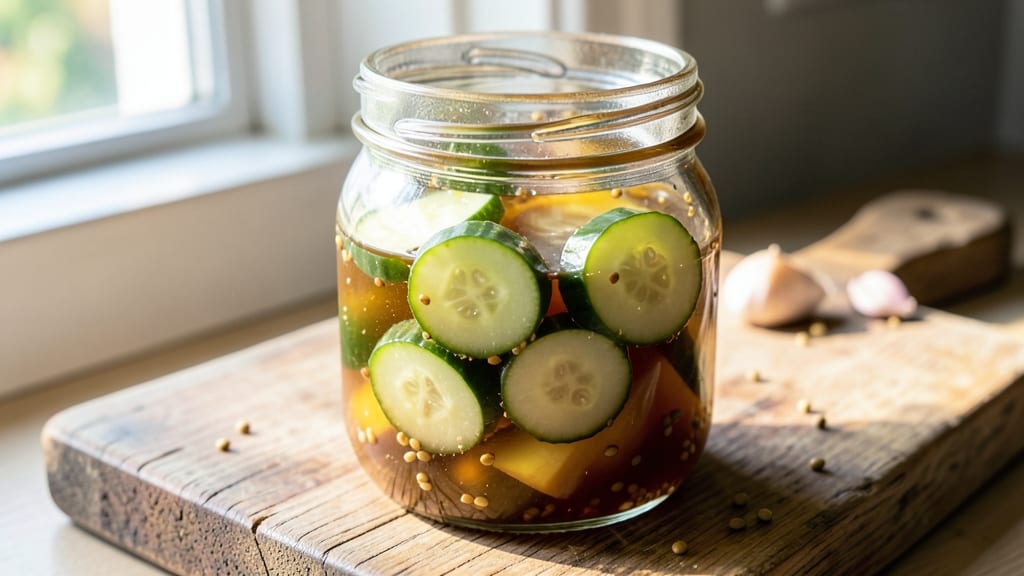
This old-fashioned refrigerator sweet pickle recipe delivers the perfect balance of vinegar brightness and sweet crunch—just like your grandmother used to make. The secret lies in a precise brine ratio that develops flavor over 7 days without requiring canning equipment, making it both foolproof and safe for modern kitchens.
I've perfected this method after years of testing, ensuring every bite delivers that nostalgic tang-sweet harmony.
The process is simpler than you'd think: thinly sliced cucumbers soak in a carefully measured vinegar-sugar-spice solution that transforms them into tender, flavorful pickles with crisp edges. No special tools are needed—just a clean jar and patience.
The vinegar acts as a natural preservative while the sugar caramelizes slightly, creating that signature sweetness that makes these pickles irresistible.
By day 7, you'll have pickles with vibrant color, satisfying crunch, and layers of flavor that stay fresh for months in the refrigerator. These aren't just side dishes—they're the star of sandwiches, charcuterie boards, or served alongside BBQ and burgers.
The recipe includes adjustments for spice levels, so you can customize it to your preference while maintaining that classic old-fashioned taste.
What makes this method truly professional is how it balances safety with tradition. The refrigerator environment prevents harmful bacteria while allowing the flavors to develop fully. Unlike quick-process pickles, these gain complexity with each passing day, making the wait worthwhile.
Ready to make pickles that taste like home? Let's get started with the exact measurements and steps that guarantee success.
Ingredients for old fashioned refrigerator sweet pickle
Twelve simple ingredients transform into nostalgic sweet pickles with perfect tang-sweet balance.
| Ingredient | Amount | Notes |
|---|---|---|
| Fresh Kirby Cucumbers 🥒 | 4 whole | Thinly sliced into 1/4-inch rounds |
| White Vinegar 💧 | 2 cups | Distilled or apple cider vinegar |
| Granulated Sugar 🍚 | 1 cup | White or light brown preferred |
| Pickling Salt 🧂 | 1 ½ tbsp | Non-iodized, fine grain preferred |
| Garlic Cloves 🧄 | 4 cloves | Thinly sliced, peeled |
| Mustard Seeds 🌶️ | 1 tsp | Yellow or brown preferred |
| Black Peppercorns 🌶️ | 1 tsp | Crushed lightly for texture |
| Dill Seeds 🌿 | 1 tsp | Or 1 tbsp fresh dill weed |
| Red Pepper Flakes 🌶️ | ½ tsp | Adjust for heat preference |
| Celery Seeds 🥬 | ½ tsp | Toasted for deeper flavor |
| Fresh Dill Weed 🌿 | ¼ cup | Chopped, for garnish (optional) |
| Distilled Water 💧 | 2 cups | For brine solution |
The cucumbers are the star—Kirby cucumbers are ideal for their thin skin and crisp texture, but Persian or pickling cucumbers work too. Trader Joe's and Whole Foods carry them fresh, but any grocery store will have them in the produce section. Slice them uniformly for even pickling. The vinegar matters too: distilled vinegar gives consistent results, while apple cider adds subtle fruitiness. Look for white vinegar labeled 'distilled'—it's the most reliable for pickling. Sugar should be white or light brown; dark brown can overpower the delicate flavor. For salt, Diamond Crystal kosher salt is my go-to—it dissolves perfectly without leaving grit.
No Kirby cucumbers? Persian cucumbers or pickling cucumbers work just as well—they're smaller and more tender. Running short on vinegar? Apple cider vinegar or white wine vinegar both work, though the flavor will shift slightly. Want to skip the seeds? Crush them lightly with a mortar and pestle—it releases more flavor. Fresh dill is ideal, but dried dill at one-third the amount works in a pinch. The celery seeds are optional but add depth—toast them for 30 seconds in a dry pan before adding for a nutty aroma. For heat, reduce red pepper flakes to 1/4 tsp if you prefer mild pickles. The brine ratio is non-negotiable though—too much water and the pickles stay bland.
These pickles improve with time—day 7 is perfect, but they'll keep developing flavor for up to 3 months in the fridge. Store in an airtight jar with the brine fully covering the cucumbers. The first few days might seem bland, but patience pays off. For serving, I like to drain them on a rack for 10 minutes before eating—it keeps them crisp. Leftovers? Portion into smaller jars for easy snacking. The brine can be reused for a second batch if strained and refreshed with water and a pinch of salt.
Why You'll Love This Recipe
- No-Slice Needed: I swear by Kirby cucumbers here—they’re thick enough to slice once and still hold their shape. No peeling, no fuss, just a quick chop and dump into the fridge. Honestly, my lazy Sundays thank me every time.
- Sweet-Tart Magic: That balance of sugar and vinegar? It’s ridiculously addictive. The garlic cloves add a subtle punch, while the salt keeps it from being too cloying. It’s the kind of pickle that makes you reach for seconds without even thinking.
- Party in a Jar: Between us, these pickles disappear at gatherings. Serve them with burgers, sandwiches, or just as a snack—no one will question why you made a whole batch. (Yes, even on a Tuesday night.)
- Fridge Stash Savior: A single batch lasts weeks in the fridge, and the ingredients cost pennies. No canning skills needed; just mix, wait, and enjoy. My wallet and my leftovers both win.
Step-by-step instructions for old fashioned refrigerator sweet pickles
Here's how to create sweet, tangy pickles that develop deep flavor over seven days in your fridge.
Prepare the Cucumbers and Spice Blend
Begin by washing the 4 whole fresh Kirby cucumbers thoroughly under cool water to remove any dirt or wax. Using a sharp chef's knife, carefully slice each cucumber into ¼-inch rounds—this uniform thickness ensures even pickling. I like to work quickly here since cucumbers can oxidize and turn bitter if left exposed too long.
In a small bowl, combine the 1 teaspoon mustard seeds, 1 teaspoon black peppercorns, 1 teaspoon dill seeds, ½ teaspoon red pepper flakes, and ½ teaspoon celery seeds. Lightly crush the peppercorns with the flat side of a knife to release their aroma without grinding them into powder. Set aside—these whole spices will infuse subtle, complex flavors into the brine without making the pickles too peppery.
Create the Brine Solution
In a medium saucepan, combine the 2 cups distilled water, 1 cup granulated sugar, and 1.5 tablespoons pickling salt. Heat over medium-low heat, stirring constantly until the sugar and salt fully dissolve—you should see a clear, golden liquid. This is your sweet brine foundation. Remove from heat and let cool to room temperature before proceeding.
While the brine cools, peel the 4 garlic cloves and slice them thinly. Add them to the cooled brine along with the spice blend. Stir gently to distribute everything evenly. The garlic will mellow as it steeps, adding just a whisper of intensity rather than overpowering the sweet-tangy profile. Here's the thing—if you rush this step, the garlic can become too pungent and bitter.
Layer Cucumbers and Brine in the Jar
Transfer the sliced cucumbers to a quart-sized mason jar, packing them snugly but not forcefully. I like to use a wooden spoon to gently press them down, creating space between slices for the brine to penetrate. Leave about 1 inch of headspace at the top—this prevents overflow when the brine is added.
Pour the garlic-infused brine over the cucumbers until they're completely submerged. The liquid should cover all slices by at least ½ inch. If needed, add a few extra tablespoons of the cooled brine from the saucepan. Seal the jar tightly with the lid. Real talk: if any cucumbers peek above the brine, they'll turn mushy rather than crisp.
Refrigerate and Develop Flavor
Place the sealed jar in the refrigerator and let the pickles steep for at least 7 days, though I find they reach peak flavor at 10-14 days. During this time, the acidity from the vinegar will gradually penetrate the cucumbers, while the sugar caramelizes slightly, creating that signature sweet-tangy balance. I check them every few days—they'll start developing a subtle crunch by day 3, but the full depth of flavor comes later.
After the initial week, taste a slice to gauge sweetness. If they're not sweet enough for your preference, you can add a small amount of the original brine (mixed with an extra ¼ cup granulated sugar) and let them steep another 2-3 days. The key is patience—the longer they sit, the more complex the flavors become. Once they reach your desired taste, they'll keep in the fridge for up to 3 months.
Pro Tips For Making Old Fashioned Refrigerator Sweet Pickle
- SLICE THIN, SLICE EVEN: DESCRIPTION:
- WEIGH THE SALT: DESCRIPTION:
- COOL THE BRINE FIRST: DESCRIPTION:
- CRUSH GARLIC, DON’T CHOP: DESCRIPTION:
Regional styles of this recipe
Southern Sweet Style
In the American South, these pickles take center stage at family gatherings and potlucks, often served with fried chicken or BBQ. The key difference? A touch of hot honey drizzled over the finished pickles—just 1 tablespoon—adds a smoky-sweet depth that Southern cooks swear by.
I like to use Penzeys Hot Honey for its balanced heat. These pickles also traditionally include 1 extra tablespoon of sugar in the brine, making them even sweeter while keeping that classic tang. 🍯
Midwest Crunchy Classic
The Midwest version focuses on maximum crunch and a slightly sharper vinegar bite. Here, ½ teaspoon extra pickling salt is added to the brine, and the cucumbers are sliced into ⅛-inch rounds instead of ¼-inch.
The brine also includes 1 tablespoon apple cider vinegar swapped for distilled vinegar, giving a fruity edge. These pickles are perfect for Reuben sandwiches or as a tangy snack with sharp cheddar cheese. The Midwest approach prioritizes texture over sweetness. 🥒
Appalachian Spiced Twist
In Appalachia, these pickles get a rustic, spiced kick with ½ teaspoon ground coriander and ¼ teaspoon ground cloves added to the spice blend. The brine also includes 1 tablespoon of molasses (instead of extra sugar) for a deeper, almost caramelized flavor.
This variation pairs beautifully with pulled pork or cornbread. The molasses adds complexity while keeping the pickles safe for refrigerator storage—just ensure the molasses is pasteurized to avoid fermentation risks. 🌶️
New England Tangy Crunch
New England cooks lean into the vinegar-forward profile, using white wine vinegar instead of distilled vinegar for a brighter acidity. The brine includes 1 tablespoon of fresh lemon juice and ½ teaspoon of celery salt (instead of plain pickling salt) for a savory twist.
These pickles are thinner—⅛-inch slices—and often served with lobster rolls or clams on the half shell. The lemon juice cuts through the richness of seafood beautifully. 🍋
Texas-Style Sweet Heat
Texas takes the sweetness to another level with ½ cup brown sugar in the brine and 1 teaspoon cayenne pepper for a slow-building heat. The cucumbers are packed tightly into the jar, and the brine includes 2 thin slices of jalapeño for extra spice.
These pickles are a staple at Texas BBQ joints and pair perfectly with brisket or smoked sausage. The cayenne adds a subtle kick that develops over time—perfect for those who love their sweet pickles with a little fire. 🔥
Pacific Northwest Fresh Twist
Out West, the focus is on fresh, bright flavors with 1 tablespoon of fresh lime juice added to the brine and ½ teaspoon of ground fennel seeds for an anise-like note. The pickles are served chilled with grilled salmon or Dungeness crab.
The lime juice keeps the pickles vibrant, and the fennel adds a subtle licorice aroma that complements seafood beautifully. This version is lighter on sugar—½ cup granulated sugar—to balance the bright acidity. 🌊
Nutrition facts
Frequently asked questions
Why do these pickles need 7 days to develop flavor?
The 7-day wait allows the vinegar to fully penetrate the cucumbers while the sugar caramelizes slightly, creating that signature sweet-tangy balance. The spices also infuse more deeply over time, transforming bland slices into complex, flavorful pickles. Rushing this process results in a milder, less satisfying taste.
Can I use regular table salt instead of pickling salt?
No, you should always use pickling salt (non-iodized, fine grain) because table salt contains anti-caking agents that can make the brine cloudy and affect texture. Diamond Crystal kosher salt works perfectly—it dissolves cleanly without leaving residue.
What happens if my cucumbers aren't fully submerged?
If cucumbers peek above the brine, they'll turn mushy rather than crisp. The acidity in the vinegar preserves submerged slices, but exposed parts ferment unevenly. Always leave 1 inch of headspace and ensure liquid covers slices by at least ½ inch.
How do I adjust the sweetness level?
For less sweetness, reduce sugar to ½ cup>. For more, increase to 1¼ cups. After 7 days, taste and adjust by adding a small amount of brine with extra sugar, then let steep another 2-3 days. The key is patience—the flavors develop gradually.
Can I reuse the brine for a second batch?
Yes! Strain the used brine, mix it with fresh water (equal parts), and add 1 tbsp pickling salt> and ½ cup sugar> per quart. Use it immediately for a second batch of pickles. The brine retains some flavor but should be refreshed for best results.