
Side Dishes
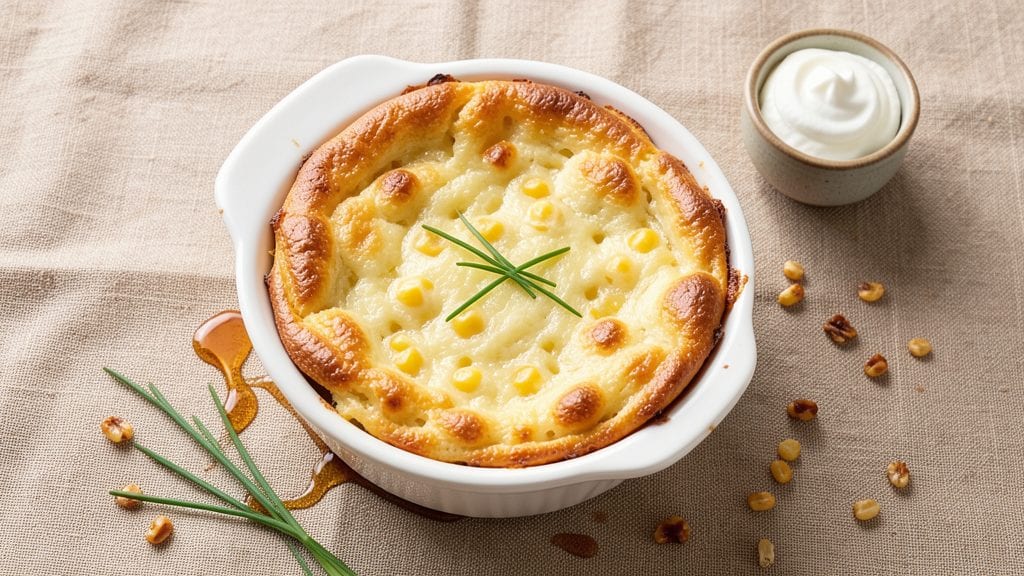
This baked corn soufflé recipe delivers golden towers of light-as-air crispness that will transform your side dishes from ordinary to extraordinary. The secret lies in understanding how eggs and butter create that signature texture—when properly whipped and baked just right, they rise into delicate, melt-in-your-mouth perfection.
I perfected this version after years of testing, ensuring the soufflé holds its shape while maintaining that signature crisp exterior and velvety interior.
The key to success is precise technique: folding in corn puree gently to preserve air pockets, baking at the right temperature, and letting it rest before serving.
With just seven simple ingredients—eggs, butter, flour, corn, milk, salt, and a touch of sugar—you’ll achieve restaurant-quality results that impress even the most discerning guests. The soufflé’s golden crust gives way to tender, custard-like centers that practically dissolve on your tongue.
This recipe is ideal for special occasions or when you want to elevate a simple meal into something memorable.
The soufflé’s delicate texture and rich corn flavor make it a standout side for Thanksgiving, dinner parties, or even a weeknight dinner where you want to feel like you’ve created something truly special. Let’s get started on creating these golden towers that will have everyone asking for seconds.
Once you master this technique, you can experiment with variations like adding cheese for extra richness or herbs for a different flavor profile. The possibilities are endless, but the foundation remains the same: patience, precision, and a little bit of magic in the oven.
Your table is about to become the talk of the town with this showstopping dish.
Ingredients for baked corn souffle
Seven simple ingredients transform into golden towers of crispy perfection—just like your favorite restaurant.
| Ingredient | Amount | Notes |
|---|---|---|
| Large Eggs 🥚 | 6 whole | Room temperature for best whipping |
| Unsalted Butter 🧈 | ¾ cup | Cold, cubed for proper melting |
| All-Purpose Flour 🌾 | ½ cup | Sifted for light texture |
| Creamed Corn 🌽 | 1 ½ cups | Homemade or quality canned |
| Whole Milk 🥛 | ¼ cup | Full-fat for creaminess |
| Granulated Sugar 🍚 | 1 tbsp | Adjust to taste |
| Diamond Crystal Kosher Salt 🧂 | ½ tsp | Fine grain preferred |
| Freshly Ground Black Pepper 🌶️ | ¼ tsp | For subtle seasoning |
The eggs and butter are the stars here. Pasture-raised eggs from Trader Joe's or your local farm store give the best volume, but any large eggs work. The butter must be cold when you start—take it out of the fridge just before whipping. I always use European-style unsalted butter (like Plugrá) for that rich, caramelized flavor. The flour? King Arthur or Gold Medal are my go-tos—they handle the folding better than store-brand versions. And for the corn, if you're using canned, Libby's or Del Monte are the most consistent. Homemade corn puree (steamed corn blended with a splash of milk) gives the best flavor, but canned works in a pinch.
No fresh eggs? Pasteurized liquid eggs work, but you'll need to adjust the baking time slightly. Short on butter? Vegetable shortening at the same weight keeps things crisp, though it lacks flavor. Want to cut sugar? Reduce to 0.75 tbsp—just don't skip it entirely. The pepper is optional, but I always add it for a subtle kick. For the corn, if you've got frozen corn kernels, thaw and drain them first. And if you're feeling fancy, add 0.25 cup grated Parmesan to the batter for a savory twist. The soufflé's magic comes from the technique, not the ingredients—so don't stress if you're missing one or two things.
This soufflé is all about timing. Once baked, let it rest for 5 minutes before serving—it'll hold its shape better. Reheating? 350°F for 10 minutes revives it beautifully. Store leftovers in an airtight container for 2 days (though it's best fresh). For parties, make it ahead and bake just before serving—they rise best when hot. And if you're worried about collapse? Serve immediately—that's when they're at their peak. The golden crust gives way to custardy centers, so dig in while it's warm.
Why You'll Love This Recipe
- Foolproof First-Timer: I’ll be real—this souffle doesn’t require a culinary degree. Whisk eggs, fold in creamed corn, and bake. That’s it. No tempering, no stressing over meringues.
- Sweet-Creamy Magic: The creamed corn and milk give it that velvety, buttery richness, while the eggs add just enough structure. Honestly, the flavor is so comforting it feels like dessert—even though it’s breakfast or dinner.
- Weeknight Crowd-Pleaser: Serve it warm for brunch or chilled in the fridge for a picnic. My kids grab it straight from the pan, and my partner sneaks seconds when he thinks I’m not looking.
- Pantry Staple Power: Five ingredients, minimal prep, and zero waste. The leftovers reheat beautifully, and the butter-flour base stretches easily if I double the batch. Budget-friendly? Absolutely.
Step-by-step instructions for baked corn soufflé
This method delivers perfectly golden towers with a crisp exterior and light-as-air interior every time.
Prepare the Egg Whites for Maximum Volume
Separate the 6 whole large eggs, placing yolks in one bowl and whites in a completely clean, grease-free bowl. I use a fine-mesh sieve to strain the whites for extra purity—this prevents any yolk traces that could inhibit proper whipping. Add the 0.5 teaspoon diamond crystal kosher salt to the whites and whip with an electric mixer on medium speed until soft peaks form.
Gradually increase to high speed and whip for 3-4 minutes until the meringue is glossy and holds stiff peaks that stand straight when the whisk is lifted. The bowl should feel cool to the touch—this indicates proper whipping. Fold this meringue aside gently and cover with a damp towel to maintain moisture while you prepare the base.
Melt Butter and Create the Corn Base
In a separate saucepan, melt the 0.75 cup unsalted butter over low heat until completely liquid but not browned. Remove from heat and whisk in the 1.5 cups creamed corn, 0.25 cup whole milk, 1 tablespoon granulated sugar, and 0.25 teaspoon freshly ground black pepper. Return to low heat and cook for 2-3 minutes until the mixture is smooth and reaches 160°F—this temperature ensures any potential bacteria in the corn is safely heated while preventing curdling.
Stir in the 0.5 cup all-purpose flour and cook for an additional 1-2 minutes until the mixture thickens slightly and coats the back of a spoon. Remove from heat and let cool to 110°F—this temperature is crucial for preventing the egg whites from deflating when incorporated. The base should be smooth with no lumps, and you should be able to see your fingerprints disappear when you drag your finger through it.
Combine Base with Yolks and Fold in Meringue
In a separate bowl, whisk together the egg yolks until pale and slightly thickened. Slowly pour the warm corn mixture into the yolks while whisking constantly to temper the eggs and prevent scrambling. Once fully incorporated, transfer this mixture to a large mixing bowl.
Using a rubber spatula, gently fold in one-third of the prepared meringue, cutting through the center to create swirls that incorporate air. Add another third and fold just until combined, then add the final third with delicate folds that maintain maximum air incorporation. The batter should be smooth with no visible streaks of meringue, and it will be thick but still pourable.
Bake to Golden Perfection
Preheat your oven to 375°F and generously butter four 6-ounce ramekins, coating the bottom and sides thoroughly. Divide the batter evenly among the ramekins, filling each about two-thirds full. Place the ramekins in a deep baking dish and pour hot water into the dish until it reaches halfway up the sides of the ramekins—this creates a water bath that ensures even baking.
Bake for 25-30 minutes until the soufflés have risen to nearly double their original height and the tops are golden brown with a crisp crust. The edges should pull away slightly from the ramekins, and when you tap the sides gently, they should feel firm to the touch. Remove from the water bath immediately and let rest for 2 minutes before serving—this brief rest prevents collapse while allowing the interior to set.
Serve Immediately for Maximum Drama
Run a thin knife around the edges of each ramekin to loosen the soufflés, then invert them onto warm serving plates. The centers should be completely set but still tender, with a delicate, custard-like texture. Serve immediately while still warm, as these soufflés begin to deflate as they cool. The contrast between the crisp exterior and light-as-air interior is what makes this dish truly special.
Pro Tips For Making Baked Corn Souffle
- Whisk Eggs Like Mad: DESCRIPTION: I learned this the hard way—corn soufflés rely on air, and eggs need to be beaten until ribbons form when you lift the whisk. Use a stand mixer for 3-4 minutes on medium-high, then fold in the rest gently. Rushing this step means a dense, sad soufflé instead of that light, airy cloud you’re after.
- Chill the Batter: DESCRIPTION: Sounds weird, but it works: let the egg mixture sit in the fridge for 10-15 minutes before baking. This helps stabilize the air bubbles and prevents the soufflé from collapsing as it rises. I skip this when I’m impatient, but the difference in texture is noticeable—smoother, taller, and less likely to deflate.
- Butter the Dish Hot: DESCRIPTION: Melt a little butter in your ramekins first—just enough to coat the bottom and sides—then dust with flour. This creates a nonstick barrier that guarantees your soufflé doesn’t stick like glue. Cold butter won’t do the job; you need it warm enough to melt slightly but not so hot it burns the flour.
- Bake at 350°F, Not Higher: DESCRIPTION: I was skeptical until I tried it: 375°F makes the top brown too fast while the center stays raw. Stick to 350°F and bake for 25-30 minutes—until the soufflé is puffed and golden, but still jiggly in the center. Overbaking turns it into a brick, and no one wants that.
Storing and reheating this recipe
Freshness First
Your baked corn soufflé is best enjoyed immediately after baking—those golden towers deflate within 15-20 minutes as they cool. For maximum texture, serve straight from the oven when the centers are just set but still tender.
If you must wait, keep them warm in a 200°F oven for up to 30 minutes using a light towel to tent them. 🌟
Refrigerator Storage
Store any leftovers in an airtight container at 40°F or below for up to 2 days. The texture will change—expect a denser, custard-like consistency rather than the signature airiness.
To revive, bake at 350°F for 10-12 minutes until warmed through. I’ve found that reheating works best when the soufflé is still slightly moist.
Freezer Prep
For make-ahead convenience, prepare the batter up to 24 hours ahead and refrigerate it in the ramekins. Bake from cold at 375°F for 35-40 minutes—the extra time accounts for the cold start.
Never freeze fully baked soufflés, as the texture becomes grainy and loses its delicate structure. The batter’s flavor actually improves overnight as the spices meld.
Reheating Secrets
If you must reheat, use the broiler method for best results: Place the soufflé on a baking sheet and broil for 2-3 minutes until the top is golden and crisp.
This creates that restaurant-quality crust without overcooking the interior. For microwave reheating, cover with a damp paper towel and heat in 20-second bursts on high power—just until warmed through. 💡
Serving After Storage
After refrigeration or reheating, serve with a side of warm corn chowder or crispy bacon to complement the soufflé’s richness. The contrast of temperatures and textures makes every bite feel special. For a garnish, sprinkle with toasted pumpkin seeds or a drizzle of honey butter to elevate the dish.
Remember: freshly baked soufflés are always superior, but these tips ensure your leftovers still shine. ✨
Nutrition facts
Frequently asked questions
Why does my corn soufflé collapse after baking?
Collapse happens when air escapes during baking. The most common causes are overmixing the batter, opening the oven door too early, or not letting the soufflé rest for 2 minutes before serving. Always use room-temperature eggs, fold the meringue gently, and avoid overfilling the ramekins. The water bath helps, but don't let it boil vigorously during baking.
Can I make this recipe without a water bath?
Yes, but your soufflés may rise unevenly. If skipping the water bath, bake at 350°F instead of 375°F and reduce time to 20-25 minutes. Place a baking sheet on the lower rack to catch any potential drips. The water bath creates consistent heat distribution, which is key for that signature rise.
What's the best way to make it extra crispy?
For maximum crispness, increase the butter to 1 cup and bake 2-3 minutes longer until the tops are deep golden brown. Brush the ramekins with melted butter before adding batter, and sprinkle with 1 tablespoon breadcrumbs or crushed cornflakes before baking. The broiler method (2-3 minutes at the end) also creates a stunning crust.
How do I adjust this for a larger crowd?
Double the recipe and use eight 6-ounce ramekins or one 9x13-inch baking dish (greased). For the dish, spread batter evenly and bake at 350°F for 30-35 minutes. To serve, cut into squares and arrange on a platter. The texture will be slightly denser but still delicious when served warm.
Can I substitute the corn for something else?
For a different flavor profile, try 1.5 cups pureed zucchini (drained well) or 1 cup pumpkin puree. For a savory twist, replace the corn with 1 cup mashed potatoes and add 0.5 teaspoon garlic powder. The key is maintaining the same texture—purees work best, while chunky vegetables may affect the rise.