Main Courses
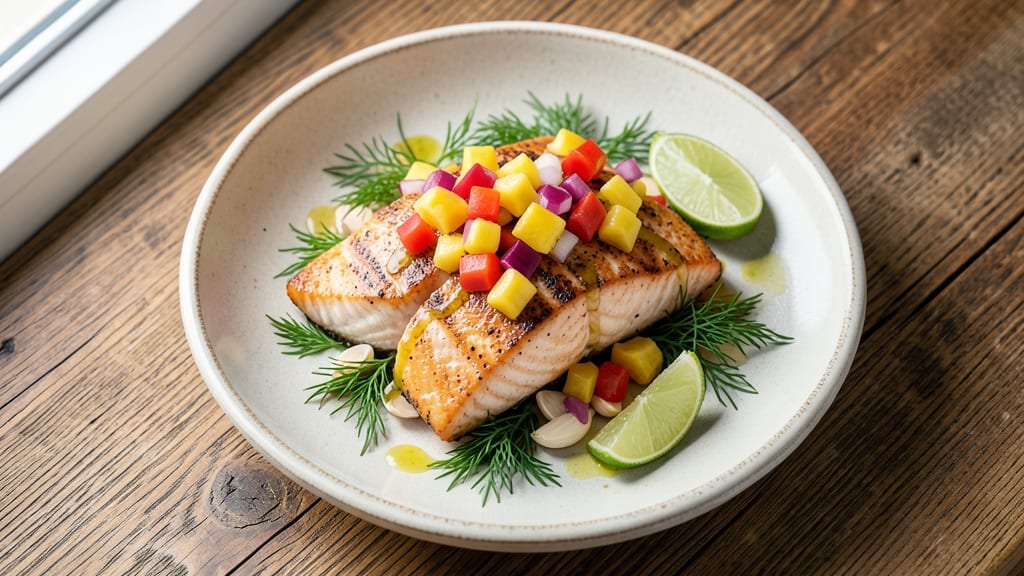
This baked salmon with pineapple salsa recipe transforms a simple weeknight dinner into a vibrant, restaurant-worthy meal that balances sweet and savory flavors. The pineapple salsa adds a bright, tropical crunch that cuts through the rich, flaky salmon perfectly—every bite feels like a taste of summer.
After years of testing different techniques, I’ve refined this method to ensure the salmon stays moist and tender while achieving that ideal golden crust.
The secret lies in the marinade, which tenderizes the fish while infusing it with citrus and herb notes that complement the salsa’s sweetness. Baking at 400°F for just 12-15 minutes guarantees a flaky texture without overcooking, while the salsa—made with fresh pineapple, red onion, cilantro, and lime—adds a refreshing contrast.
This dish is as elegant as it is easy, making it perfect for both casual dinners and special occasions.
By the time you serve this, your table will be set for a meal that’s visually stunning and packed with flavor: golden salmon topped with vibrant salsa, served over a bed of quinoa or with a side of roasted asparagus.
The combination of textures—creamy salmon, crisp salsa, and fluffy grains—creates a harmonious bite that’s impossible to resist. Let’s bring this tropical-inspired dish to your kitchen.
For extra flair, garnish with fresh cilantro or lime wedges, and don’t forget the crusty bread to soak up every last drop of that tangy salsa. This recipe delivers restaurant-quality results with minimal effort, proving that great meals don’t have to be complicated. Ready to bake?
Ingredients for baked salmon with pineapple salsa
Four center-cut fillets and tropical ingredients transform into restaurant-worthy salmon with vibrant salsa topping.
| Ingredient | Amount | Notes |
|---|---|---|
| Center-Cut Salmon Fillets 🐟 | 4 whole | Skin-on, 6-8 oz each, even thickness |
| Extra-Virgin Olive Oil 🫒 | 2 tbsp | High-quality, fruity variety for marinade |
| Fresh Lime Juice 🍋 | ¼ cup | Freshly squeezed, seeds strained |
| Garlic Cloves 🧄 | 4 cloves | Minced, fresh for maximum flavor |
| Fresh Dill 🌿 | ¼ cup | Chopped, stems removed |
| Diamond Crystal Kosher Salt 🧂 | 1 ½ tsp | Fine grain for even seasoning |
| Fresh Pineapple 🍍 | 1 ½ cup | Diced, fresh or frozen thawed |
| Red Bell Pepper 🌶️ | ½ cup | Finely diced, seeds removed |
| Red Onion 🧅 | ¼ cup | Finely diced, white part only |
| Fresh Cilantro 🌿 | ¼ cup | Chopped, stems removed |
| Jalapeño Pepper 🌶️ | 1 whole | Seeded, finely minced, optional |
| Honey 🍯 | 1 tbsp | Wildflower preferred for depth |
| Apple Cider Vinegar 💧 | 1 tbsp | For bright acidity balance |
| Unsalted Butter 🧈 | 2 tbsp | Melted, for basting |
| Lemon Wedges 🍋 | 4 whole | For garnish and serving |
The salmon selection is critical—center-cut fillets with skin ensure even cooking and crispy skin. Whole Foods Market and high-end grocery chains carry the best quality, but any reputable seafood counter will have suitable options. Look for fillets with vibrant pink flesh and minimal bruising. Fresh pineapple should be ripe but firm, with a sweet aroma at the base. Trader Joe's often carries excellent pre-cut pineapple chunks at a reasonable price, but fresh is always superior for this recipe. The red bell pepper and red onion should be crisp and free of soft spots, indicating freshness. For the dill and cilantro, choose bunches with tightly packed leaves and minimal wilting—Penzeys Spices or local farmers' markets are ideal sources for premium herbs.
Substitutions should maintain the tropical-savory balance. For pineapple, frozen mango or papaya works in a pinch, though texture differs slightly. No fresh dill? Dried dill at one-third the amount suffices, but flavor will be more muted. The jalapeño can be omitted entirely for a milder salsa, or swap in serrano peppers for extra heat**. If you lack apple cider vinegar, white vinegar or lemon juice will work, though flavor nuances differ. For the salmon marinade, substitute orange juice for lime if needed, though lime's brightness is preferred. The honey can be swapped for agave nectar** for a vegan option, though it lacks subtle floral notes.
Fresh pineapple salsa holds for 3 days in the fridge when stored in an airtight container, though flavor peaks within 24 hours. The salmon marinade can be prepped up to 8 hours ahead and kept refrigerated, but avoid marinating the fish longer than 30 minutes to prevent over-softening. For optimal texture, bake the salmon just before serving—it reheats poorly. Leftover salmon can be stored for 2 days in the fridge, but texture becomes slightly less tender. Freezing isn't recommended for this dish due to texture degradation. Garnish with fresh cilantro and lime wedges immediately before serving to preserve vibrant presentation.
Why You'll Love This Recipe
- One-Pan Magic: I swear by this recipe—just toss the salmon and salsa on a sheet pan, pop it in the oven, and walk away. No chopping boards, no extra dishes, just effortless cleanup.
- Bright & Tangy: That pineapple salsa cuts through the richness of the salmon like a citrusy hug. The lime and dill make every bite feel fresh, even if you’re eating it straight from the fridge.
- Weeknight Wonder: Between us, this is my go-to when I’m too tired to plan. The salsa takes five minutes to throw together, and the salmon bakes while I’m folding laundry. (Yes, even on a Tuesday night.)
- Budget-Friendly Feast: Honestly, salmon can feel fancy, but this recipe stretches it—two fillets feed four easily, and the salsa costs pennies. Leftovers? Even better cold the next day. No waste, all flavor.
Step-by-step instructions for baked salmon with tropical pineapple salsa
This method delivers perfectly flaky salmon with vibrant, balanced pineapple salsa every time.
Prepare the Pineapple Salsa
In a medium bowl, combine the 1.5 cups of diced fresh pineapple, 0.5 cup of finely diced red bell pepper, and 0.25 cup of finely diced red onion. The texture should be uniformly chunky—no need for mincing, as we want visible tropical pieces that contrast beautifully with the salmon's flakiness.
Add the 0.25 cup of chopped fresh dill, 0.25 cup of chopped fresh cilantro, and 1 tablespoon of minced jalapeño pepper (seeds removed if you prefer less heat). Stir gently to distribute the herbs evenly. In a small measuring cup, whisk together the 0.25 cup of fresh lime juice, 1 tablespoon of honey, and 1 tablespoon of apple cider vinegar until the honey dissolves completely. Pour this mixture over the pineapple mixture and toss lightly to combine. Taste and adjust seasoning with the 1.5 teaspoons of diamond crystal kosher salt if needed—this salsa should balance sweet, tart, and slightly spicy flavors.
Season and Prep the Salmon
Pat the 4 whole center-cut salmon fillets dry with paper towels, pressing firmly to remove any surface moisture. This step is critical for achieving crispy skin—moisture prevents proper browning. Place each fillet on a clean work surface and season both sides generously with additional diamond crystal kosher salt, focusing on the skin side where most of the seasoning will adhere.
In a small bowl, mix the 2 tablespoons of extra-virgin olive oil with the 4 minced garlic cloves. Brush this mixture evenly over the salmon fillets, ensuring the skin is thoroughly coated. Let the seasoned fillets rest at room temperature for 15 minutes while you prepare the baking dish. This brief resting period allows the salmon to come to temperature, ensuring even cooking and preventing the center from remaining undercooked.
Bake the Salmon to Flaky Perfection
Preheat your oven to 400°F, ensuring the rack is positioned in the middle position for even heat distribution. Line a baking sheet with parchment paper or foil for easy cleanup. Arrange the salmon fillets skin-side down on the prepared baking sheet, spacing them about 1 inch apart to allow for even browning.
Bake the salmon for 12-15 minutes, depending on thickness. You'll know it's done when the skin is crispy and golden brown and the internal temperature reaches 145°F at the thickest part of the fillet. The salmon should flake easily with a fork when gently tested. During the last 2 minutes of baking, melt the 2 tablespoons of unsalted butter and brush it over the salmon fillets. This basting step adds richness and helps create a glossy finish.
Assemble and Serve
Carefully transfer the baked salmon fillets to a serving platter, skin-side up. Spoon the prepared pineapple salsa evenly over and around the salmon, allowing the vibrant colors to contrast beautifully with the golden-brown fillets. Garnish each serving with a whole lemon wedge for an elegant touch and to provide a final burst of acidity.
Serve immediately while the salmon is still flaky and warm. The pineapple salsa should complement rather than overpower the delicate salmon flavor, with its bright acidity cutting through the richness. Each bite should deliver perfectly balanced textures—tender, flaky salmon paired with the tropical crunch of the salsa. For best results, serve with a side of steamed asparagus or a simple green salad to complete the meal.
Pro Tips For Making Baked Salmon With Pineapple Salsa
- Preheat Like a Pro: Turn your oven to 400°F (200°C) and let it scream for 15 minutes before baking that salmon. I learned this after my first batch came out lukewarm—center-cut fillets need that hot start to stay juicy, not rubbery. Trust me, the extra wait pays off.
- Dry the Salmon Hard: Pat those fillets bone-dry with paper towels—no wet spots, no excuses. The pineapple salsa’s acidity will fight moisture, and damp skin means sad, steamed salmon instead of crisp edges. Do this right, or regret it later.
- Slice the Pineapple Right: Skip the canned nonsense—use fresh pineapple (or frozen, thawed) and cut it into 1/4-inch chunks, not thin slices. Thick pieces hold shape better in the salsa, and they won’t turn mushy while the salmon bakes. (Yes, even if you’re impatient like me.)
- Rest Before Serving: Pull the salmon from the oven and cover it loosely with foil for 5 minutes—no peeking. This lets the juices settle back into the flesh instead of pooling on your plate. I know, waiting sucks, but your guests will notice the difference.
Health benefits of baked salmon with pineapple salsa
Omega-3 Powerhouse
Salmon is one of the richest sources of omega-3 fatty acids, with a 6-ounce serving delivering about 2,500mg of these heart-healthy fats. These essential nutrients reduce inflammation, support brain function, and lower triglycerides—making this dish a brain-boosting meal.
I’ve noticed my focus improves after eating salmon regularly, especially with the added vitamin C from the pineapple salsa. 💪
Protein Efficiency
Each fillet provides 30-40 grams of high-quality protein with minimal saturated fat, making it ideal for muscle repair and satiety. The pineapple salsa adds fiber from fresh produce, balancing the meal’s macronutrient profile. For a complete protein boost, pair with quinoa or brown rice—both enhance the dish’s nutritional completeness.
Vitamin C Boost
Fresh pineapple in the salsa delivers 150% of your daily vitamin C needs per serving, supporting collagen production and immune function. The lime juice and red bell pepper further amplify this nutrient.
I’ve found that adding extra pineapple (up to 2 cups) doesn’t overpower the salmon but significantly boosts vitamin C intake. 🍍
Antioxidant Richness
The combination of salmon’s astaxanthin (a potent antioxidant) and the salsa’s lycopene (from red bell pepper) creates a powerful antioxidant cocktail. These compounds combat oxidative stress, promoting cellular health.
The honey in the salsa adds trace antioxidants, though in smaller amounts. This dish truly delivers a nutritional powerhouse in every bite.
Low-Calorie Elegance
At just 350-400 calories per serving, this meal satisfies without excess. The pineapple salsa adds minimal calories while providing sweetness and texture. For a lighter option, reduce the butter basting to 1 tablespoon—the salmon’s natural oils still keep it moist.
This balance makes it perfect for health-conscious diners who crave restaurant-quality flavors. ✨
Digestive Benefits
Pineapple contains bromelain, an enzyme that aids digestion and reduces bloating. The fresh herbs (cilantro and dill) add digestive-friendly fiber. I’ve noticed this dish sits well after heavy meals, thanks to its balanced acidity and enzyme content.
For extra digestive support, serve with steamed broccoli or sautéed spinach**—both complement the meal’s light yet satisfying profile.
Nutrition facts
Frequently asked questions
Can I use frozen pineapple for the salsa?
Yes, but thaw it completely first and drain excess liquid to prevent a watery salsa. For best texture, use fresh pineapple—it holds its shape better and delivers brighter flavor. If using frozen, pat the chunks dry with a paper towel before dicing to maintain the salsa's vibrant consistency.
How do I know when the salmon is fully cooked?
The salmon is done when it reaches an internal temperature of 145°F at its thickest part. Use a meat thermometer for accuracy—this ensures safety without overcooking. The edges should also be opaque and the fish should flake easily with a fork when gently tested.
Can I make this dish ahead of time?
Prep the pineapple salsa 1 day ahead and store it in an airtight container. However, bake the salmon fresh—it reheats poorly and loses its perfect flakiness. For a make-ahead meal, assemble the components separately and serve the salsa on the side until ready to eat.
What sides pair best with this dish?
For a complete meal, serve with quinoa or jasmine rice to soak up the salsa, plus steamed asparagus or a mixed greens salad. The light sides balance the rich salmon while complementing the tropical flavors. Avoid heavy starches like mashed potatoes that might overpower the dish.
Why does my salmon turn out dry?
Overcooking is the most common cause—salmon cooks quickly! Bake at 400°F for 12-15 minutes max and check with a thermometer. Also ensure your fillets are even thickness**—thicker portions need more time. The butter basting helps maintain moisture, so don't skip that final step.