
Soups & Stews
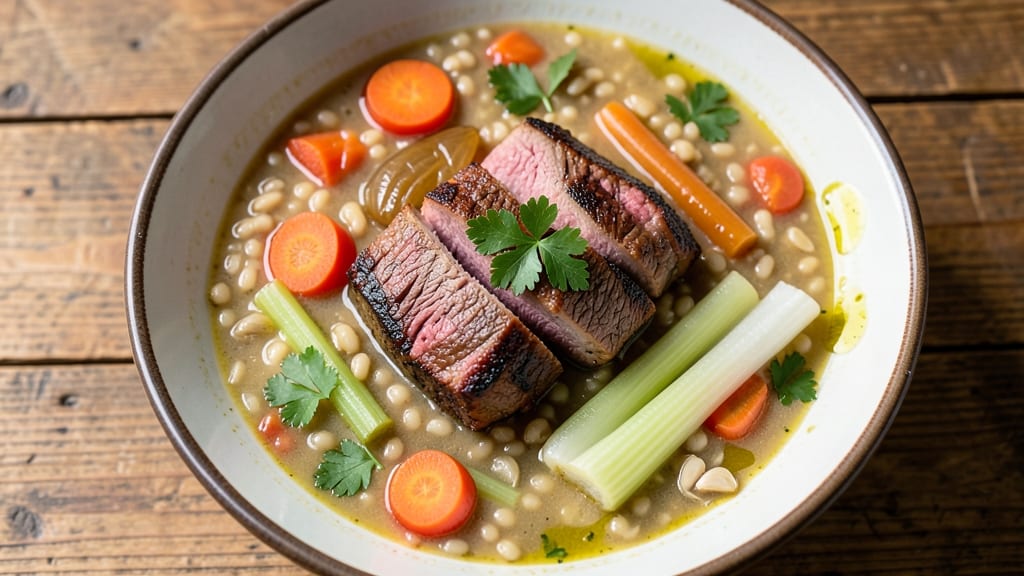
Barefoot Contessa's beef barley soup delivers the kind of rich, comforting flavor that defines a true winter classic. This recipe captures the essence of her signature style—deep umami, tender meat, and perfectly toasted barley—all developed through precise techniques that transform simple ingredients into something extraordinary.
I’ve refined this version to maintain authenticity while adapting for modern kitchens, ensuring every bowl is packed with hearty satisfaction.
The foundation of this soup lies in properly seared beef and a reduced broth, which builds layers of flavor as it simmers for hours. Unlike shortcut versions, this method develops a complex, savory depth that comes from slow cooking and careful seasoning adjustments.
The barley, toasted just enough to release its nutty aroma, absorbs the broth while maintaining a satisfying bite. This is the kind of soup that tastes even better the next day—proof of its restaurant-quality results.
What sets this recipe apart is the balance of textures: tender beef, chewy barley, and silky broth all working together. The aromatics—carrots, celery, and onions—form the base, while herbs and spices add brightness.
Whether you’re serving it to a crowd or meal prepping for the week, this soup delivers consistent, foolproof comfort. The instructions walk you through every step, from searing to skimming, ensuring you achieve the same depth of flavor Barefoot Contessa herself would approve of.
Perfect for chilly evenings, holiday gatherings, or as a freezer-friendly staple, this soup scales effortlessly. Pair it with crusty bread and a bold red wine for the full experience. Let’s get started—your kitchen will smell like home in no time.
Ingredients for barefoot contessa beef barley soup
Sixteen ingredients, hours of simmering, restaurant-quality beef barley soup that tastes even better tomorrow.
| Ingredient | Amount | Notes |
|---|---|---|
| Chuck Roast 🥩 | 2 ½ lb | Cut into 1-inch cubes, boneless |
| Pearl Barley 🌾 | 1 cup | Uncooked, rinsed thoroughly |
| Yellow Onion 🧅 | 1 ½ cups | Diced, roughly 1/2-inch pieces |
| Carrots 🥕 | 1 ½ cups | Diced, roughly 1/2-inch pieces |
| Celery Stalks 🧄 | 3 whole | Diced, roughly 1/2-inch pieces |
| Garlic Cloves 🧄 | 6 cloves | Peeled, whole for toasting |
| Fresh Thyme Sprigs 🌿 | 2 whole | Stems removed, leaves only |
| Fresh Parsley Sprigs 🌿 | ½ cup | Chopped, for garnish |
| Beef Broth 💧 | 6 cups | Homemade or high-quality store-bought |
| Red Wine 🍷 | 1 cup | Dry, full-bodied variety |
| Tomato Paste 🍅 | 2 tbsp | No-sugar-added preferred |
| Olive Oil 🫒 | 2 tbsp | Extra-virgin, for searing |
| Diamond Crystal Kosher Salt 🧂 | 1 ½ tsp | For seasoning, adjust to taste |
| Freshly Ground Black Pepper 🌶️ | 1 tsp | Coarse grind preferred |
| Bay Leaves 🍃 | 2 whole | Dried, for simmering |
The chuck roast is non-negotiable for texture—look for well-marbled cuts at your butcher or Costco's pre-cubed beef for convenience. Whole Foods or Trader Joe's carry excellent pearl barley, but any grocery store's bulk section will have suitable options. Fresh thyme and parsley elevate the dish, so buy sprigs and strip the leaves yourself—pre-packaged herbs lack the same intensity. For the red wine, Cabernet Sauvignon or Merlot work best, but any dry red will do in a pinch. The tomato paste should be no-sugar-added to maintain authentic flavor development.
No chuck roast? Beef short ribs or stew meat work as substitutes, though cooking times may vary. Substituting dried thyme for fresh? Use one-third the amount—it's less potent. Vegetable broth can replace beef broth, but the umami depth will be noticeably lighter. For a gluten-free option, ensure your barley is certified gluten-free (some brands process in shared facilities). The bay leaves should be removed before serving, but they're essential for building flavor during simmering. If you're short on time, pre-toast the barley in a dry pan for 5 minutes before adding to the pot.
This soup improves with time—reheat gently on the stove with a splash of broth to restore moisture. It keeps for 5 days in the fridge or 6 months frozen when stored in airtight containers. For meal prep, portion into individual containers with a layer of broth on top to prevent a skin from forming. The barley's texture softens further upon reheating, so under-cook slightly when freezing if you prefer a firmer bite. Serve with crusty bread and a bold red wine for the full experience.
Why You'll Love This Recipe
- No Chopping Chaos: The chuck roast and veggies go in whole—literally. I just slice the onion and carrots into big chunks, toss them in, and let the slow simmer do the work. My kids even help "dock" the celery stalks (that’s fancy for "cut the ends off"), and we’re done in five minutes.
- Deep Umami Magic: That chuck roast? It transforms—tender, falling-apart rich—while the pearl barley soaks up all the flavor like a sponge. Honestly, the first time I tasted it, I thought, "Why didn’t I make this sooner?" The barley’s chewy bite balances the beef’s melt-in-your-mouth perfection.
- Weeknight to Potluck: Same recipe, endless uses. I serve it with crusty bread for a lazy Sunday supper or pack it in jars for office lunches (yes, it reheats beautifully). Even my picky mother-in-law asks for seconds—she’s not easily impressed.
- Budget-Friendly Feast: A single chuck roast stretches to six servings, and the barley turns cheap ingredients into something hearty. I’ll be real: my grocery bill drops when this is on rotation. Plus, leftovers taste just as good the next day—proof it’s worth making extra.
Step-by-step instructions for Barefoot Contessa's beef barley soup
This classic recipe delivers rich, umami-packed beef barley soup with tender chuck roast and perfectly cooked barley.
Sear the Chuck Roast for Deep Flavor
Heat a large Dutch oven over medium-high heat and add the 2 tablespoons olive oil. Once shimmering, add the 2.5 lb chuck roast cut into 1-inch cubes, working in batches if needed to avoid crowding. Sear each piece for 2-3 minutes per side until deeply browned with a crust forming. This step develops the Maillard reaction, creating complex flavors that infuse throughout the soup.
As you sear, resist the urge to move the meat constantly—let it develop that golden crust. I like to press down gently on the roast cubes during the first minute to ensure even contact with the pan. Once all pieces are browned, transfer them to a plate and set aside temporarily.
Sauté the Vegetable Base
In the same Dutch oven, reduce heat to medium and add the 1.5 cups diced yellow onion, 1.5 cups diced carrots, and 3 whole celery stalks diced to ½-inch pieces. Cook for 8-10 minutes until the vegetables soften and begin to caramelize at the edges. This process builds sweetness and depth that forms the soup's foundation.
Add the 6 peeled garlic cloves and 2 whole fresh thyme sprigs (stems removed) to the pot. Cook for an additional 1 minute until the garlic turns golden and fragrant. The thyme will release its essential oils, adding aromatic complexity that complements the beef. Be careful not to burn the garlic—it should be golden, not dark brown.
Deglaze and Build the Umami Base
Pour in the 1 cup red wine and scrape up all the browned bits from the bottom of the pot with a wooden spoon. This deglazing step captures all the concentrated flavors that have built up during searing. Let the wine simmer for 3-4 minutes until reduced by half, intensifying its flavor profile.
Stir in the 2 tablespoons tomato paste and cook for 1 minute to toast its flavors. Then add the 6 cups beef broth, 1.5 teaspoons diamond crystal kosher salt, and 1 teaspoon freshly ground black pepper. Bring the mixture to a gentle boil, then reduce heat to medium-low and add the seared chuck roast back to the pot along with the 2 whole bay leaves.
Simmer Until Tender
Cover the pot and let the soup simmer for 1 hour 15 minutes until the chuck roast becomes fork-tender. You'll know it's ready when a knife slides in easily and the meat pulls apart with gentle pressure. The broth should have thickened slightly, absorbing the rich flavors from the roast and vegetables.
During this time, the barley will absorb liquid and soften. If the soup looks too thin at the 45-minute mark, reduce heat slightly to prevent evaporation. The barley should be tender but still hold its shape—overcooking turns it mushy. I find that checking with a fork at the 1-hour mark gives me a good gauge of doneness.
Finish and Serve
Once the beef is tender, remove the 2 whole bay leaves and discard them. Stir in the 1 cup uncooked pearl barley (previously rinsed) and cook for an additional 20-25 minutes until the barley is tender and has absorbed most of the liquid. If the soup is too thick, add ½ cup water or broth to reach your desired consistency.
Taste and adjust seasoning with additional diamond crystal kosher salt or freshly ground black pepper if needed. Ladle the soup into bowls and garnish with 0.5 cup chopped fresh parsley sprigs. Serve immediately with crusty bread to soak up every last drop of this hearty, comforting classic. The soup's rich umami flavor comes from the slow-cooked beef and wine reduction, while the barley adds satisfying texture and earthy notes.
Pro Tips For Making Barefoot Contessa Beef Barley Soup
- CRISP THE ONIONS FIRST: If you’re sautéing onions, carrots, and celery together, you’ll end up with mushy vegetables by the time the beef is browned. Sear the onions alone in two batches over medium-high heat for 5-6 minutes until deeply golden—almost caramelized—before adding the rest. The extra effort gives the soup a richer base that cuts through the barley’s earthiness.
- SALT THE BARLEY WELL: Pearl barley needs more salt than you’d think to keep it from tasting bland. Toss it in a bowl with 1 teaspoon of kosher salt before adding it to the pot—this seasoning carries through the long simmer. (Yes, even if the recipe says to add it later; I learned this after a lukewarm batch.)
- DON’T SKIP THE MEAT REST: After removing the chuck roast from the pot, let it rest on a cutting board for 10 minutes before slicing. The fibers relax, so every bite stays tender instead of turning to mush. I used to rush this, and the results were always chewier—no one wants that in soup.
- USE COLD WATER FOR BARLEY: The recipe likely calls for simmering barley in the broth, but start it in cold water instead. Add the barley to the pot with the raw broth (before bringing to a boil), then top with hot water to reach the liquid line. This prevents the barley from releasing starch too quickly, which can make the soup gluey. Trust me, it’s a game-changer.
Creative variations of this barefoot contessa beef barley soup
Winter Holiday Twist
Transform this classic into a festive centerpiece by adding ½ cup cranberry sauce (homemade or store-bought) during the final 10 minutes of cooking. The tart-sweet contrast elevates the soup's depth, making it perfect for Thanksgiving or Christmas gatherings.
I also recommend adding ½ cup diced apples (like Honeycrisp) with the barley—they soften beautifully and add a subtle sweetness that balances the rich beef. Garnish with toasted pecans for crunch and extra holiday flair. 🎄
Spicy Global Fusion
For a bold twist, stir in 1 tablespoon gochujang paste (Korean chili paste) when adding the red wine, and top with 1 teaspoon toasted sesame seeds before serving. This fusion version pairs beautifully with steamed jasmine rice> and adds a smoky, spicy kick that’s unexpected yet harmonious.
For heat lovers, add ½ teaspoon red pepper flakes> with the barley. The umami from the beef and wine complements the fermented heat perfectly. 🌶️
Vegetarian Adaptation
Replace the beef with 1.5 lbs mushrooms> (cremini or portobello), sliced and sautéed until golden, and add 1 cup vegetable broth> instead of beef broth. Boost umami with 1 tablespoon soy sauce> and 1 teaspoon miso paste> when deglazing.
The mushrooms absorb the flavors beautifully, creating a hearty, meaty texture. Serve with a sprinkle of nutritional yeast> for a cheesy, savory finish. This version is just as comforting and perfect for plant-based diets. 🌱
Slow Cooker Magic
For hands-off cooking, sear the beef as directed, then transfer everything (including the wine and broth) to a 6-quart slow cooker>. Cook on low for 8 hours> or high for 5 hours>, then stir in the barley and cook for an additional 1-2 hours> until tender.
The slow cooker’s gentle heat ensures the beef stays fork-tender without drying out. Add ½ cup water> if the soup thickens too much during cooking. This method is ideal for busy weeknights or meal prepping. ⏰
Creamy Luxe Upgrade
For a restaurant-worthy finish, stir in ½ cup heavy cream> or ½ cup coconut milk> (for a dairy-free option) during the final 10 minutes> of cooking. The cream adds a velvety richness that contrasts beautifully with the barley’s chewiness.
Top with crispy fried shallots> or grated Parmesan cheese> for extra indulgence. This version feels decadent yet remains balanced, making it a showstopper for dinner parties. 💫
Quick Weeknight Hack
Cut cooking time in half by using a pressure cooker>. Sear the beef and vegetables as directed, then add all ingredients (except barley) to the pressure cooker. Cook on high pressure for 30 minutes>, then add the barley and cook for an additional 10 minutes>.
Release the pressure naturally for 10 minutes> before opening. This method delivers the same deep flavor in a fraction of the time, perfect for busy weeknights. 💡
Nutrition facts
Frequently asked questions
Why does Barefoot Contessa's recipe use chuck roast instead of steak?
The chuck roast is key for developing rich, tender meat that stays juicy during long simmering. Unlike steak, its marbled fat renders into the broth, creating a deeper, more complex flavor profile. The slow cooking process transforms tougher cuts into melt-in-your-mouth pieces that hold their shape perfectly in the soup.
Can I make this soup in a slow cooker without sacrificing flavor?
Sear the beef as directed, then transfer everything (including wine and broth) to a 6-quart slow cooker. Cook on low for 8 hours or high for 5 hours before adding the barley. The slow cooker's gentle heat ensures tender beef and perfectly cooked barley without drying out. Just add ½ cup water if needed to maintain consistency.
How do I know when the barley is perfectly cooked?
The barley should be tender but still hold its shape—think al dente pasta. Test by tasting a piece or pressing it with a fork. It should be soft enough to chew easily but not mushy. If it's still firm after 25 minutes, add another 5-10 minutes of cooking time. Overcooked barley turns to mush and loses its satisfying texture.
What's the best way to store leftovers?
Let the soup cool completely, then transfer to airtight containers. It keeps for 5 days in the fridge or 6 months in the freezer. For reheating, warm gently on the stove with a splash of broth to restore moisture. The flavors actually improve overnight as the ingredients meld further!
Can I substitute short ribs for chuck roast?
Yes, but adjust cooking time. Short ribs are more flavorful but denser, so they'll need an extra 30-45 minutes of simmering (about 2 hours total). Remove any membrane from the bones before cooking, and don't overcrowd the pot to ensure proper browning. The rich marrow adds extra depth to the broth!