Soups & Stews
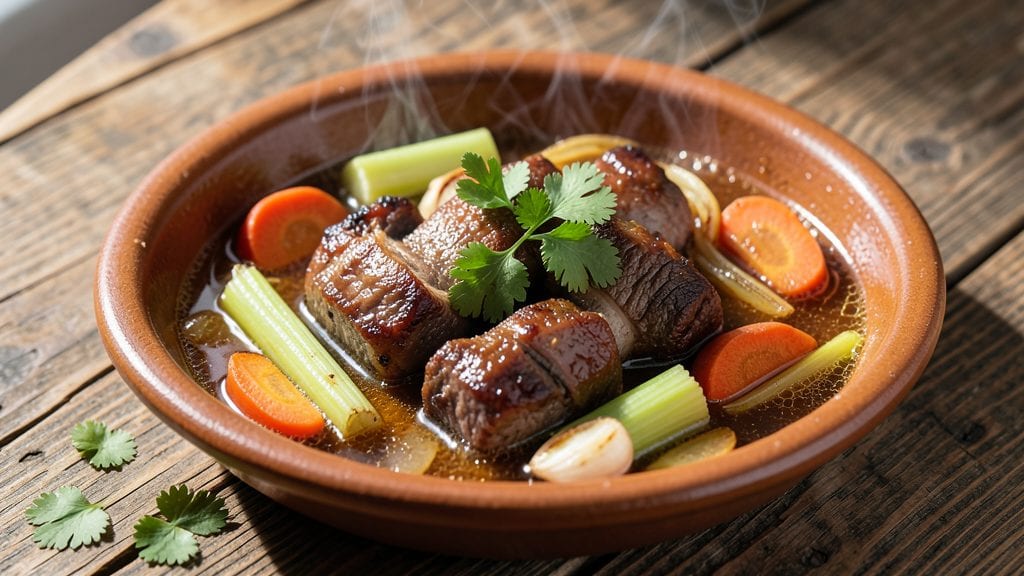
Transforming tough beef feet into a collagen-rich masterpiece reveals the secret to restaurant-quality broth that practically dissolves into velvety perfection. This traditional technique turns what many consider waste into a dish so luxurious it belongs at any dinner table.
The key lies in slow-cooking, where connective tissues break down into gelatinous richness that elevates every spoonful.
What makes this recipe special is its ability to deliver deep umami flavor with minimal effort after the initial preparation. The beef feet require thorough cleaning and a long simmer—typically 8 to 12 hours—but the result is worth every minute.
The broth becomes thick and glossy, perfect for dipping crispy vegetables or serving alongside steamed greens and rice.
By the end, you'll have a dish that's both nutrient-dense and deeply satisfying—packed with gelatin, protein, and minerals that support joint health. The texture transforms from tough to melt-in-your-mouth as collagen dissolves into the broth, creating a silky consistency that's impossible to resist.
Pair this rich broth with traditional sides like steamed bok choy or buttered noodles to complete the meal. The versatility of this dish makes it ideal for special occasions or when you want to impress with a dish that feels both rustic and refined.
Ingredients for beef feet
Transform tough beef feet into a luxurious collagen-rich broth using these twelve essential ingredients.
| Ingredient | Amount | Notes |
|---|---|---|
| Beef Feet (Cleaned) 🦵 | 4 lb | Tough cuts, thoroughly cleaned |
| Yellow Onions 🧅 | 2 whole | Peeled, halved lengthwise |
| Carrots 🥕 | 4 whole | Scrubbed, cut into chunks |
| Celery Stalks 🥬 | 4 whole | Trimmed, cut into pieces |
| Garlic Cloves 🧄 | 8 cloves | Peeled, smashed slightly |
| Fresh Ginger 🌿 | 2 tbsp | Grated, aromatic quality |
| Bay Leaves 🍃 | 4 whole | Dried, standard size |
| Black Peppercorns 🌶️ | 1 tbsp | Crushed, freshly ground |
| Sea Salt 🧂 | 2 tbsp | Diamond Crystal preferred |
| Apple Cider Vinegar 🍏 | ¼ cup | For initial cleaning |
| Cold Water 💧 | 12 cups | Filtered preferred |
| Extra-Virgin Olive Oil 🫒 | ¼ cup | For initial searing |
The beef feet are the foundation—source from a reputable butcher or specialty meat supplier like Whole Foods Market or D'Artagnan for optimal quality. Look for feet with intact joints and minimal odor; freshness is critical as they should smell faintly of the ocean rather than ammonia. The extra-virgin olive oil should be cold-pressed and have a peppery finish, while the ginger and garlic should be vibrant, not shriveled. Bay leaves from Penzeys Spices add depth without overpowering the umami profile. Prep time is minimal after the cleaning phase, but thoroughness here ensures a crystal-clear broth.
Substitutions are limited due to the specialized nature of beef feet, but the aromatic vegetables can be adjusted: swap carrots for parsnips or celery for fennel stalks. If fresh ginger isn't available, substitute 1 tbsp ground ginger, but the texture will differ slightly. For the vinegar, white wine vinegar works equally well for cleaning. The water quantity can be reduced to 10 cups if you prefer a more concentrated broth, though 12 cups yields optimal consistency. The olive oil can be omitted if you're concerned about fat content, though it adds a subtle richness that enhances the final product's mouthfeel.
Store the cleaned, uncooked beef feet in the coldest part of your refrigerator for up to 3 days before cooking. The finished broth keeps in the refrigerator for 5-7 days in an airtight container, though flavor peaks at 3-4 days. For longer storage, freeze in 1-cup portions for up to 6 months. Reheat gently on the stove to preserve the silky texture—never microwave. The gelatinous quality thickens as it cools, so reheating with a splash of water restores the desired consistency.
Why You'll Love This Recipe
- One-Pot Magic: I swear by this—just toss the cleaned beef feet, chopped veggies, and garlic into a pot, cover with water, and let the slow cooker do the work. No chopping boards, no extra pans, just hands-off perfection.
- Umami Bomb: That deep, savory richness from the beef feet? It’s next-level. The onions and carrots caramelize just enough to balance the garlic’s punch, and the celery adds this bright, fresh contrast—like a hug for your taste buds.
- Meal Prep MVP: I make a big batch on Sundays and reheat portions all week. The flavors actually get better as it sits, and the texture? So satisfying you’ll forget it’s "just" beef feet. (Yes, even on a Tuesday night.)
- Budget Win: Honestly, this recipe stretches my grocery budget like nothing else. A few pounds of beef feet feed my whole family for days, and the veggies are cheap staples. Plus, the leftovers? They’re the reason I don’t stress about dinner plans.
Step-by-step instructions for collagen-rich beef feet broth
Transform tough cuts into velvety richness through precise technique and patience.
Prepare and Sear the Beef Feet
Begin by rinsing the 4 lb beef feet under cold water to remove any residual blood or debris. Place them in a large stockpot and cover with the 12 cups cold water. Add the 0.25 cup apple cider vinegar and bring to a rolling boil over high heat. This acidic step helps dissolve impurities and extract collagen.
Once boiling, reduce heat to medium and skim off any foam that rises to the surface with a fine-mesh skimmer. This ensures clarity in your final broth. After 10 minutes of simmering, drain the water completely and rinse the feet again under cold water to remove any remaining impurities. This thorough cleaning is critical for a clean, flavorful broth.
Heat a large Dutch oven over medium-high heat and add the 0.25 cup extra-virgin olive oil. Once shimmering, carefully add the beef feet in a single layer. Sear for 8-10 minutes on each side until deeply golden brown. This caramelization develops rich, nutty flavors that will infuse your broth. Work in batches if needed to avoid crowding the pan.
Build the Aromatic Base
Return the seared beef feet to the Dutch oven and add the peeled, halved yellow onions, scrubbed carrots cut into chunks, trimmed celery stalks cut into pieces, and smashed garlic cloves. Pour in 8 cups fresh cold water to cover everything by about 1 inch. This initial water volume creates a proper cooking environment for the collagen extraction process.
Bring to a simmer over medium heat, then reduce to a gentle bubble. Add the grated fresh ginger, whole bay leaves, crushed black peppercorns, and 1 tablespoon sea salt. The ginger and peppercorns will add warmth and depth, while the bay leaves contribute earthy complexity. Let this mixture simmer uncovered for 2 hours, maintaining a steady simmer rather than a rolling boil to prevent cloudiness.
After 2 hours, carefully remove the beef feet using tongs and set them aside. Strain the broth through a fine-mesh sieve into a clean stockpot, pressing gently on the vegetables to extract maximum flavor. Discard the solids. This strained liquid forms the foundation of your collagen-rich broth, now infused with all the aromatic compounds from the vegetables and spices.
Complete the Collagen Extraction
Return the beef feet to the stockpot with the strained broth. Add the remaining 4 cups cold water to bring the total volume to approximately 12 cups. This additional liquid helps maintain proper collagen extraction conditions. Bring to a simmer again over medium-low heat, then reduce to a gentle bubble.
Cover the pot and maintain this low simmer for 8-10 hours. The key here is patience—the prolonged cooking time breaks down connective tissues into gelatinous collagen that gives the broth its signature richness. Check the liquid level periodically and add hot water as needed to maintain coverage. The beef feet should become fork-tender and easily pull apart when tested.
After the full cooking time, remove the beef feet and strain the broth through a fine-mesh sieve into a clean container. Discard the solids. The resulting broth should be deep amber in color with a velvety texture. If you desire an even more concentrated broth, you can reduce it by half over low heat, stirring occasionally to prevent skin formation. This final reduction intensifies the flavor and creates a more substantial base for soups or braises.
Finish and Store Properly
Taste the broth and adjust seasoning with the remaining 1 tablespoon sea salt if needed. The broth should have a well-balanced flavor profile with notes of caramelized beef, sweet vegetables, and aromatic spices. Let it cool to room temperature before transferring to airtight containers for storage.
For best results, refrigerate the broth for up to 5 days or freeze for up to 6 months. When ready to use, thaw overnight in the refrigerator. This collagen-rich broth can be used as a base for soups, stews, or braising liquids, or enjoyed on its own as a comforting, nutrient-dense beverage. The gelatinous quality will give your dishes an unparalleled richness and mouthfeel that's impossible to achieve with other cooking methods.
Pro Tips For Making Beef Feet
- BLANCH FEET FIRST: Skip the slow start—drop cleaned beef feet in boiling water for 10 minutes to remove impurities and speed up tenderizing. I used to skip this, and my broth always tasted off until I learned this trick. Use a big pot and don’t crowd them.
- CHOP VEGETABLES UNIFORM: Dice onions, carrots, and celery into ½-inch pieces so they cook evenly with the feet. Big chunks stay tough; tiny bits burn. My grandmother called it "the lazy chef’s shortcut" because it actually saves time.
- LOW AND SLOW WINS: After initial boiling, reduce heat to a bare simmer—180°F (82°C)—and let feet cook for 3-4 hours. Rushing it makes them rubbery, and I’ve ruined more batches than I’ll admit by ignoring this.
- SALT THE BROTH LATE: Wait until the last 30 minutes to add salt—otherwise, it toughens the collagen. Use 1 tsp per quart of water, and taste as you go. Sounds weird, but it makes all the difference in texture.
Flavor customization for this beef feet
Spicy Asian-Inspired
Transform your broth into a bold Thai-inspired version by adding 1 tbsp red curry paste (like Maesri) and 1 tbsp fish sauce during the final 30 minutes of simmering.
Boost heat with 1 tsp chili crisp or ½ tsp Sichuan peppercorns for a tingling finish. Serve with steamed jasmine rice and quick-pickled cucumbers for a restaurant-worthy dish. 🌶️
Herb-Infused European
For a French-inspired twist, swap the bay leaves for 2 sprigs fresh thyme and 1 sprig rosemary during the 2-hour aromatic phase. Add 1 tbsp white wine (like Sauvignon Blanc) when searing the beef feet.
Finish with a splash of 1 tsp cognac for depth. This version pairs beautifully with crusty baguette and buttered escargot-style snails.
Smoky BBQ Style
Create a Southern-inspired version by adding 1 tbsp smoked paprika and ½ cup BBQ sauce (like Starkist) during the final 1 hour of cooking. Char the beef feet in a hot cast-iron skillet before simmering for extra smokiness.
Serve with cornbread and pickled red onions for a hearty meal. The smoky depth makes this perfect for game-day gatherings.
Citrus Brightened
Add zesty brightness by including 1 orange peel (no pith) and 1 tbsp orange juice during the 8-hour collagen phase. The citrus cuts through the richness while adding a refreshing note.
Garnish with thin orange slices and serve with cucumber salad for a light yet flavorful contrast. This version works wonderfully as a summer broth.
Mushroom Umami Boost
Deepens the umami profile by adding 8 oz shiitake mushrooms (sliced) and 1 tbsp soy sauce during the 2-hour aromatic phase. The mushrooms dissolve into the broth, creating a velvety texture with earthy notes. This version pairs beautifully with wild rice and seared scallops for an elevated dish. 💫
Sweet and Tangy Glaze
Finish with a sweet-tangy glaze by reducing ½ cup apple cider vinegar and ¼ cup honey together until syrupy, then whisking it into the finished broth. This balances the savory richness with bright acidity.
Drizzle over steamed bok choy or use as a dipping sauce for spring rolls. The contrast of sweet and salty makes this a crowd-pleaser.
Nutrition facts
Frequently asked questions about beef feet broth
Why do beef feet need such a long cooking time?
The extended simmering—typically 8 to 12 hours—is essential to break down collagen-rich connective tissues into gelatin, creating that signature velvety texture. This slow transformation turns tough cuts into melt-in-your-mouth richness that regular meats can't match. Patience here is key for maximum flavor extraction!
Can I use frozen beef feet instead of fresh?
Yes! Thaw frozen beef feet overnight in the refrigerator before starting. Just ensure they're fully thawed and rinse them well to remove any ice crystals or packaging residue. Frozen feet work perfectly, but fresh will yield slightly clearer broth due to fewer impurities.
What's the best way to use leftover cooked beef feet?
Shred the tender beef feet and use them in stir-fries, tacos, or fried rice for extra protein and umami. You can also chop them finely and mix into meatloaf or stuffing. The gelatinous texture makes them excellent for adding richness to soups or stews too!
How do I know when the broth is ready?
The broth is done when it reaches a deep amber color and the beef feet pull apart easily with a fork. The liquid should also thicken slightly when chilled—this gelatinous quality confirms proper collagen extraction. Taste it too: the umami should be rich and balanced, not overly salty or bitter.
Can I make this broth in an Instant Pot?
Yes! Use the High Pressure setting for 90 minutes after searing, then strain. The Instant Pot will speed up collagen extraction, but you'll need to add 1 extra hour of simmering afterward to achieve the same velvety texture. Monitor water levels carefully to prevent burning.