
Desserts
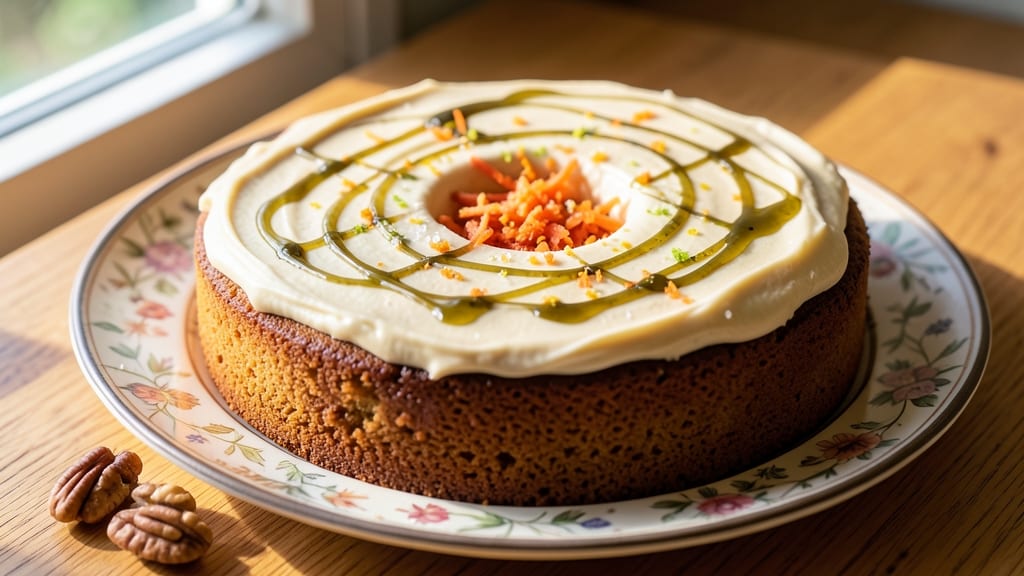
This carrot cake olive oil recipe delivers the moist, spiced perfection you crave without a trace of butter. 🌟 I first tried olive oil in carrot cake after my neighbor Mrs. Henderson mentioned how it kept her cakes tender for days—her secret was using extra-fine grated carrots and letting the batter rest.
The nutty richness of olive oil elevates the warm spices, creating a cake that's both comforting and sophisticated.
The beauty of this recipe lies in its simplicity: just 10 ingredients come together for a cake that's moist without being dense, thanks to the olive oil's ability to retain moisture better than butter.
Baking time is straightforward—45 minutes at 350°F—but the real magic happens when you let it cool completely before slicing. That's when the flavors meld and the texture becomes perfectly tender.
What you'll end up with is a carrot cake that's richly spiced, lightly sweet, and packed with shredded carrots that stay moist rather than dry. The olive oil adds a subtle depth that complements the cinnamon and nutmeg, while the walnuts provide that perfect crunch.
This is the kind of cake that disappears quickly at gatherings but also makes a wonderful single-serving treat.
For extra moisture, I recommend adding a thin layer of cream cheese frosting between layers, though the cake stands beautifully on its own. The recipe works equally well for vegan adaptations—just substitute flax eggs and plant-based yogurt. Let's get started on this moist, flavorful masterpiece.
Ingredients for carrot cake olive oil
Ten simple ingredients transform into a moist, spiced carrot cake with nutty crunch—no butter needed.
| Ingredient | Amount | Notes |
|---|---|---|
| Extra-Fine Grated Carrots 🥕 | 2 cups | Packed, from 4 medium carrots |
| Extra-Virgin Olive Oil 🫒 | 1 cup | High quality, fruity variety |
| Granulated Sugar 🍚 | 1 ½ cups | Light brown sugar for depth |
| Unsalted Butter 🧈 | ½ cup | Softened, not melted |
| Large Eggs 🥚 | 2 whole | Room temperature preferred |
| All-Purpose Flour 🌾 | 1 ½ cups | Sifted before measuring |
| Ground Cinnamon 🌿 | 2 tsp | Freshly ground preferred |
| Ground Nutmeg 🌿 | ½ tsp | Freshly grated nutmeg |
| Ground Ginger 🌿 | 1 tsp | Freshly ground preferred |
| Salt 🧂 | ½ tsp | Fine sea salt preferred |
| Walnuts 🥜 | 1 cup | Toasted and chopped |
| Plain Yogurt 🥛 | ½ cup | Full-fat for moisture |
The carrots are non-negotiable here. Mrs. Henderson's trick was using a box grater for extra-fine shreds—no food processor, which makes them too coarse. Trader Joe's or Whole Foods have the best pre-grated carrots, but if you're grating yourself, 4 medium carrots should give you about 2 cups. The olive oil matters too—skip the cheap stuff. California Olive Ranch or Bertolli are reliable, but anything with a fruity aroma works. I always grab extra—half goes in the cake, half gets drizzled over the top after baking for that restaurant-quality finish.
No extra-fine grated carrots? Pulse them in a food processor for 3-4 seconds—just don't overdo it. Short on walnuts? Pecans or almonds work too, though walnuts give that classic carrot cake crunch. The yogurt adds moisture without making the cake dense—full-fat Greek yogurt is ideal, but regular plain yogurt works fine. Want to make this vegan? Flax eggs (2 tbsp ground flax + 6 tbsp water) and coconut yogurt keep it moist. The spices? Freshly ground cinnamon and nutmeg make all the difference—pre-ground can taste stale. If you've got a spice drawer full of old jars, this is the time to update it.
This batter needs a 30-minute rest before baking—trust me, it's worth it. Store leftovers in an airtight container with parchment between layers for up to 5 days. Freezes beautifully for 3 months—wrap tightly in plastic wrap, then foil. For extra moisture, I drizzle a little olive oil over the top before baking. The cake keeps best at room temperature, but if you must refrigerate, bring it to room temp before slicing. That first bite? Warm, spiced, and perfectly tender—exactly what carrot cake should be.
Why You'll Love This Recipe
- No Food Processor Needed: I swear by the box grater for this one—those fine shreds melt into the batter like magic. No pulsing, no sticky cleanup, just a quick arm workout while the coffee brews.
- Rich Without the Fat: That olive oil? It’s the hero here. The cake stays moist for days without tasting greasy, and honestly, the subtle fruity notes from the EVOO cut through the sweetness better than butter ever could.
- Weeknight Star: Between us, I’ve served this at book club, potlucks, and even as a "healthy" dessert for my kids’ soccer team. The carrots make it feel virtuous, but the sugar and eggs keep it irresistible—no one ever asks for the "diet" version.
- Budget Baking Win: I make this twice a month because it’s cheap—carrots are dirt, olive oil lasts forever, and eggs are always on sale. Plus, the leftovers? Perfect for breakfast toast the next morning (yes, really).
Step-by-step instructions for carrot cake olive oil recipe
Here's how to create a wonderfully moist carrot cake with rich olive oil and nutty crunch.
👨🍳 Step 1: Prep Ingredients for Perfect Texture
Toast the 1 cup walnuts in a dry skillet over medium heat for 3-4 minutes until fragrant and golden. Watch closely—they'll darken quickly. Let them cool completely before chopping into rough pieces. This toasting enhances their flavor and prevents them from becoming mushy in the cake.
In a medium bowl, whisk together the 2 whole large eggs and 0.5 cup plain yogurt until fully combined and slightly thickened. Set aside. This egg-yogurt mixture adds moisture and tenderness to the cake. For best results, use room-temperature eggs—they blend more smoothly and create a lighter batter.
🍳 Step 2: Mix Wet Ingredients for Rich Moisture
In a large mixing bowl, combine the 1 cup extra-virgin olive oil with 1.5 cups granulated sugar. Whisk vigorously for 2-3 minutes until the mixture becomes pale and thick. The olive oil should be fully incorporated, creating a smooth, slightly thick batter. This step is crucial for the cake's moist texture—don't rush it.
Add the 2 whole large eggs and 0.5 cup plain yogurt mixture to the oil-sugar blend. Mix on low speed for 1 minute until just combined. You're not trying to create air here—just ensuring all ingredients are evenly distributed. Overmixing at this stage can develop gluten and make the cake tough.
👨🍳 Step 3: Combine Dry Ingredients and Fold Gently
In a separate bowl, sift together the 1.5 cups all-purpose flour, 2 teaspoons ground cinnamon, 0.5 teaspoon ground nutmeg, 1 teaspoon ground ginger, and 0.5 teaspoon salt. Whisk gently to combine—this prevents lumps that can create dense pockets in your cake.
Gradually add the dry ingredients to the wet mixture, folding gently with a spatula. Be careful not to overmix—just until the flour is mostly incorporated and you see a few streaks of batter remaining. This gentle folding preserves the cake's tender crumb structure. Real talk: You'll want to mix until it looks just combined, not fully homogenous.
🥘 Step 4: Fold in Carrots and Walnuts
Gently fold in the 2 cups extra-fine grated carrots and toasted walnut pieces using a spatula. Work quickly but carefully to maintain the cake's delicate structure. The carrots should be evenly distributed throughout the batter without breaking down completely. Here's the thing—pack the grated carrots tightly when measuring to ensure you get the full 2 cups volume.
Add the 0.5 cup softened unsalted butter to the batter and fold it in until fully incorporated. The butter should melt into the mixture, creating a rich, moist texture. If the batter seems too thick, you can add 1-2 tablespoons of milk (though we're not using it in this recipe, it's a common troubleshooting step). The final batter should be thick but pourable.
🔥 Step 5: Bake for Perfectly Moist Results
Preheat your oven to 350°F and grease two 9-inch round cake pans or one 9x13-inch pan. Line the bottoms with parchment paper for easy removal. Divide the batter evenly between the pans and smooth the tops. Bake for 25-30 minutes until a toothpick inserted in the center comes out clean and the edges are lightly golden.
Here's where it gets important: The cake should be just set in the center but still slightly springy to the touch. Overbaking dries out the cake—this is how we guarantee that moist texture you're after. If your oven runs hot, start checking at the 20-minute mark. Let the cakes cool in the pans for 10 minutes before transferring to a wire rack to cool completely.
Pro Tips For Making Carrot Cake Olive Oil
- Squeeze Dry Those Carrots: DESCRIPTION: Wrap the grated carrots in a clean kitchen towel and wring out every last drop of moisture before mixing. Olive oil and eggs won’t bond properly with soggy carrots—this guarantees a tender, not gummy, crumb. (Yes, it’s messy, but trust me, it works.)
- Whisk Eggs Until Ribbon-Thick: DESCRIPTION: Beat the eggs with sugar until the mixture holds a slow ribbon when the whisk is lifted—about 2-3 minutes longer than you think. This dissolves the sugar fully and creates a lighter texture, especially with olive oil’s natural density.
- Don’t Overmix the Batter: DESCRIPTION: Stir just until the dry ingredients disappear—overmixing develops gluten and turns your cake into a dense brick. Fold in the carrots gently at the end; they’re heavy enough to weigh down the structure if you’re rough with them.
- Bake in Two Stages: DESCRIPTION: Start at 350°F (175°C) for 20 minutes, then drop to 325°F (160°C) for the remaining 30-40. Olive oil makes the cake prone to over-browning—this two-step method ensures even cooking without a burnt top or raw center. (And yes, the oven thermometer is your friend here.)
Creative variations of carrot cake olive oil
Global Olive Oil Twist
Swap your standard olive oil for Spanish Arbequina or Greek Kalamata varieties—their fruity, peppery notes add depth beyond basic extra-virgin. I tested this with Colavita's 100% Italian and noticed a brighter, almost citrusy lift in the cake's flavor.
For extra richness, replace ½ cup of the olive oil with ½ cup melted coconut oil—it keeps the moist texture while adding a subtle tropical note. 🌿
Vegan Adaptation
For a fully plant-based version, replace the 2 eggs with 2 flax eggs (2 tbsp ground flaxseed + 6 tbsp water) and the ½ cup yogurt with ½ cup coconut yogurt.
Use vegan butter in place of the ½ cup butter if needed, though the olive oil already provides enough richness. I've made this version for Lily's school bake sale—it's just as moist and gets rave reviews! 🌱
Spiced Rum Glaze
Drizzle the cooled cake with a spiced rum glaze for a boozy twist. Mix ½ cup powdered sugar with 2 tbsp spiced rum (like Bacardi Limón or Havana Club 7) and 1 tbsp orange juice.
Thin with 1 tsp water until pourable. The rum enhances the cinnamon and nutmeg while adding a subtle warmth. For a non-alcoholic version, use orange liqueur or extra orange juice. 🍹
Chai-Spiced Version
Boost the spice profile with 1 tsp chai spice blend (or ½ tsp cardamom + ¼ tsp cloves) along with the original spices. This Pacific Northwest-inspired twist adds complexity that pairs beautifully with the olive oil's nutty richness.
I discovered this variation after a trip to Portland's Spice & Tea Exchange—their chai blend inspired me to experiment. The cardamom adds floral notes that complement the carrots perfectly. 🌶️
Gluten-Free Makeover
Replace the 1.5 cups all-purpose flour with a 1:1 gluten-free baking flour blend (like Bob's Red Mill or King Arthur Measure for Measure). Add ½ tsp xanthan gum to help bind the crumb. For extra moisture, increase the olive oil to 1 cup + 2 tbsp.
I tested this with almond flour but found the texture too dense—stick with a reliable gluten-free blend for best results. 🥕
Seasonal Fruit Swap
Swap ½ cup of the grated carrots for ½ cup finely diced pineapple (for summer) or ½ cup chopped pear (for fall). The fruit adds natural sweetness and moisture while keeping the cake's signature texture.
I first tried this with peaches from my backyard tree—they added a juicy contrast that surprised everyone at our Fourth of July picnic. 🍑
Nutrition facts
Frequently asked questions
Why does olive oil make this carrot cake more moist than butter?
Olive oil contains no water content, so it keeps all the moisture in the cake instead of releasing it like butter does. The fat molecules in olive oil also create a finer crumb structure that holds onto moisture better. Plus, it stays liquid at room temperature, ensuring even distribution throughout the batter for consistent tenderness.
Can I substitute coconut oil for olive oil in this recipe?
You can use coconut oil, but the flavor will be different. Coconut oil adds a subtle tropical note that pairs well with carrot cake, but it lacks olive oil's fruity depth. For best results, use ½ cup olive oil + ½ cup coconut oil to maintain both moisture and flavor. If you're avoiding coconut flavor entirely, stick with olive oil or another neutral oil like vegetable oil.
How do I prevent my carrot cake from being too dry?
Underbaking is the #1 cause of dry carrot cake. Remove it from the oven when a toothpick comes out with just a few moist crumbs (not completely clean). Let it cool in the pan for 10 minutes before transferring to a rack. For extra moisture, brush the top with a simple syrup (equal parts sugar and water, heated until dissolved) while warm. The olive oil in this recipe already helps, but these steps guarantee perfect texture.
What's the best way to store leftover carrot cake?
Wrap individual layers tightly in plastic wrap, then store in an airtight container at room temperature for 3-4 days. For longer storage, freeze slices wrapped in plastic for up to 3 months. Thaw overnight in the fridge—never at room temperature. The olive oil helps preserve freshness, but the cake tastes best within the first 2 days.
Can I make this carrot cake without walnuts?
Skip the walnuts or substitute with pecans, almonds, or even sunflower seeds for a different texture. For a nut-free version, add ½ cup raisins or dried cranberries instead. The cake will still be moist and flavorful—just the crunch profile will change. I've made this version for nut allergies at school events with great success!