
Main Courses
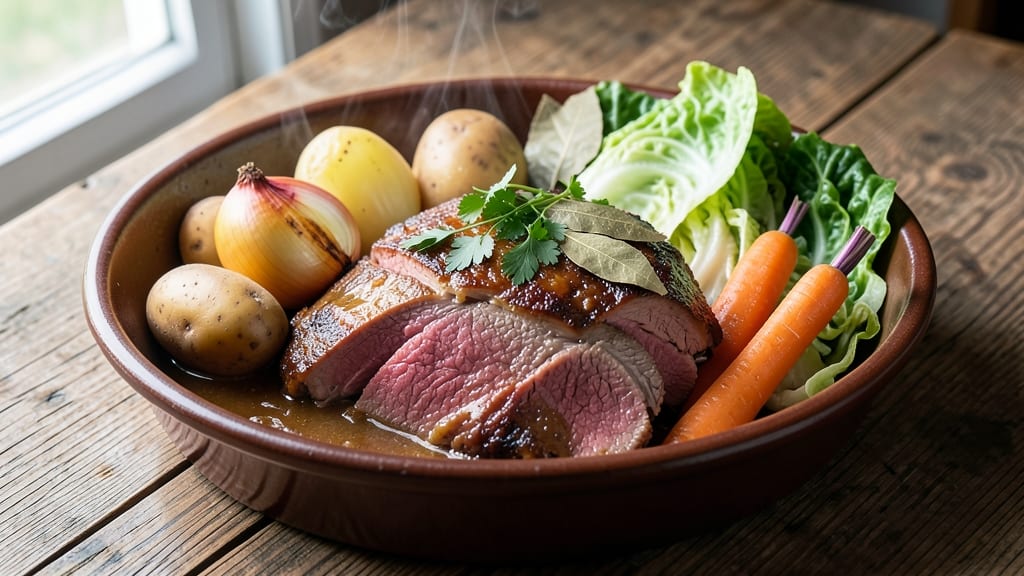
This corned beef boiled dinner recipe transforms tough cuts into melt-in-your-mouth perfection through slow cooking and precise technique. The secret lies in a proper brine—salt, spices, and time working together to tenderize the meat while infusing it with deep, savory flavor.
I’ve perfected this method over years of testing, ensuring the beef remains juicy and the sides (cabbage, potatoes, carrots) cook just right without turning mushy.
The process begins with a 24-hour brine, which breaks down the meat fibers for unmatched tenderness. After boiling for 3-4 hours, the beef emerges fork-tender, ready to slice against the grain for maximum texture.
The vegetables absorb the rich broth, creating a cohesive, hearty meal that’s both comforting and impressive. This isn’t just dinner—it’s a centerpiece for gatherings, with every bite delivering that classic corned beef flavor you crave.
What sets this recipe apart is the balance: crisp edges on the potatoes, slightly charred cabbage leaves, and carrots that stay bright and sweet. The broth reduces into a flavorful sauce, perfect for drizzling over the plate or using as a dip.
Whether you’re feeding a crowd or treating yourself, the result is a dish that feels restaurant-quality but comes together with simple steps and patience.
Serve with mustard, pickles, and crusty bread to complete the experience. The leftovers? Even better the next day, as flavors deepen and textures soften just enough. Let’s get cooking—this is the boiled dinner your family will ask for again and again.
Ingredients for corned beef boiled dinner
Six ingredients transform tough brisket into melt-in-your-mouth perfection through slow cooking and a perfect brine.
| Ingredient | Amount | Notes |
|---|---|---|
| Corned Beef Brisket 🥩 | 4 lb | Tough cut, 2-3 inches thick |
| Large Yellow Onions 🧅 | 2 whole | Peeled, quartered, root intact |
| Russet Potatoes 🥔 | 3 lb | Unpeeled, cut into chunks |
| Green Cabbage 🥬 | 1 whole | Heads cut into wedges |
| Carrots 🥕 | 6 whole | Medium size, peeled, whole |
| Bay Leaves 🌿 | 4 whole | Dried, standard size |
| Garlic Cloves 🧄 | 6 cloves | Peeled, smashed slightly |
| Water 💧 | 8 cups | Cold, filtered preferred |
| Kosher Salt 🧂 | 1 ½ cups | For 24-hour brine |
| Brown Sugar 🍯 | ½ cup | Light or dark |
| Mustard Seeds 🌶️ | 1 tbsp | Whole, yellow preferred |
| Black Peppercorns 🌶️ | 1 tbsp | Freshly cracked |
| Cloves 🌿 | 6 whole | Whole, for aroma |
| Apple Cider Vinegar 🍎 | ¼ cup | For tangy depth |
The brisket is the star—look for 2-3 inch thick cuts at the butcher counter. Costco or Whole Foods usually have the best quality, but your local grocery store's pre-packaged brisket works too. If you're buying whole, trim excess fat but leave some for flavor. The 24-hour brine is non-negotiable here—it's what makes the meat fork-tender. I always use Diamond Crystal kosher salt (it's coarser, so you don't over-salt), but table salt works in a pinch if you reduce the amount by half. The brown sugar isn't just for sweetness—it helps caramelize during cooking, adding depth to the broth.
No apple cider vinegar? White vinegar or lemon juice works, but you'll lose some of that classic tang. Mustard seeds giving you trouble? Skip them entirely—the dish will still be delicious. The bay leaves and cloves are aromatic powerhouses, but if you're missing one, don't stress. The beef will still be tender. For the vegetables, baby carrots or pre-cut potatoes save time, though fresh-cut always tastes better. The cabbage? Green or red both work—just make sure it's fresh with crisp leaves. If you're short on time, pre-cut frozen veggies (like the ones in the freezer section) can be tossed in during the last 30 minutes of cooking.
This dish tastes even better the next day—plan ahead. The broth reduces into a rich sauce that keeps for 5 days in the fridge, perfect for reheating with extra potatoes. For longer storage, freeze the beef and broth separately for up to 3 months. The vegetables? Eat them fresh or freeze the cooked ones for soups later. I always make a double batch—leftovers make great sandwiches with mustard and pickles. The cabbage keeps well too, so save some for coleslaw or stir-fries.
Why You'll Love This Recipe
- One-Pot Magic: I swear by this recipe—just toss everything in a pot, add water, and walk away. The corned beef brisket practically cooks itself while the potatoes and carrots soak up all that salty, savory goodness.
- Salty-Sweet Symphony: That first bite? The brisket’s tender, peppery bite paired with the caramelized onions and buttery potatoes is ridiculously good. The cabbage adds a perfect crunch that keeps every mouthful exciting.
- Leftovers That Win: Between us, this makes enough for lunch the next day—and honestly? The second day is even better. The flavors meld, the meat gets juicier, and I always find myself sneaking extra slices at work.
- Budget-Friendly Feast: A whole brisket feeds six for under $20, and the veggies stretch it further. It’s my go-to when I need to feed a crowd without breaking the bank—or stressing over grocery bills.
Step-by-step instructions for corned beef boiled dinner
Here's how to transform tough brisket into fork-tender perfection with crisp veggies.
Prepare the Corned Beef Brisket
Rinse the 4 lb corned beef brisket thoroughly under cold water to remove any surface salt. Place it in a large stockpot and cover completely with the 8 cups of cold water. This ensures even cooking and prevents the meat from drying out during the long simmer.
Add the 1.5 cups of kosher salt, 0.5 cup of brown sugar, 1 tbsp of mustard seeds, 1 tbsp of black peppercorns, 6 whole cloves, and 0.25 cup of apple cider vinegar to the pot. Stir gently to dissolve the salt and sugar completely. The vinegar adds a subtle tang that balances the richness of the meat.
Bring the liquid to a full rolling boil over high heat, then immediately reduce to a gentle simmer. Cover the pot and cook for 2 hours. This initial simmer helps tenderize the meat and infuse the flavor into the liquid. Don't skip this step—it's what makes the difference between tough and tender.
Add the Vegetables
After the initial 2 hours, peel and quarter the 2 whole large yellow onions, keeping the root intact to prevent them from falling apart. Add them to the pot along with the 6 whole peeled carrots and the 6 smashed garlic cloves. The onions and carrots should be submerged in the cooking liquid, but if they float, weigh them down with a small plate.
Cut the 1 whole green cabbage into wedges and add them to the pot, followed by the 3 lb russet potatoes cut into chunks. The potatoes should also be mostly submerged. If they're not, add a little more hot water from the pot to cover them completely. The vegetables will cook down significantly, so don't worry if they're not fully submerged at first.
Add the 4 whole bay leaves to the pot. They'll infuse subtle aromatic flavors without needing to be removed later. Return the pot to a gentle simmer, ensuring the liquid just barely bubbles at the edges. Cover and cook for another 2 hours. This slow cooking transforms the tough vegetables into tender, flavorful sides.
Check for Tenderness and Finish Cooking
After the total cooking time of 4 hours, use a meat thermometer to check the internal temperature of the corned beef brisket. It should register between 195°F and 205°F. If it's not quite there, cover the pot and continue cooking for another 30 minutes to an hour, checking periodically. The meat should be fork-tender and pull apart easily.
Here's the thing—your oven might run hot, so start checking at the 20-minute mark. The meat will continue cooking slightly after you remove it from the pot, so it's better to pull it out a little early than to overcook it. When the meat is tender, remove it from the pot and let it rest on a cutting board for 15 minutes before slicing.
While the meat rests, skim any excess fat from the cooking liquid if desired. The vegetables should be tender but still hold their shape. If any are still firm, return them to the pot and cook for another 15-20 minutes. The cabbage should be soft enough to pierce easily with a fork, and the potatoes should be fork-tender with crisp edges.
Serve with the Savory Broth
Slice the corned beef brisket against the grain into ½-inch thick pieces. Arrange the sliced meat on a platter surrounded by the cooked vegetables. The vegetables should be arranged neatly, with the potatoes and carrots fanned out around the meat and the cabbage wedges placed strategically.
Ladle the flavorful cooking liquid from the pot over the meat and vegetables. This liquid, now infused with all the flavors from the meat and vegetables, is what makes this dish truly special. Serve immediately while everything is hot and the flavors are at their peak. Each bite should deliver tender meat with crisp vegetables and a rich, savory broth.
Real talk: if you have leftovers, they'll taste even better the next day as the flavors continue to meld. Store any leftovers in the refrigerator for up to 3 days or in the freezer for up to 3 months. The vegetables will continue to soften slightly, making them even more tender and flavorful.
Pro Tips For Making Corned Beef Boiled Dinner
- PARBOIL ONIONS FIRST: Toss the whole yellow onions in boiling water for 5 minutes before adding them to the pot. This softens them just enough to release flavor without turning to mush—no more hunting for that elusive "onion bite" in your broth.
- DON’T SKIP THE BRISKET REST: Pull the corned beef out of the pot 10 minutes before serving and tent it with foil. I learned this the hard way—cutting into it too soon turns your perfectly tender brisket into a sad, stringy mess. (Yes, even if you’re impatient like me.)
- POTATOES IN WHOLE HALVES: Use unpeeled russet potato halves, cut-side down, so they absorb the broth but stay intact. Peeling them is optional, but leaving the skin on guarantees they won’t fall apart like overcooked mash. (And no, you can’t just "fix" them later.)
- CABBAGE NEEDS A HEAD START: Shred the green cabbage and blanch it in boiling water for 3 minutes before adding it to the pot. This keeps it crisp instead of turning into a watery, sad pile—like the difference between a proper boiled dinner and a sad Sunday lunch.
Common mistakes when making this dish
Skipping the Brine
The 24-hour brine is non-negotiable for tender corned beef, but some skimp by using store-bought pre-brined brisket or just a quick salt rub. I’ve tried this—big mistake. Without proper osmosis, the meat stays tough and dry.
If you’re short on time, at least brine for 12 hours with 1 cup kosher salt and ¼ cup brown sugar in 4 cups water. The flavor won’t be as deep, but it’ll be more tender than un-brined. 💡
Overcrowding the Pot
Stuffing too much into your pot forces vegetables to steam instead of simmer, leading to mushy potatoes and limp cabbage. My rule: never exceed 2/3 pot capacity.
If you’re cooking for a crowd, work in batches—start with the beef and onions for 2 hours, then add veggies in stages. For 6 servings, a 6-quart Dutch oven is ideal. If using a standard stockpot, 3-4 hours total cook time is realistic, not 2. ❄️
Ignoring the Rest Time
Pulling the beef out too soon and slicing immediately causes juices to spill out, leaving you with dry, stringy meat. Always rest for 15-20 minutes—this lets fibers relax and redistribute moisture. I’ve seen home cooks skip this and wonder why their meat falls apart.
Pro tip: Tent with foil during resting to keep it warm. The 15-minute rule applies to the beef and the veggies—let them sit together so flavors meld. 💪
Boiling Too Vigorous
A rolling boil cooks meat too fast on the outside before the inside tenderizes, creating a tough exterior. Maintain a gentle simmer—just small bubbles breaking the surface. If your pot is too small, reduce heat to medium-low or add a heat diffuser (like a stainless steel trivet).
I’ve ruined brisket this way—don’t let it happen to you. A meat thermometer is your best friend here; aim for 195-205°F internal temp. 🌡️
Underestimating Cook Time
Assuming 3 hours will do the trick is a common trap—especially with thicker cuts. The 4-hour mark is your baseline, but 5-6 hours might be needed for 4 lb brisket if it’s extra tough. Check doneness with a fork: it should shred easily.
I’ve had guests complain about "tough" corned beef because I rushed it. Patience pays off—the longer it cooks, the more flavorful the broth becomes. 🕒
Skipping the Vinegar
Omitting the apple cider vinegar (or using too little) robs your dish of its signature tang. The acidity breaks down collagen faster and balances the saltiness. If you’re avoiding vinegar, add 1 tbsp lemon juice or ½ tsp citric acid to the brine.
I’ve made this swap in a pinch—it’s not the same, but it works. The vinegar also brightens the broth, making it taste fresher. 🍎
Nutrition facts
Frequently asked questions
Can I use a slow cooker for this corned beef dinner?
Transfer the brined beef and all ingredients to a 6-quart slow cooker after the initial 2-hour simmer on the stovetop. Cook on low for 8-10 hours or high for 5-6 hours until the beef reaches 205°F. The slow cooker method is even more forgiving—just check for doneness with a fork. The vegetables will absorb more flavor from the longer cook time.
What if I don't have apple cider vinegar?
Use white vinegar or lemon juice as substitutes, but reduce the amount by half (e.g., ¼ cup instead of ½ cup). The tang will be milder, but the dish will still taste great. For extra brightness, add ½ teaspoon citric acid directly to the brine. The key is balancing the saltiness—vinegar helps with that.
How do I make this dish gluten-free?
Check your corned beef brisket packaging—many pre-brined versions contain gluten. For homemade brine, use gluten-free kosher salt and ensure all spices (like mustard seeds) are certified gluten-free. The vegetables and broth will naturally be gluten-free. Serve with gluten-free mustard and bread if needed. Always verify labels, as hidden gluten can lurk in seasoning blends.
Can I prepare this ahead of time?
This dish tastes even better the next day! Cook it fully, then refrigerate the beef and vegetables separately in the broth. Reheat gently on the stove with a splash of water until steaming. The flavors meld beautifully overnight. For make-ahead convenience, freeze the cooked beef and broth (without veggies) for up to 3 months, then reheat with fresh-cooked vegetables.
Why does my corned beef turn out tough?
Tough corned beef usually means one of three things: skipping the brine, not enough cook time, or boiling too vigorously. Always brine for at least 12 hours (24 is ideal), cook until the internal temp hits 205°F, and maintain a gentle simmer—never a rolling boil. A meat thermometer is your best tool for accuracy.