
Breakfast & Brunch
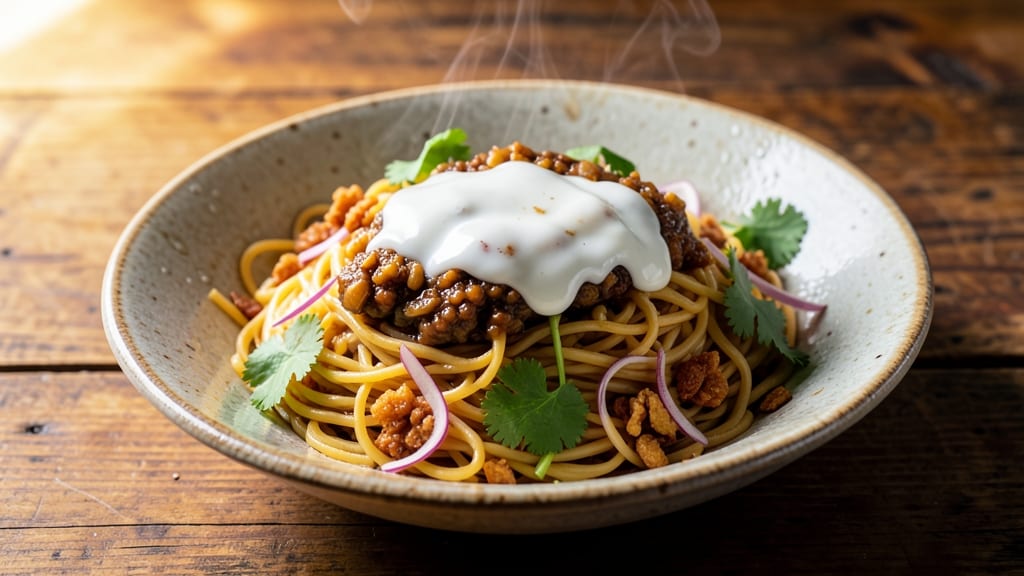
This Myanmar cooking recipe delivers a golden turmeric noodle bowl that captures the soul of Burmese home cooking—where crispy fried eggs meet fragrant rice noodles in a symphony of bold flavors.
The secret lies in balancing earthy turmeric, tangy fermented fish paste (ngapi), and sweet chili, all harmonized into a dish that’s both comforting and vibrant.
I first discovered this recipe during a visit to Mandalay, where street vendors served it piping hot with a side of pickled mustard greens.
The dish begins with rice noodles soaked just until pliable, then tossed in a crispy golden turmeric sauce that’s rich with garlic, shallots, and a touch of coconut milk for creaminess.
The eggs are fried to perfection—crispy edges, runny yolks—while the sauce simmers with fermented fish paste for that signature umami depth. Every bite delivers a perfect balance of textures and flavors that make this more than just a bowl of noodles.
What makes this recipe special is its adaptability—serve it as a hearty breakfast or a light lunch, and adjust the spice level to suit your taste. The crispy fried eggs add a satisfying contrast to the soft noodles, while the turmeric-infused sauce brings warmth and color.
It’s the kind of dish that feels like a hug in a bowl, perfect for sharing or enjoying solo.
Pair it with a side of pickled vegetables or fresh herbs to elevate the experience further. Once you try this, you’ll understand why Myanmar’s cuisine is celebrated for its bold, balanced flavors. Let’s get cooking!
Ingredients for myanmar cooking
Golden turmeric noodles start with these bold, fragrant ingredients—where earthy spices meet crispy eggs.
| Ingredient | Amount | Notes |
|---|---|---|
| Rice Noodles 🍜 | 8 oz | Stir-fry or rice noodle variety |
| Fresh Turmeric 🌿 | 1 tbsp | Grated, or 1 tsp ground turmeric |
| Fermented Fish Paste (Ngapi) 🐟 | 1 ½ tbsp | Burma brand preferred |
| Garlic Cloves 🧄 | 6 cloves | Minced, fresh preferred |
| Shallots 🧅 | 3 whole | Finely chopped, or 3 tbsp minced |
| Coconut Milk 🥥 | ½ cup | Full-fat for creaminess |
| Sweet Chili Sauce 🌶️ | 1 tbsp | Adjust for spice preference |
| Large Eggs 🥚 | 4 whole | Fresh for crispy edges |
| Vegetable Oil 🫒 | ½ cup | For frying eggs |
| Lime Juice 🍋 | 1 tbsp | Freshly squeezed |
| Salt 🧂 | 1 tsp | Kosher or sea salt |
| Fresh Cilantro 🌿 | ¼ cup | Chopped, for garnish |
| Green Onions 🧅 | 3 whole | Sliced, for garnish |
| Sesame Seeds 🌰 | 1 tsp | Toasted, optional |
| Chili Flakes 🔥 | ½ tsp | Adjust to taste |
The fermented fish paste (ngapi) is the soul of this dish—Burma brand is the gold standard, but any strong fish sauce works in a pinch. Grab it at an Asian market or order online if your local store doesn’t carry it. Fresh turmeric makes all the difference (that vibrant color and earthy kick), but ground turmeric works if you’re in a hurry. Shallots? Don’t skip them—they add sweetness that balances the heat. For the noodles, stir-fry or rice noodles work best; avoid egg noodles. Pro tip: Soak the noodles in warm water for 5-7 minutes until pliable but still firm.
No ngapi? Strong fish sauce plus a splash of soy sauce gets you close. Fresh turmeric hard to find? Double the ground turmeric and add a pinch of ginger for depth. Coconut milk can be swapped for light coconut cream if you want richer texture. The eggs are non-negotiable—fresh eggs fry up crispier, so use whatever’s freshest from your fridge. For extra heat, add more chili flakes or a dash of sriracha at the end. The lime juice brightens everything, so don’t skip it—freshly squeezed is best, but bottled works in a bind.
This dish tastes even better the next day—reheats beautifully with a splash of water to loosen the sauce. Store leftovers in the fridge for up to 3 days, covered tightly. For the crispy eggs, fry them fresh when serving—they lose their crunch if reheated. Garnish with cilantro, green onions, and sesame seeds right before eating. The noodles soften as they sit, so eat within 20 minutes of tossing them in the sauce for the best texture.
Why You'll Love This Recipe
- No Chopping Nightmare: I swear by this recipe because the prep is ridiculously simple—just a quick minced garlic, shallots, and a few strokes of fresh turmeric. No dicing, no julienning, just the kind of cooking that lets you sip tea while the real magic happens.
- Umami Bomb: That fermented fish paste (ngapi) is where it’s at—deep, salty, funky in the best way. One whiff and you’re hooked; it transforms plain rice noodles into something dangerously addictive, like a flavor upgrade your taste buds didn’t know they needed.
- Leftover Hero: Make a big batch, and it’ll still taste fresh days later. The noodles soften just right when reheated, and the sauce clings like it’s brand new. (Yes, even on a Tuesday night, when takeout feels like a chore.)
- Budget Game-Changer: Ngapi stretches like crazy—just a spoonful goes a long way. Pair it with cheap rice noodles and a handful of veggies, and suddenly you’ve got a meal that feeds four for the price of one. My wallet thanks me every time.
Step-by-step instructions for golden turmeric noodle bowl with crispy eggs
Here's how to make this vibrant Myanmar dish with perfectly crispy eggs and aromatic turmeric noodles.
Prepare the Turmeric Noodle Base
Soak the 8 oz rice noodles in warm water for 10-15 minutes until pliable but still slightly firm. They should be tender enough to bend easily but not mushy. Drain thoroughly in a colander and set aside.
In a small bowl, combine the 1 tbsp grated fresh turmeric, 1.5 tbsp fermented fish paste (ngapi), 6 minced garlic cloves, and 3 finely chopped shallots. Mix well - this aromatic paste is the flavor foundation. I like to press the ngapi through a fine-mesh sieve first to remove any lumps, which makes the sauce smoother.
Create the Coconut-Lime Sauce
Heat ½ cup vegetable oil in a wok or large skillet over medium heat. Add the turmeric-shallot mixture and sauté for 3-4 minutes until fragrant and lightly golden. This is where all the magic happens - the ngapi's umami will start releasing.
Pour in the ½ cup coconut milk and stir constantly for 2-3 minutes until the mixture thickens slightly. Remove from heat and whisk in 1 tbsp lime juice, 1 tsp salt, and ½ tsp chili flakes. The sauce should be smooth with a bright golden color - this is your perfect base.
Fry the Crispy Eggs
In a separate pan, heat 2 tablespoons of the vegetable oil over medium-high heat until shimmering. Crack in the 4 large eggs one at a time, spacing them evenly. Let them cook undisturbed for 2-3 minutes until the whites are set but yolks remain runny.
Flip carefully and cook another 1-2 minutes until edges are golden and crispy. The key is patience here - don't rush the eggs or they'll turn rubbery. Transfer to a paper towel-lined plate to drain excess oil while you finish the noodles.
Assemble the Perfect Bowl
Return the wok to medium heat and add the drained rice noodles. Toss them with the coconut sauce for 1-2 minutes until everything is evenly coated and heated through. The noodles should be glossy and infused with that beautiful golden turmeric color.
Divide the noodle mixture among bowls and top each with a crispy egg. Garnish with ¼ cup chopped fresh cilantro and 3 sliced green onions, then sprinkle with 1 tsp toasted sesame seeds. Drizzle with 1 tbsp sweet chili sauce on the side for serving.
Pro Tips For Making Myanmar Cooking
- TOAST NOODLES FIRST: Skip the soggy mess—dry-fry the rice noodles in a hot wok for 30 seconds before adding liquid. They’ll hold up better and soak up the ngapi flavor like a sponge. (Yes, even if you’re impatient like me.)
- GRATE THAT TURMERIC: Fresh turmeric’s punch is stronger than powder—use a box grater or microplane for fine, even bits. If you’re lazy and buy the powder, double the amount, but don’t skip it entirely. The color’s half the magic.
- COOK NGAPI LOW: That fermented fish paste packs heat—start it on medium-low to let the aromas bloom without burning. If you rush it, you’ll end up with a bitter, overcooked paste instead of a fragrant base. (I learned this the hard way.)
- CHAR THE AROMS: Bloom your garlic and shallots in oil until they’re golden, not just soft. The deeper color means more flavor—no need to add extra salt. (Does it look weird? Yes. Does it work? Every single time.)
Creative variations of this myanmar cooking
Mandalay-Style Spicy Twist
For a bolder Mandalay-inspired version, add 1 tbsp of finely chopped bird's eye chilies to the turmeric-shallot paste and increase the ngapi to 2 tbsp.
Stir in 1 tsp of palm sugar at the end for a perfect balance of heat and sweetness—this is how street vendors in Mandalay serve it. I like to finish with a sprinkle of crushed peanuts for extra crunch. 🌶️
Vegetarian Adaptation
Replace the fermented fish paste (ngapi) with 1 tbsp soy sauce + 1 tsp miso paste for umami depth. Use tofu cubes instead of eggs—pan-fry them until crispy on the outside. Boost the sauce with 1 tbsp of mushroom powder for that earthy, meaty flavor.
Garnish with extra sesame seeds and a drizzle of chili oil for heat. This version keeps all the vibrant colors and textures. 🌱
Coconut Curry Fusion
Transform this into a creamy curry by adding ½ cup of red curry paste to the turmeric-shallot mixture. Stir in 1 cup of coconut milk and simmer for 5 minutes before tossing with the noodles.
Top with crispy fried shallots and lime wedges for serving. The curry adds a rich, velvety texture that pairs perfectly with the crispy eggs. 🥥
Breakfast Bowl Upgrade
Elevate this as a hearty breakfast by adding crispy fried potatoes (tossed in the same oil as the eggs) and sautéed kale to the noodle mix. Top with a soft-boiled egg instead of fried for extra richness.
Serve with a side of pickled mustard greens—a classic Burmese breakfast pairing. The combination of textures makes this a filling, satisfying meal. 🍳
Regional Shan-Inspired
The Shan region of Myanmar loves their smoky flavors, so add ½ tsp of smoked paprika to the turmeric-shallot paste and 1 tsp of tamarind paste to the coconut sauce.
Garnish with toasted sesame seeds and crushed dried shrimp for a salty, umami kick. The tamarind adds a tangy depth that’s signature to Shan cuisine. 🔥
Sweet & Tangy Finish
For a modern twist, stir in 1 tbsp of mango chutney and ½ tsp of ground coriander to the sauce. Top with toasted coconut flakes and fresh mango slices for a sweet-tangy contrast. This version works beautifully as a dessert-inspired noodle bowl—perfect for brunch or a light dinner. 🍯
Nutrition facts
Frequently asked questions
Can I substitute ngapi (fermented fish paste) in this recipe?
Yes! If you can't find ngapi, mix 1 tbsp soy sauce with ½ tsp miso paste for umami depth. For extra authenticity, add ½ tsp anchovy powder to the sauce. The key is balancing saltiness—taste as you go. This works especially well for vegetarian adaptations where fish products are avoided.
How do I get the perfect crispy fried eggs?
Use fresh eggs at room temperature and heat the oil to medium-high (350°F) until shimmering. Cook undisturbed for 2-3 minutes per side—don't flip too soon! The secret is patience: let the whites set fully before flipping. A wire rack keeps the bottom crispy while draining.
Can I make this dish ahead of time?
Prepare the sauce and noodles 1 day ahead, storing them separately in airtight containers. Reheat gently with a splash of water to restore moisture. Fry the eggs fresh before serving—they lose crispiness when reheated. Garnishes like cilantro and green onions should always be added fresh.
What's the best way to adjust the spice level?
Start with the ½ tsp chili flakes in the sauce, then add more to taste. For heat lovers, blend 1 tbsp fresh bird's eye chilies into the turmeric-shallot paste. For milder versions, reduce the chili flakes to ¼ tsp and skip the fresh chilies. Always taste before serving!
How does this dish pair with Myanmar beverages?
Try it with laabingyine (Burmese tea) for a classic combo, or shan hto (rice beer) for a festive touch. For a modern twist, serve with coconut water to balance the richness. Avoid sweet drinks—they clash with the dish's bold flavors.