
Main Courses
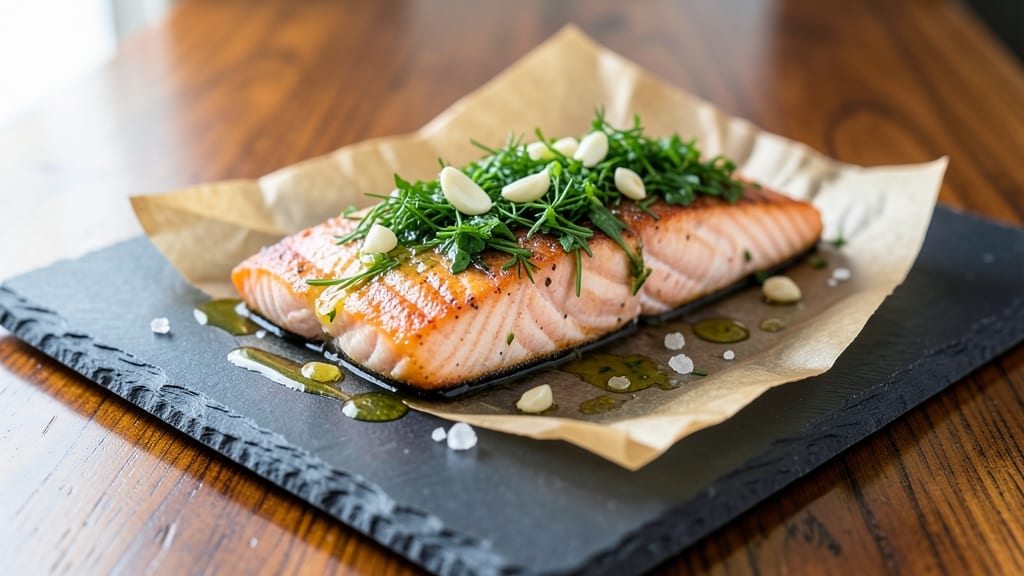
Parchment baked salmon transforms dinner prep into a hands-off masterpiece—juicy, flaky fillets emerge effortlessly while you focus on sides. I perfected this method after years of overcooked fish disasters, and the secret lies in the parchment's magic: it locks in moisture while creating a delicate crisp along the edges. The technique is foolproof, requiring just 20 minutes of active time and minimal cleanup.
What makes this recipe special is the balance of simplicity and professional results. You'll need just five core ingredients—salmon, olive oil, lemon, herbs, and salt—plus parchment paper that acts as both baking surface and serving platter.
The salmon bakes at 400°F for 12-15 minutes, giving you perfectly tender fish every time without flaking apart. The lemon and herbs infuse flavor directly into the fish, eliminating the need for complicated marinades.
By the time your kitchen timer rings, you'll have restaurant-quality salmon with golden edges and moist centers, ready to be plated directly on its parchment. The method preserves all the natural richness of the fish while adding bright, herby notes that complement everything from roasted vegetables to crusty bread.
This is the kind of dinner that feels special without requiring hours in the kitchen.
Pair with a simple green salad or roasted asparagus for a complete meal that comes together faster than takeout. The parchment makes serving effortless—just slide it onto plates and enjoy. Let's get started with this foolproof technique that delivers perfect salmon every time.
Ingredients for parchment baked salmon
Five simple ingredients plus parchment paper—this is restaurant-quality salmon with zero fuss.
| Ingredient | Amount | Notes |
|---|---|---|
| Salmon Fillets 🐟 | 4 whole | Skin-on, center-cut, 6-8 oz each |
| Extra-Virgin Olive Oil 🫒 | 2 tbsp | High quality, fruity variety |
| Fresh Lemon Juice 🍋 | 2 tbsp | Freshly squeezed, no pulp |
| Fresh Dill 🌿 | ¼ cup | Chopped, stems removed |
| Fresh Parsley 🌿 | ¼ cup | Chopped, flat-leaf preferred |
| Diamond Crystal Kosher Salt 🧂 | 1 tsp | Fine grain preferred |
| Freshly Ground Black Pepper 🌶️ | ½ tsp | Freshly cracked preferred |
| Baking Parchment Paper 📄 | 1 sheet | 12x15 inch size recommended |
| Garlic Cloves 🧄 | 2 cloves | Minced, for herb mix |
| Unsalted Butter 🧈 | 1 tbsp | Cold, for finishing |
The salmon is where all the magic happens. Center-cut fillets stay together better than tails—ask your fishmonger for them if they don't come pre-cut. I always grab wild-caught Alaskan from the seafood counter at Whole Foods or Trader Joe's because it's consistently high quality. Look for fillets with a vibrant pink color and minimal bruising. The skin should be intact—it helps the fish hold its shape while baking. If you can't find skin-on, use skinless but don't skip the butter finish later.
No fresh dill? Substitute with extra parsley plus 1/4 tsp dried dill—it won't be identical but works in a pinch. Running low on lemon? Lime juice works too, though the flavor profile shifts slightly. The olive oil matters here—use something you'd drizzle on bread, not the cheap cooking oil. For the herb mix, I usually chop everything together, but you could make it ahead and store it in the fridge for 3 days. The butter at the end? Don't skip it—it adds that buttery richness that makes this feel special.
Parchment paper is your best friend here. No greasing needed—the oil on the salmon prevents sticking. Store any unused salmon in the fridge for 1-2 days wrapped tightly in plastic, or freeze for up to 3 months. The herb mix keeps well in the fridge for 5 days if stored in an airtight container. Leftovers? Reheat gently in the oven at 300°F for 5-7 minutes—microwaving makes salmon dry out.
Why You'll Love This Recipe
- One-Pan Magic: I swear by this method—just slap the salmon on parchment, drizzle with olive oil, and let the oven do the work. No messy pans, no extra dishes. My lazy Sunday mornings now include perfectly baked fish while I sip coffee.
- Zesty, Herby Bliss: That bright lemon juice and fresh dill? It’s like a flavor explosion in your mouth. The parsley ties it all together—simple, but somehow feels fancy. My picky-eater husband actually asks for seconds.
- Meal Prep Hero: Between us, this is my go-to for work lunches. Bake a batch on Sunday, store the leftovers, and reheat in seconds. The salmon stays moist, and I don’t have to think about dinner until Thursday.
- Budget-Friendly Luxury: Fresh salmon feels indulgent, but this recipe stretches it—two fillets feed my family of four, and the leftovers? Even better the next day. Honestly, it’s the closest I get to a restaurant-quality meal without breaking the bank.
Step-by-step instructions for parchment baked salmon
Here's how to achieve perfectly flaky, buttery salmon every time—no fancy equipment needed.
Prep the Salmon and Herb Mix
Start by preheating your oven to 400°F. This high temperature ensures the salmon cooks quickly while staying moist. While the oven heats, prepare your herb mix by combining the 0.25 cup fresh dill, 0.25 cup fresh parsley, 2 cloves minced garlic cloves, 1 tsp diamond crystal kosher salt, and 0.5 tsp freshly ground black pepper in a small bowl. Mix well—this aromatic blend is what elevates the simple salmon to restaurant-quality.
Pat each of the 4 whole salmon fillets dry with paper towels. This step is crucial—moisture on the skin prevents crispiness. Place each fillet skin-side down on a clean work surface. Using your fingers, gently press the herb mix into the flesh of each fillet, covering it evenly. The herbs will infuse the salmon as it bakes, creating layers of flavor in every bite.
Create the Parchment Packages
Lay out the 1 sheet baking parchment paper on a flat surface. Cut it into four equal rectangles if needed—each fillet should have its own space. Place one salmon fillet, herb-side up, near one edge of a parchment rectangle. Drizzle 1 tablespoon extra-virgin olive oil evenly over the top of each fillet. This oil creates a barrier that locks in moisture while promoting browning.
Fold the parchment paper over the salmon, creating a sealed package. The edges should meet but not overlap—this prevents steam from escaping during baking. Repeat with the remaining fillets. The parchment acts like a mini oven, trapping heat and moisture to create that signature flaky texture. If you're worried about leaks, double-wrap each package with another sheet of parchment.
Bake to Perfect Doneness
Arrange the sealed parchment packages on a baking sheet, leaving about 1 inch between each one. This spacing allows hot air to circulate, ensuring even cooking. Bake at 400°F for 12-14 minutes, depending on the thickness of your fillets. You'll know they're done when the salmon flakes easily with a fork and reaches an internal temperature of 145°F in the thickest part.
Here's the thing—don't cut into the salmon to check doneness. The parchment creates a steam environment that can make the internal temperature read lower than actual. Instead, rely on the fork test: gently insert it into the thickest part of the fillet. If it slides in with minimal resistance and the flesh flakes apart cleanly, it's perfect. If it feels slightly firm, return it to the oven for another 1-2 minutes.
Finish with Lemon and Butter
Remove the salmon from the oven and carefully open each parchment package. Let the salmon rest for 2-3 minutes before handling—this resting period allows the juices to redistribute, ensuring every bite is moist. While it rests, squeeze 2 tablespoons fresh lemon juice evenly over the top of each fillet. The acidity brightens the flavors and cuts through the richness of the butter.
Add 1 tablespoon cold unsalted butter, cut into small pieces, to the top of each fillet. The cold butter will melt slightly from the residual heat, creating a glossy, buttery finish. Serve immediately, straight from the parchment if you're feeling fancy. The combination of lemon, herbs, and butter creates a harmonious balance of flavors that makes this salmon unforgettable.
Pro Tips For Making Parchment Baked Salmon
- Preheat Parchment First: Tear off a small piece of parchment, crumple it into a ball, and toss it on the oven rack while preheating—this guarantees your salmon won’t stick, even if you’re impatient to get cooking. I learned this the hard way after wrestling with a stubborn fillet that refused to release.
- Pat Dry, Then Salt: Wipe the salmon fillets with paper towels until they’re almost dry, then season with salt immediately—this keeps the flesh firm and prevents the parchment from getting soggy. Skip this, and your lemon-dill marinade will just pool instead of clinging.
- Don’t Overcrowd the Pan: Leave at least 1 inch between fillets—crowding steams the salmon instead of browning it, and you’ll end up with sad, gray centers. I used to jam them in tight, thinking more would cook faster, but the oven just turned into a sauna.
- Finish with Fresh Zest: After baking, sprinkle the salmon with a generous pinch of lemon zest while it’s still warm—it brightens the whole dish instantly. I was skeptical until I tried it; now I skip the extra lemon juice entirely.
Dietary considerations for these flavors
Gluten-Free Friendly
This recipe is naturally gluten-free, making it perfect for anyone avoiding gluten or following a gluten-free diet. The parchment baking method eliminates the need for flour or breadcrumbs that often accompany traditional salmon recipes.
I always double-check my ingredients—using Diamond Crystal kosher salt and extra-virgin olive oil ensures no hidden gluten sources sneak in. The fresh herbs and lemon provide vibrant flavors without relying on gluten-containing seasoning blends. 🌱
Low-Carb Adaptations
For a low-carb version, simply skip any additional sides that contain carbohydrates like bread or potatoes. The salmon itself is already a zero-carb protein, and the herb mix adds minimal carbs.
I often serve this with a side of roasted Brussels sprouts or a simple zucchini noodle salad to keep the meal under 10 grams net carbs per serving. The parchment baking technique keeps the focus on the clean, protein-rich fish without unnecessary fillers.
Dairy-Free Option
If you're avoiding dairy but still want that rich finish, swap the unsalted butter for olive oil or dairy-free butter. I like Miyoko's Creamery dairy-free butter because it melts beautifully and adds a similar richness.
The lemon and herbs still shine through, creating a bright, flavorful dish. Just be sure to use a high-quality dairy-free alternative—some can leave a slightly off taste if they're not well-refined. ✨
Allergen Awareness
This recipe is free from common allergens like dairy, gluten, and nuts, making it safe for many dietary restrictions. However, always double-check your ingredients—some brands of kosher salt or olive oil may be processed in facilities that handle allergens.
I source my olive oil from Portland's New Seasons Market, where they clearly label allergen information. For added safety, I keep a separate set of measuring spoons and cutting boards for allergen-sensitive ingredients in my kitchen.
Pescatarian Perfect
This dish is a pescatarian dream—packed with protein and flavor without any meat. The omega-3 fatty acids in salmon make it a heart-healthy choice, and the fresh herbs and lemon add a bright, clean finish.
I often serve this as the centerpiece of a pescatarian meal with roasted vegetables or a fresh salad. The parchment baking method keeps the focus on the natural flavors of the fish, making it a satisfying and nutritious option for anyone avoiding meat. 🐟
Nutrition facts
Frequently asked questions
Can I use frozen salmon for this parchment method?
Yes, but thaw it properly first! Place frozen salmon in the fridge for 24 hours or use the cold water method (sealed in a bag for 30 minutes). Never microwave—it creates uneven cooking. Pat completely dry before seasoning to prevent soggy parchment packages. The texture will be just as tender when done right!
Why does my salmon turn out dry when baked on parchment?
Overcooking is the #1 culprit! The parchment traps steam, so salmon cooks faster than on a bare pan. Use a meat thermometer—it should hit 145°F in the thickest part. Also ensure your fillets are 1-inch thick max and don't overcrowd the baking sheet. The resting time (2-3 minutes) is crucial too!
What sides pair best with parchment-baked salmon?
Keep it simple with bright, fresh flavors that complement the herby salmon. Try roasted asparagus with lemon zest, a crisp arugula salad with orange segments, or garlic sautéed green beans. For heartier meals, add quinoa pilaf or crusty sourdough bread. The parchment makes plating effortless!
Can I make this ahead of time?
Assemble the parchment packages up to 12 hours ahead and refrigerate. Bake straight from cold at 400°F for 15-17 minutes (add 2-3 minutes). For make-ahead meals, the flavors actually deepen overnight. Just skip the butter until serving—it's best added fresh after baking!
What's the secret to crispy skin when using parchment?
Leave the skin on and pat it bone-dry before baking. The parchment creates steam that keeps the flesh moist while the skin gets crispy. For extra crunch, place the salmon skin-side down on the parchment and add a thin layer of olive oil directly on the skin before sealing. Bake as directed—no flipping needed!