Desserts
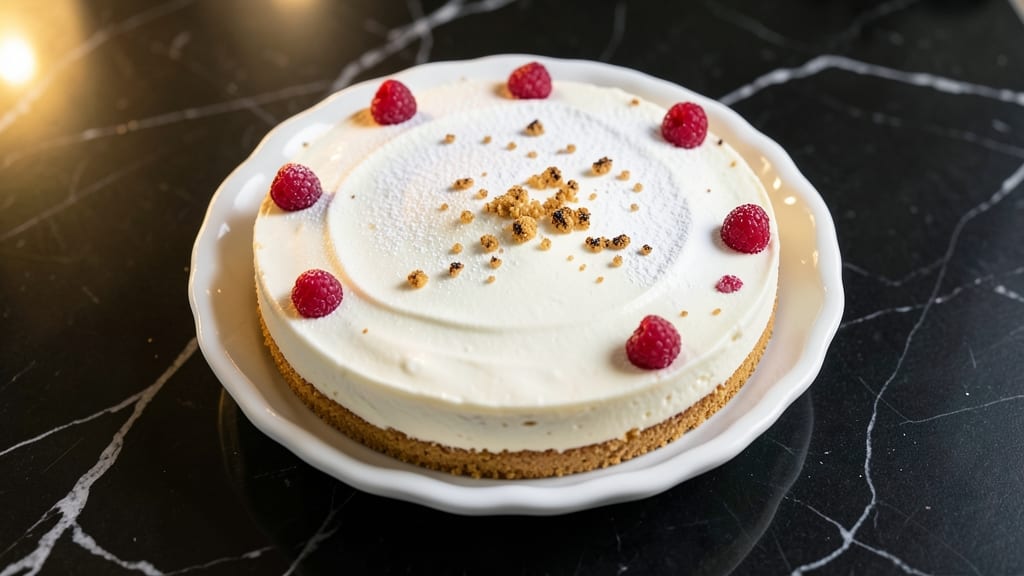
This Philadelphia cream cheese New York-style cheesecake delivers the perfect balance of a crispy graham cracker crust and a velvety top layer that melts in your mouth.
After years of perfecting the technique—including the critical water bath method—I’ve cracked the code for a cheesecake that’s rich, dense, and crack-free every time. The secret lies in precise ingredient ratios and gradual cooling, which prevents those dreaded sinkholes.
The crust starts with finely ground graham crackers mixed with melted butter until it forms a golden, shatteringly crisp base. Meanwhile, the filling combines Philadelphia cream cheese with sour cream, eggs, and sugar, whipped just until smooth to avoid overaeration.
Baking at 325°F for 50 minutes ensures even cooking without browning, while the water bath keeps the texture silky rather than rubbery.
What you’ll end up with is a cheesecake that’s restaurant-quality—dense enough to slice cleanly, with a top layer so smooth it looks like it came from a bakery. The graham crust stays crispy even after cooling, and the center remains slightly jiggly, just as it should be.
This isn’t your grandmother’s cheesecake; it’s a professional-level dessert that’s foolproof for home bakers.
Serve it chilled with a drizzle of chocolate ganache or fresh berry compote for that classic New York touch. Let’s get baking—this recipe is designed to impress without the guesswork.
Ingredients for philadelphia cream cheese new york style cheesecake
Fourteen ingredients. Two layers. One showstopper dessert that’ll fool everyone into thinking you baked it in a professional kitchen.
| Ingredient | Amount | Notes |
|---|---|---|
| Philadelphia Cream Cheese 🧀 | 32 oz | Full-fat, room temperature |
| Sour Cream 🥛 | 1 cup | Full-fat for richness |
| Large Eggs 🥚 | 4 whole | Room temperature preferred |
| Granulated Sugar 🍚 | 1 ½ cups | White or light brown |
| Vanilla Extract 🌿 | 2 tsp | Pure, not imitation |
| Graham Cracker Crumbs 🍪 | 2 cups | Finely ground, store-bought or homemade |
| Unsalted Butter 🧈 | ½ cup | Melted, full-fat |
| All-Purpose Flour 🌾 | 1 tbsp | For crust texture |
| Salt 🧂 | ¼ tsp | Fine sea salt |
| Lemon Juice 🍋 | 1 tbsp | Freshly squeezed |
| Heavy Cream 🥛 | ¼ cup | Optional, for extra richness |
| Dark Chocolate Chips 🍫 | ½ cup | For ganache topping (optional) |
The cream cheese is non-negotiable—Philadelphia brand is the gold standard, but any full-fat, high-quality brand works. Grab the 8 oz blocks from the dairy case, not the pre-softened tubs. Room temperature is key here: take the blocks out of the fridge 2 hours before baking so they soften evenly. For the graham crackers, Honey Maid or Keebler are the most reliable for consistent texture. If you’re grinding your own, pulse them in a food processor until you get a fine, sand-like consistency—no big chunks. The butter matters too: use unsalted so you control the saltiness, and melt it completely before mixing.
No sour cream? Greek yogurt at half the amount works in a pinch, but it’ll be slightly tangier. Running short on vanilla? Vanilla bean paste adds depth and looks fancy. For the crust, if you can’t find graham crackers, digestive biscuits or vanilla wafers work—just toast them lightly first for extra crunch. The chocolate chips for the ganache? Semi-sweet or dark 60% works best. If you’re feeling fancy, swap them for chopped bittersweet chocolate. And pro tip: measure your sugar by spooning it into the cup and leveling it off—don’t scoop, or you’ll pack it too tightly.
This cheesecake is a make-ahead masterpiece: bake it, let it cool, then refrigerate for at least 6 hours before serving—ideally overnight. The crust stays crispy for 3 days if stored in an airtight container, but the filling gets denser over time, so eat it within 5 days. For the ganache, melt the chocolate with the heavy cream (if using) and let it set for 10 minutes before drizzling—it’ll thicken up nicely. Freeze slices for up to 2 months, but thaw them in the fridge overnight to avoid soggy crusts.
Why You'll Love This Recipe
- No-Fuss Mixing: I beat the cream cheese and sugar until it’s just smooth—no overworking, no lumps, no stress. That’s the magic of New York style: let the sour cream and eggs do the heavy lifting while you stir for two minutes. Honestly, I’ve made this while chatting on the phone.
- Creamy Without Compromise: The ratio of cream cheese to sour cream gives it that signature dense, velvety texture—no grainy aftertaste, no watery center. And that vanilla? It’s not subtle; it’s there, like a warm hug in every bite. (Yes, even on a Tuesday night.)
- Party-Proof Leftovers: Slice it the next day, and it’s still rich and sliceable—no sad, cracked edges. I’ve brought this to potlucks, holidays, and even my book club, and no one’s ever asked for seconds quietly. It’s that good.
- Budget-Friendly Luxury: Philadelphia cream cheese is the star, but the rest? Basic pantry staples. No specialty items, no last-minute grocery runs. And a single batch feeds six—meaning fewer takeout nights and more dessert wins. My secret weapon for stretching joy.
Step-by-step instructions for Philadelphia cream cheese New York-style cheesecake
Here's the straightforward method for a classic New York-style cheesecake with that signature crispy crust and silky filling.
Prepare the Crispy Graham Cracker Crust
Preheat your oven to 325°F. In a medium bowl, melt the 0.5 cup unsalted butter in 30-second bursts in the microwave, stirring between each. Let it cool slightly until just warm to the touch.
Add the 2 cups graham cracker crumbs and 1 tbsp all-purpose flour to the melted butter. Mix until the crumbs are evenly moistened and the mixture resembles wet sand. Press this firmly into the bottom of a 9-inch springform pan, using the back of a measuring cup to create an even, compact layer.
Bake the crust for 10 minutes until it's golden around the edges. Let it cool slightly while you prepare the filling—this prevents the crust from getting soggy when you pour in the cheesecake batter.
Mix the Cheesecake Filling
In a large mixing bowl, beat the 32 oz Philadelphia cream cheese and 1.5 cups granulated sugar on medium speed with an electric mixer until completely smooth and creamy. This should take about 3-4 minutes—don't rush it, or you'll end up with lumps.
Add the 1 cup sour cream, 0.25 tsp salt, and 2 tsp vanilla extract to the cream cheese mixture. Mix on medium speed until fully combined and smooth. Scrape down the sides of the bowl with a spatula to ensure everything is evenly incorporated.
In a separate bowl, whisk together the 4 whole large eggs and 1 tbsp lemon juice until frothy. This acidity helps stabilize the cheesecake filling and prevents cracking. Add the eggs to the cream cheese mixture in a slow, steady stream, mixing on low speed just until combined.
Fold in the Heavy Cream and Pour
Gently fold in the 0.25 cup heavy cream using a spatula, being careful not to overmix. The batter should be thick but pourable. Pour the filling over the pre-baked crust, spreading it evenly with a spatula to eliminate any air bubbles.
Place the springform pan on a baking sheet lined with parchment paper before putting it in the oven. This prevents any potential mess if the cheesecake leaks. Bake at 325°F for 50-55 minutes, until the edges are set but the center still has a slight wobble—it'll continue cooking as it cools.
Cool Gradually for Perfect Texture
Turn off the oven and crack the door open slightly. Let the cheesecake cool inside for 30 minutes—this gradual temperature change prevents cracking. Then remove it from the oven and cool at room temperature for another 1 hour.
Once cooled, refrigerate the cheesecake for at least 6 hours (overnight is best) to allow it to fully set. This chilling time is crucial for achieving that signature silky texture. When ready to serve, run a knife around the edge to loosen it from the pan.
Optional Chocolate Ganache Topping
For the chocolate topping, melt the 0.5 cup dark chocolate chips with 0.25 cup heavy cream in a microwave-safe bowl in 30-second intervals, stirring between each, until smooth. Let it cool slightly until it thickens to a drizzling consistency.
Drizzle the ganache over the top of the chilled cheesecake and let it set for 10 minutes before slicing. This optional step adds a rich contrast to the creamy cheesecake, but the classic version is delicious on its own.
Pro Tips For Making Philadelphia Cream Cheese New York Style Cheesecake
- Whip the cream cheese: DESCRIPTION: Take your time beating the cream cheese and sugar—at least 3-4 minutes—until it’s pale yellow and completely smooth. I learned this the hard way: skipping this step leaves little lumps, and no amount of mixing later fixes it.
- Room eggs first: DESCRIPTION: Pull those eggs out of the fridge 30 minutes before using. Cold eggs won’t blend evenly, and you’ll end up with a denser batter. Trust me, your cheesecake will thank you—especially if you’re making it in a hot kitchen.
- Skip the pre-bake crust: DESCRIPTION: New York-style cheesecake crusts don’t need to be pre-baked—just press the crumbs into the pan and chill for 15 minutes. It’s faster, and the crust stays crispier. (Yes, even if your recipe says otherwise.)
- Water bath at 325°F: DESCRIPTION: Set your oven to 325°F—not 350°F—and bake the cheesecake without the water bath for the first 20 minutes. Then add the bath. This prevents cracking from sudden heat shock. (I tried the full bath first—don’t make my mistake.)
Troubleshooting your philadelphia cream cheese new york style cheesecake
Cracked Top Fix
If you see cracks forming during baking, it’s usually from overmixing or sudden temperature changes. To prevent this, mix the batter just until combined—no need to whip it like cake batter.
Also, always cool the cheesecake gradually: turn off the oven after baking, crack the door open, and let it sit for 30 minutes before removing.
For an already cracked cheesecake, spread a thin layer of chocolate ganache or berry compote over the top to disguise the cracks while adding flavor. 🔥
Soggy Crust
A soggy crust happens when moisture seeps in during baking. To avoid this, always pre-bake the crust for 10 minutes at 325°F until golden. Let it cool slightly before adding the filling, and don’t skip the 1 tbsp flour in the crust mixture—it adds structure.
If your crust still gets soggy, try pressing a layer of crushed graham crackers on top of the batter before baking to create a barrier. ❄️
Sunken Center
A sunken or undercooked center is often caused by opening the oven too soon or underbaking. The cheesecake should have a slight wobble in the center when done—it’ll firm up as it cools. If yours is still too soft, return it to the oven for 5-10 minutes at 325°F.
For extra insurance, bake it in a water bath: place the springform pan inside a larger roasting pan filled with 1 inch of hot water to keep the filling moist and even. 💡
Grainy Texture
Graininess usually means the cream cheese wasn’t fully blended or the eggs were added too quickly. Beat the cream cheese and sugar together for at least 3-4 minutes until completely smooth before adding other ingredients.
When incorporating the eggs, pour them in slowly while mixing on low speed to avoid creating air pockets. If your batter still looks lumpy, strain it through a fine-mesh sieve before pouring it into the crust. ✨
Leaking Filling
Leaks happen when the batter is too runny or the pan isn’t sturdy enough. To fix this, place the springform pan on a baking sheet lined with parchment paper before baking to catch any drips.
For extra stability, wrap the bottom of the pan with a double layer of heavy-duty aluminum foil before adding the crust. If your cheesecake still leaks, try reducing the sour cream by 2 tbsp to thicken the batter slightly. 🛠️
Dry or Crumbly Cheesecake
Overbaking or using too much flour in the crust can make the cheesecake dry. Stick to the 50-55 minute baking time and check for doneness by looking for a set edge with a slight wobble in the center.
If your cheesecake turns out dry, try adding 1-2 tbsp sour cream to the filling or brushing the top with a simple syrup (equal parts sugar and water, heated until dissolved) before serving. 💪
Nutrition facts
Frequently asked questions
Can I substitute Philadelphia cream cheese with another brand?
While Philadelphia is ideal, any full-fat, high-quality cream cheese works—just ensure it's soft and lump-free. Avoid low-fat versions, as they lack richness. For best results, let the block sit at room temperature for 2 hours before mixing to prevent graininess.
Why does my cheesecake crack on top?
Cracking usually happens from overmixing, sudden temperature changes, or opening the oven too soon. Mix the batter just until combined, cool the cheesecake gradually (crack the oven door after baking), and avoid moving it while setting. A thin layer of chocolate ganache can also disguise cracks beautifully.
How do I make this cheesecake ahead of time?
Bake the cheesecake as directed, then refrigerate for 6 hours (overnight is best) before serving. The crust stays crispy for 3 days in an airtight container, while the filling remains fresh for 5 days. For longer storage, freeze slices for up to 2 months—thaw overnight in the fridge.
What’s the secret to a perfectly crispy crust?
Pre-bake the crust for 10 minutes at 325°F until golden, then let it cool slightly before adding filling. Mix 1 tbsp flour into the graham crumbs for extra structure, and press the mixture firmly into the pan. For extra crunch, toast the crumbs in the oven for 5 minutes before mixing with butter.
Can I make this cheesecake without a water bath?
Yes, but a water bath creates a smoother texture by preventing rapid heat loss. Place the springform pan in a larger roasting pan filled with 1 inch of hot water to mimic professional results. If skipping it, reduce baking time by 5 minutes and check for doneness early (edges set, slight wobble in center).