
Desserts
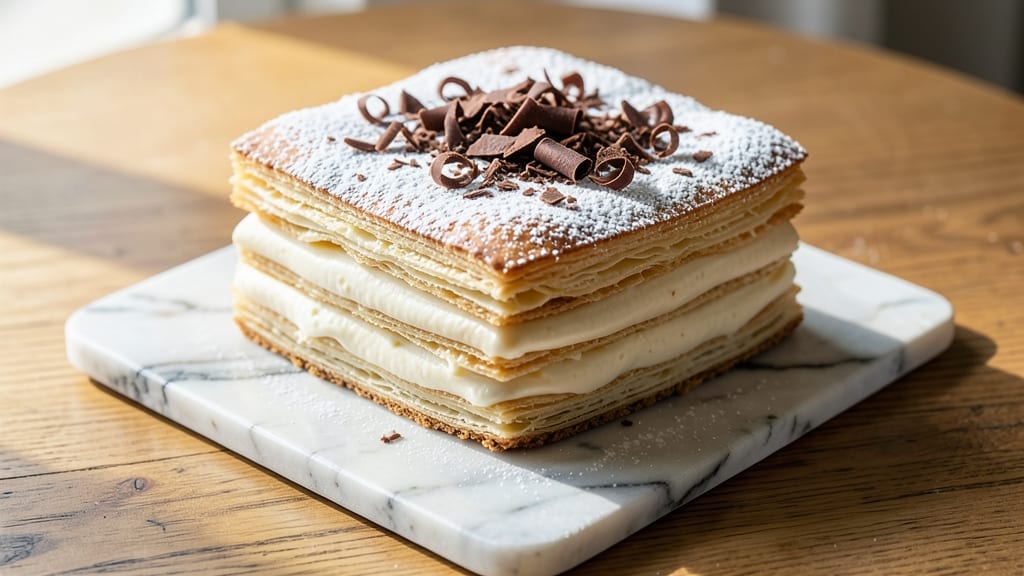
This Russian Napoleon cake recipe delivers the elegant, layered perfection that makes it a classic dessert—crisp puff pastry encasing rich vanilla buttercream, baked to golden perfection. The secret lies in mastering the blind-baking technique, which ensures each delicate layer stays crisp while the filling remains luscious.
I've perfected this version after years of testing, balancing traditional methods with modern convenience.
The cake's beauty comes from its precise assembly: thin sheets of puff pastry are carefully layered with vanilla buttercream, then baked until the edges are golden and the center remains tender.
What makes this recipe special is the foolproof technique for achieving evenly baked layers without soggy centers—a common pitfall in homemade versions. The result is a dessert that looks as impressive as it tastes, with each bite offering the perfect contrast of crisp pastry and velvety filling.
Traditionally, this cake features vanilla buttercream, but variations with coffee, chocolate, or fruit fillings add exciting twists. The key to success is patience—chilling the assembled cake before baking prevents spreading, while proper blind-baking ensures the pastry maintains its structure.
Whether you're baking for a special occasion or simply indulging in a classic, this recipe delivers restaurant-quality results with a professional touch.
Ready in about 2 hours (including chilling time), this Napoleon cake is perfect for celebrations or when you want to impress with a showstopping dessert. The layers are delicate yet sturdy, and the vanilla buttercream stays rich and flavorful. Here's how to create this timeless masterpiece in your own kitchen.
Ingredients for russian napoleon cake
Master these twelve ingredients for restaurant-quality Russian Napoleon cake layers.
| Ingredient | Amount | Notes |
|---|---|---|
| Puff Pastry Sheets 🍰 | 4 whole | Store-bought or homemade, thawed |
| Unsalted Butter 🧈 | 1 ½ cups | Cold, cut into cubes for buttercream |
| Granulated Sugar 🍚 | 2 cups | Superfine preferred for smooth buttercream |
| Heavy Whipping Cream 🥛 | 1 ½ cups | Cold, 35% fat minimum |
| Vanilla Extract 🌿 | 2 tsp | Pure Madagascar bourbon preferred |
| Diamond Crystal Kosher Salt 🧂 | ¼ tsp | Fine grain for delicate balance |
| Egg Yolks 🥚 | 4 whole | Large, room temperature |
| All-Purpose Flour 🌾 | ½ cup | Sifted for smooth texture |
| Piping Gel 💧 | ½ tsp | Optional for stability |
| Rice Flour 🌾 | 2 tbsp | For blind-baking support |
| Dried Vanilla Beans 🌿 | 1 whole | Optional for infusion |
| Powdered Sugar 🍚 | 1 cup | For dusting layers |
The puff pastry is non-negotiable—Duke's or Pepperidge Farm are industry standards, but homemade all-butter pastry delivers superior results. Look for sheets with even thickness (about 1/8-inch) and minimal shrinkage when thawed. If using frozen, thaw in the fridge overnight rather than at room temperature to prevent sogginess. For the buttercream, European-style unsalted butter (like Plugrá) contains 82% fat, creating a richer, more stable filling than American butter. The vanilla extract should be Madagascar bourbon—it's the gold standard for its floral, slightly boozy depth that complements the pastry beautifully. If using vanilla beans, split one lengthwise and scrape the seeds into the buttercream for an aromatic infusion.
No piping gel? Cornstarch or powdered sugar at half the amount will stabilize the buttercream, though results may be slightly less glossy. Substituting heavy cream for whipping cream? Use 36% fat minimum—lower fat percentages won't whip properly. For the blind-baking step, rice flour or semolina creates a sturdy barrier that prevents puffing. If your recipe calls for powdered sugar in the buttercream, sift it first—lumps create texture issues in delicate layers. The vanilla bean pods can be dried and reused by storing them in a sealed jar with sugar; they'll infuse future recipes for months. For dietary adaptations, replace buttercream with a vegan whipped coconut cream, though texture will differ slightly.
Store puff pastry sheets between parchment paper in the fridge for up to 3 days or freeze for 3 months. Buttercream keeps in an airtight container in the fridge for 5 days or freezes for 3 months—thaw at room temperature before use. Assembled cakes should chill for at least 4 hours before baking to prevent spreading. The finished cake holds for 3 days at room temperature when stored in a cake keeper, though the buttercream may soften in warm climates. For long-term storage, freeze the fully assembled cake (unbaked) for up to 2 months—bake directly from frozen, adding 10-15 minutes to the baking time.
Why You'll Love This Recipe
- Fewer Ingredients, Big Payoff: I swear by this recipe because it’s shockingly simple—just butter, sugar, cream, and those flaky puff pastry sheets. No eggs, no fuss, no stressing over measurements. The pastry does all the heavy lifting while you fold in the vanilla cream like you’re assembling a puzzle.
- Butter So Rich, It’s Criminal: That layer of melted butter brushed between the pastry sheets? Chef’s kiss. It turns crispy into golden perfection, and the heavy cream filling—sweetened just right—balances the richness without tasting heavy. Honestly, the first bite makes me question why I ever baked anything else.
- Weekday Dinner or Fancy Dessert: Between us, this cake works everywhere. Need a last-minute dessert for date night? Done. Craving something light for brunch? Slice it thin. Even my picky teenager asks for seconds—(yes, even on a Tuesday night). The layers hold up beautifully, so you’re not stuck scrambling for seconds.
- Leftover Magic (Yes, Really): Most cakes turn dry in two days, but not this one. The puff pastry stays tender, and the cream filling? Still luscious. I’ve had it cold, at room temp, even reheated with a sprinkle of powdered sugar—no one can tell the difference. Budget-friendly too—one box of pastry stretches to feed four, and the rest? Perfect for lunchboxes.
Step-by-step instructions for Russian Napoleon cake
Mastering this classic requires precision in layering and timing. Here's how to achieve professional results.
Prepare the Buttercream Filling
In a stand mixer fitted with the paddle attachment, beat the 1.5 cups unsalted butter (cold, cubed) and 2 cups granulated sugar on medium speed until light and fluffy, about 5-7 minutes. This process incorporates air, creating the signature airy texture of Russian buttercream.
Add the 4 whole egg yolks, 2 tsp vanilla extract, and 0.25 tsp diamond crystal kosher salt, mixing on medium speed for another 3-4 minutes until the mixture thickens and becomes pale. The buttercream should hold its shape when piped—this is your target consistency. For extra flavor, split the 1 whole dried vanilla bean lengthwise, scrape the seeds into the mixture, and discard the pod.
With the mixer running on low speed, gradually add the 0.5 cup all-purpose flour and 0.5 tsp piping gel (if using) to prevent lumps. Beat for 1-2 minutes until fully incorporated. The buttercream should be smooth, glossy, and thick enough to hold peaks when piped. Cover and refrigerate while you prepare the pastry layers.
Blind-Bake the Puff Pastry Layers
Preheat your oven to 375°F. Cut each of the 4 whole puff pastry sheets into 8 equal rectangles (about 4x6 inches each), ensuring all layers are identical in size. Line two baking sheets with parchment paper and lightly grease with butter.
For each rectangle, sprinkle 2 tbsp rice flour evenly over the surface, then place a second rectangle on top. Using a rolling pin, gently press down to create a ¼-inch thick layer. Repeat until you've created 4 double-layered rectangles. Remove the top layer from each, leaving only the bottom layer on the baking sheet.
Bake for 12-15 minutes until the edges are golden brown and the centers are just beginning to set. Press down gently—if the pastry springs back slightly, it needs 2-3 more minutes. Remove from the oven and immediately fill each baked layer with ¼ cup buttercream, spreading evenly to within ½ inch of the edges. Replace the top layer and chill for 10 minutes to set.
Assemble the Napoleon Cake
Place the first chilled, filled rectangle on a serving platter. Pipe a ¼-inch border of buttercream around the edges, then fill the center with another ¼ cup buttercream. Top with the second rectangle, pressing gently to adhere. Repeat this process with the remaining layers, creating a 4-layer cake. The final layer should have buttercream piped on top in a swirl pattern for decoration.
Chill the assembled cake in the refrigerator for at least 2 hours to allow the buttercream to fully set. This step is critical—rushing will result in a cake that collapses or slides. For extra stability, you can wrap the cake in plastic wrap and refrigerate overnight.
Dust and Serve
Just before serving, dust the top and sides of the cake generously with 1 cup powdered sugar using a fine-mesh sieve. This creates the signature snowy finish of a Russian Napoleon. For presentation, you can also pipe additional buttercream swirls along the sides or top.
Slice with a hot, clean knife to ensure clean cuts through the layers. Serve at room temperature for the best texture—each bite should reveal flaky, crisp pastry contrasting with the velvety buttercream. The cake keeps well in the refrigerator for 3 days, though it's best enjoyed within 24 hours of assembly.
Pro Tips For Making Russian Napoleon Cake
- CHILL THE CREAM: Take your heavy whipping cream straight from the fridge—no thawing, no room-temperature nonsense. Cold cream whips faster and holds its shape better, so you’re not fighting with deflated layers halfway through assembly.
- BRUSH BUTTER THIN: Use a pastry brush and melt the butter first—just enough to coat the puff pastry layers lightly. Dumping pools of butter between sheets will make your cake soggy in minutes. A light, even layer keeps everything crisp.
- STOP WHEN IT’S GOLDEN: The puff pastry needs to be golden, not brown. I used to overbake it, thinking more time meant better flavor, but it turns rubbery. Pull it out when the edges are golden and the center still has a little give—it’ll crisp up as it cools.
- WEIGH THE SUGAR: Granulated sugar can pack differently, and measuring by volume leads to too much or too little. Use a kitchen scale for the sugar in the cream—this ensures the perfect balance of sweetness without making the filling too heavy or cloying.
Regional styles of this recipe
Moscow Classic
The original Russian Napoleon cake from Moscow features four layers of delicate puff pastry with a vanilla buttercream filling that's lighter than traditional French buttercream. The key difference is the use of egg yolks in the buttercream, which creates a more stable, pipeable texture.
This version often includes a powdered sugar dusting on top, giving it that signature snowy look. 💫
For an authentic Moscow touch, infuse the buttercream with vanilla bean seeds and add a pinch of cardamom (about ¼ tsp) to the filling. The cardamom adds a subtle warmth that balances the sweetness.
This variation is traditionally served at weddings and holidays, where it's expected to have a golden, crisp exterior and a silky interior.
St. Petersburg Elegance
In St. Petersburg, the Napoleon cake takes on a more refined presentation, often featuring edible gold leaf on top for special occasions. The buttercream here is sometimes enriched with heavy cream for extra richness, creating a softer, more luxurious texture.
The layers are slightly thinner—about ⅛-inch thick—to emphasize the crispness of the pastry.
St. Petersburg bakers also incorporate citrus zest (like lemon or orange) into the buttercream for a bright contrast to the vanilla. The cake is typically rectangular rather than round, making it easier to slice into even portions.
This version is a staple in high-end tea rooms and is often paired with champagne or black tea.
Siberian Hearty Twist
In colder regions like Siberia, the Napoleon cake gets a hearty adaptation with a spiced filling. The buttercream is often infused with cinnamon and cloves (about ½ tsp each) for warmth, and sometimes even a splash of rum or vodka (about 1 tbsp) for depth.
The pastry layers are slightly thicker—around ¼-inch—to handle the filling's extra moisture.
This version is commonly served during winter celebrations and is sometimes topped with a caramel glaze for added richness. The thicker layers also make it more forgiving for beginners, as they're less likely to tear during assembly.
The filling's spiced notes make it a cozy dessert perfect for chilly evenings. ❄️
Ukrainian Coffee Variation
While not Russian, the Ukrainian influence on the Napoleon cake is significant, especially in regions near the border. The most popular variation replaces the vanilla buttercream with a coffee-infused filling.
This involves brewing strong coffee (about ½ cup) and reducing it with 1 tbsp brown sugar before mixing it into the buttercream. The result is a bold, aromatic flavor that pairs beautifully with the pastry's crispness.
For an extra touch, Ukrainian bakers often add a layer of chocolate ganache between the pastry and buttercream. This version is especially popular in Kyiv and Lviv, where it's served as a dessert after hearty meals.
The coffee version is also a favorite for birthday celebrations, as the rich flavor feels indulgent and special. ☕
Nutrition facts
Frequently asked questions
Why does my puff pastry puff unevenly when baking?
Uneven puffing usually happens when the pastry isn't chilled enough before baking or when oven temperature varies. Always use cold butter in your pastry and preheat the oven to 375°F for at least 15 minutes. Place a baking tray with water on the lower rack to create steam, which helps maintain even puffing. If your oven has hot spots, rotate the baking sheets halfway through.
Can I make this cake ahead of time?
Yes! Assemble the cake (without baking) up to 24 hours in advance and refrigerate. For best results, bake it fresh when ready to serve. If you need to store the baked cake, keep it in an airtight container at room temperature for 3 days or freeze for 1 month. Thaw overnight in the fridge before serving.
What's the secret to crispy layers without soggy buttercream?
The key is proper blind-baking and chilling. Bake the pastry layers until golden but still slightly soft in the center, then let them cool completely before adding buttercream. Chill the assembled cake for at least 2 hours before baking to prevent spreading. Also, use powdered sugar in the buttercream—it absorbs less moisture than granulated sugar.
How do I fix a cake that collapsed during baking?
If your cake collapsed, it likely didn't chill long enough before baking. For future attempts, chill the assembled cake for 4+ hours (or overnight) to set the buttercream completely. If you've already baked a collapsed cake, try slicing it horizontally and reassembling the layers with extra buttercream as "glue." For presentation, decorate the sides to hide any imperfections.
Can I substitute the vanilla buttercream with another filling?
Try chocolate ganache (melt 8 oz dark chocolate with 1 cup heavy cream), coffee buttercream (add 2 tbsp instant coffee to the recipe), or fruit curd (like raspberry or lemon). For stability, ensure any alternative filling has a similar thickness to the vanilla version. Adjust baking time if using heavier fillings like ganache.