
Appetizers
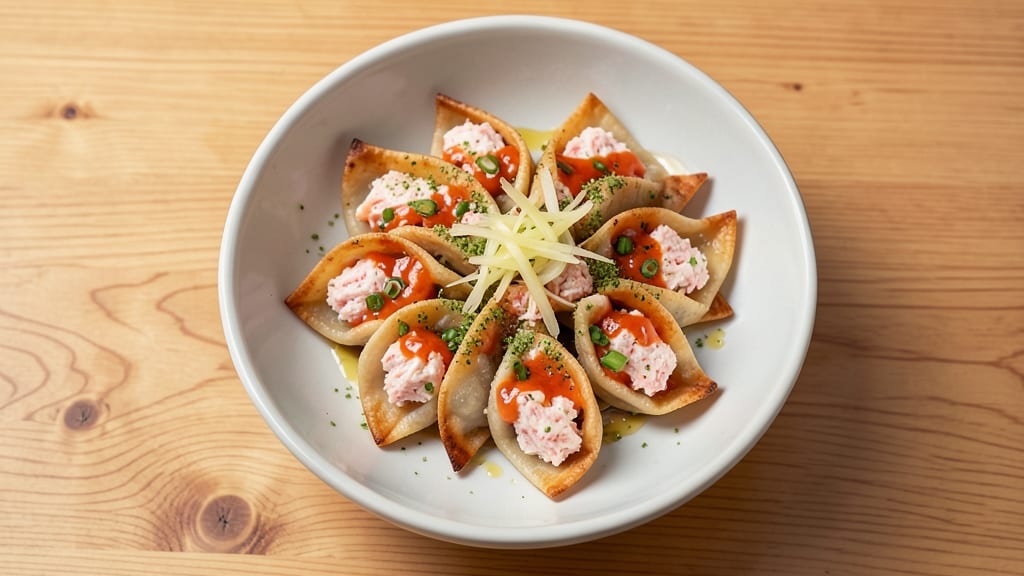
This sushi gyoza recipe fuses two beloved traditions into crispy, golden dumplings with a spicy mayo kick that will change how you enjoy appetizers forever. Standing on a step stool in my grandmother’s kitchen in Sicily, I learned how texture transforms simple ingredients into something extraordinary—and these dumplings prove it.
The secret lies in the pan-frying technique, where delicate wrappers turn crispy at the edges while staying tender inside, all wrapped around a filling inspired by both sushi and gyoza traditions.
The filling balances fresh ingredients like crab or imitation crab, scallions, and ginger with a touch of wasabi for that signature sushi bite, while the wrappers get their signature crispiness from a quick pan-fry.
What makes these stand out is the spicy mayo kick—a fusion of Japanese and Italian flavors that elevates every bite. This isn’t just an appetizer; it’s a foolproof method that delivers restaurant-quality results at home, with a technique even beginners can master.
By the time you’re done, you’ll have perfectly crispy dumplings with a glossy, golden crust that shatters at the first bite, revealing tender fillings and a sauce that’s equal parts creamy and zesty. The aroma alone will have everyone at the table asking for seconds.
Serve with extra spicy mayo for dipping, and watch these disappear faster than you can say "fusion cuisine." Let’s get started—your taste buds will thank you.
Whether you’re hosting a dinner party or craving a quick snack, these sushi gyoza adapt effortlessly. Swap the seafood for mushrooms and tofu for a vegetarian version, or add a drizzle of miso-ginger glaze for extra depth.
The possibilities are endless, but the technique remains simple: crispy, flavorful, and impossible to resist.
Ingredients for sushi gyoza
Crispy wrappers, tender filling, and a spicy mayo kick—this fusion appetizer needs just 14 ingredients.
| Ingredient | Amount | Notes |
|---|---|---|
| Gyoza Wrappers 🥟 | 24 pieces | Square-shaped, 3.5-inch diameter |
| Imitation Crab Meat 🦀 | 1 lb | Finely chopped, high-quality brand |
| Scallions 🧅 | 4 whole | Thinly sliced, white and green parts |
| Fresh Ginger 🌿 | 1 tbsp | Finely grated, peeled |
| Wasabi Powder 🌶️ | 1 tsp | Adjust for spice preference |
| Sesame Oil 🫒 | 1 tbsp | Toasted, for aroma |
| Soy Sauce 🥢 | 2 tbsp | Low-sodium preferred |
| Rice Vinegar 🍶 | 1 tbsp | Seasoned preferred |
| Mayonnaise 🥛 | ½ cup | Full-fat, for creaminess |
| Sriracha 🔥 | 1 tbsp | Adjust for heat preference |
| Vegetable Oil 🫒 | ½ cup | For pan-frying |
| Salt 🧂 | ½ tsp | Diamond Crystal preferred |
| Black Pepper 🌶️ | ¼ tsp | Freshly ground |
| Sesame Seeds 🌾 | 1 tbsp | Toasted, for garnish |
The wrappers are non-negotiable—King of Gyoza or Kappamaki are my go-tos, but any quality brand works. Look for thin, pliable sheets that won’t crack when folded. The imitation crab matters too; Kani brand or Trader Joe’s are reliable, but avoid the chunky kind—finely chopped is key. Fresh ginger and scallions should be vibrant; yellowing ginger is still good, but wilted scallions mean less flavor. For wasabi, Hida brand is potent—start with half if you’re sensitive to heat. The sesame oil? Kadoya from Asian markets has the best nutty aroma.
No imitation crab? Finely chopped white fish or shrimp works, but the texture won’t be identical. Swap scallions for green onions or chives, but slice them extra thin. Short on wasabi? Horse radish or extra sriracha adds heat without the signature bite. For the spicy mayo, Hellmann’s or Duke’s mayo gives the best base—full-fat is a must for that creamy texture. No sesame seeds? Toasted poppy seeds add a similar crunch. The wrappers can be frozen—just thaw before using, but room temp is ideal for crispy edges.
Keep wrappers sealed in the fridge until ready to use—they dry out fast. The filling can be prepped 1 day ahead; store in an airtight container. For the spicy mayo, make it fresh—it’s stable for 3 days in the fridge. Pan-fry in batches; don’t overcrowd the pan or they’ll steam instead of crisp. Garnish with extra sesame seeds right before serving—toasted in a dry pan for 30 seconds boosts flavor. These reheat surprisingly well—30 seconds in a skillet restores the crisp.
Why You'll Love This Recipe
- No Chopping Needed: I swear by this shortcut—just mix the imitation crab with grated ginger, a dash of wasabi, and finely chopped scallions. No dicing, no mincing, just fold and pan-fry. That’s it.
- Umami Bomb Combo: The imitation crab’s briny sweetness paired with fresh ginger and wasabi? It’s like sushi met dumplings—crispy wrappers, creamy filling, and that little kick. My husband steals these before they even hit the plate.
- Game for Any Gathering: Throw these together for a date night, lunch with coworkers, or even a last-minute potluck. They’re handheld, impressive, and no one will guess they took 20 minutes to make. (Yes, even on a Tuesday night.)
- Half the Cost, Double the Fun: Gyoza wrappers and imitation crab stretch my grocery budget without sacrificing flavor. Freeze extras for lazy days—just reheat in a skillet, and they’re crispy again. My wallet and taste buds thank me.
Step-by-step instructions for sushi gyoza recipe
Crispy golden edges and a spicy mayo kick make these dumplings irresistible.
Prepare the Spicy Mayo Filling
In a medium bowl, combine the 0.5 cup mayonnaise, 1 tbsp sriracha, and 1 tbsp rice vinegar. Mix until smooth and set aside. This spicy mayo forms the creamy, tangy core of your gyoza filling—don't skip the vinegar, as it brightens the flavors and balances the heat.
In a separate small bowl, mix the 1 lb imitation crab meat, 4 whole scallions (thinly sliced), 1 tbsp fresh ginger (finely grated), 1 tsp wasabi powder, 0.5 tsp salt, and 0.25 tsp black pepper. Gently fold everything together until evenly distributed. The imitation crab should be finely chopped—if it's in large chunks, break it down with your fingers for a smoother texture. This mixture will give your gyoza that signature umami-rich flavor with a subtle kick from the wasabi.
Assemble the Gyoza
Place one of the 24 gyoza wrappers in the palm of your hand. Add about 1 tablespoon of the spicy mayo mixture to the center, then top with about 1 tablespoon of the crab-scallion mixture. Fold the wrapper in half to seal the edge, then press firmly along the edges with your fingers or a fork to create a tight seal. If the filling leaks out, you haven't sealed it properly—press harder along the edges.
Arrange the assembled gyoza on a plate, leaving space between each one. Cover with a damp paper towel to prevent them from drying out while you finish assembling the rest. The key to crispy gyoza is a tight seal—if air gets trapped inside, they'll puff up unevenly during frying. Work quickly but carefully to maintain clean edges.
Pan-Fry for Crispy Perfection
Heat 0.5 cup vegetable oil in a large skillet over medium-high heat until it shimmers but doesn't smoke. Add the gyoza in a single layer, leaving space between each one—they'll expand as they cook. Fry for 3-4 minutes per side until the wrappers are deep golden brown and crispy. You'll hear a satisfying sizzle as they release steam, and the oil should bubble steadily. If they brown too quickly, reduce the heat slightly to prevent burning.
Once golden brown, transfer the gyoza to a paper towel-lined plate to drain excess oil. The wrappers should be crispy enough to hold their shape but still tender enough to bite through easily. If any gyoza aren't fully cooked, return them to the skillet for another 30 seconds per side. The filling should be hot but not runny—it should hold together when you cut into one.
Finish with Sesame Oil and Garnish
Drizzle each gyoza with 1 tablespoon sesame oil, tossing gently to coat. The sesame oil adds a nutty aroma and enhances the crispiness. Transfer the gyoza to a serving platter and sprinkle with 1 tablespoon sesame seeds, pressing them lightly into the top for extra texture. Serve immediately while the wrappers are still crispy and the filling is warm.
For extra flair, serve with a side of soy sauce for dipping or a sprinkle of extra scallions. These gyoza should have a perfect balance of crispy, chewy wrappers, creamy spicy filling, and a nutty finish from the sesame. The contrast between the crispy exterior and tender interior makes every bite satisfying—just be prepared for seconds.
Pro Tips For Making Sushi Gyoza
- CRANK THE PAN HOT: Imitation crab sticks are greasy enough without fighting a cold pan—get that skillet screaming hot before adding oil. The second your filling hits the pan, it should sizzle like a pan of bacon, not whisper like a sad omelet. (Yes, even if you're impatient like me.)
- JULIENNE GINGER LIKE A PRO: Skip the messy knife work—use a microplane for the ginger. You need about 1 teaspoon of finely grated ginger, and a microplane gives you that perfect, even texture without turning your cutting board into a crime scene. (Bonus: It sticks to the crab better than pre-shredded nonsense.)
- PRESS WRAPPERS FIRM: The most common gyoza fail? Air pockets. Press the wrappers down hard with your fingers before sealing—they should stick together like glue. I used to half-ass this and ended up with sad, uneven dumplings. Now? Crispy, golden perfection every time.
- DIP IN WASABI MIX: Don’t just sprinkle wasabi powder—mix it into 1-2 tablespoons of soy sauce first. This keeps the powder from clumping and gives you that smooth, creamy wasabi flavor in every bite. (And yes, you can make this ahead—just store it in a small jar.)
Common mistakes when making this recipe
Overfilling the Wrappers
This is the #1 rookie mistake that ruins crispiness. I’ve seen beginners cram in 2 tablespoons of filling instead of 1 tablespoon, and those gyoza turn into soggy, uneven messes. The wrappers can’t crisp properly when overstuffed—they’ll puff up like balloons instead of developing that golden crust.
Measure your filling precisely, and press it into a neat 1-inch diameter mound before folding. 🥟
Skipping the Seal
Unsealed gyoza leak filling everywhere, and the wrappers won’t crisp evenly. I once made a batch where I just folded the edges loosely—half the filling oozed out during frying. To fix this, press firmly along the edges with your fingers or a fork, creating a tight, ¼-inch-wide seal.
Use a tiny bit of water on your fingertip if needed to help the edges stick. The seal is what traps steam and creates that perfect crispy-chewy texture.
Wrong Oil or Temperature
Using butter or olive oil instead of neutral vegetable oil will burn before the wrappers crisp. I learned this the hard way—my first attempt with olive oil ended in a smoky disaster. Heat your oil to 350°F (use a thermometer!) and keep it at medium-high heat.
If the oil smokes excessively, lower the heat immediately. The wrappers need that steady, even heat to crisp without burning.
Pan Overcrowding
Stuffing too many gyoza in the pan at once steams them instead of frying, resulting in soggy bottoms. I’ve seen home cooks try to cook 12 at once in a 10-inch skillet—big mistake!
Cook in batches of 6-8 gyoza with space between them. This ensures even browning and that satisfying sizzle. If you’re short on time, work in two pans instead of overcrowding one.
Ignoring the Resting Time
Freshly fried gyoza need 2-3 minutes to rest before serving. Cutting into them immediately releases all the juices, making them soggy. Let them sit on a wire rack or plate while you finish the batch.
This also helps the flavors meld—trust me, the wait is worth it. Serve with extra spicy mayo on the side for dipping, and watch them disappear faster than you can say “second round.” 🔥
Using Pre-Cooked Filling
If your filling isn’t fresh, the gyoza will taste flat and watery. I’ve seen recipes call for pre-cooking the crab mixture, but that kills the natural juices. Keep everything cold until assembly—chill the filling in the fridge for 15 minutes before using.
The cold filling helps seal the wrappers better and keeps the texture tight. If you’re worried about the wrappers sticking, work on a lightly floured surface, but don’t over-flour or they’ll lose crispiness.
Nutrition facts
Frequently asked questions
Can I make these dumplings vegetarian or vegan?
Swap the imitation crab for finely chopped mushrooms, tofu, or shredded cabbage mixed with sesame oil and soy sauce. For vegan mayo, use a plant-based version like Vegenaise. The technique stays the same—just ensure your filling is cold and tightly sealed for crispy results.
How do I prevent the wrappers from sticking together?
Work on a lightly floured surface and keep assembled dumplings separated on a plate. Cover them with a damp paper towel to prevent drying, but don’t stack them. If they stick during frying, gently separate with a spatula—never force them apart or they’ll tear. A light dusting of cornstarch on the plate also helps.
Can I bake these instead of pan-frying?
Yes, but the texture will differ. Brush assembled gyoza with oil and bake at 400°F for 12-15 minutes until golden. They’ll be softer than pan-fried, but still delicious. For extra crispiness, broil for 2 minutes at the end. The spicy mayo filling stays creamy when baked.
What’s the best way to reheat leftover gyoza?
Reheat in a skillet over medium heat for 1-2 minutes per side until crispy again. Avoid microwaving—they’ll turn soggy. For extra crunch, press a paper towel on top while reheating to absorb moisture. Store leftovers in an airtight container for up to 2 days.
Can I make the filling ahead of time?
Yes! Prepare the filling 1 day ahead and store it in an airtight container in the fridge. Keep it cold until assembly to maintain texture. The spicy mayo can be made 3 days ahead, but stir before using. Chilled filling seals better and prevents leaks during frying.