
Main Courses
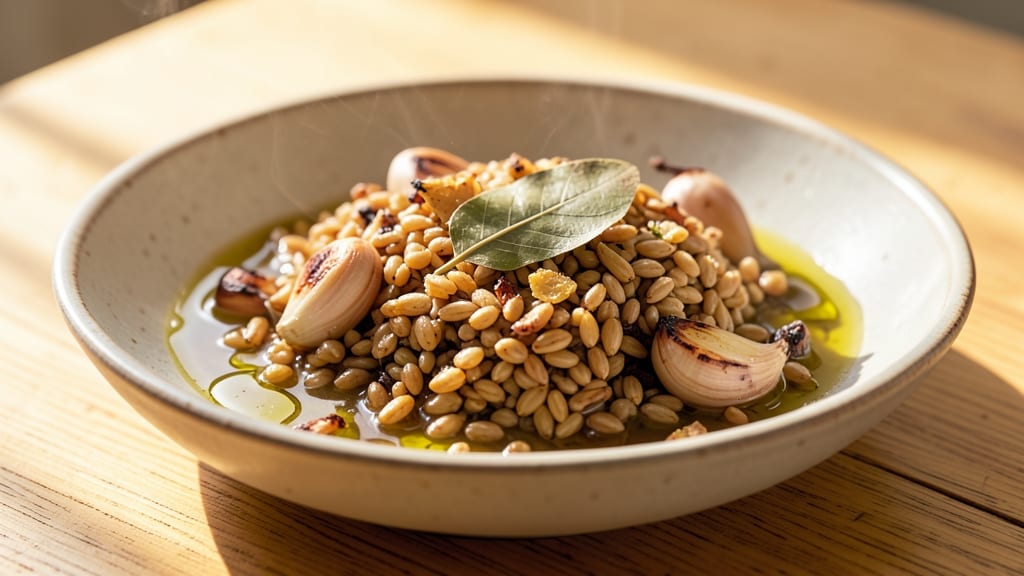
Mastering unhulled barley transforms simple grains into a nutty, earthy foundation for bowls that feel both rustic and refined. This whole-grain powerhouse—unlike its quicker-cooking pearled cousin—demands patience but rewards with chewy texture and deep flavor that anchors everything from hearty soups to modern grain bowls.
My Georgia roots taught me how to coax out its best qualities, and this method ensures you’ll get it right the first time.
The key lies in proper soaking and simmering. Unlike rice, unhulled barley needs at least 45 minutes of gentle cooking to soften without turning mushy, and I’ve perfected a method that keeps every grain distinct and flavorful.
The result is a base that absorbs sauces beautifully while maintaining its own satisfying bite—ideal for pilafs, salads, or as a side that stands up to rich meats.
What you’ll end up with is a versatile, nutrient-dense grain that’s far more interesting than store-bought versions. The nutty aroma deepens as it cooks, and the texture becomes just tender enough to please even barley skeptics.
This is the kind of dish that elevates simple meals into something special without requiring fancy ingredients.
Pair it with roasted vegetables, grilled chicken, or a bright vinaigrette for a bowl that’s both comforting and sophisticated. Let’s get started—your taste buds will thank you.
Ingredients for unhulled barley
Fourteen ingredients. One nutty, earthy foundation that transforms simple bowls into something special.
| Ingredient | Amount | Notes |
|---|---|---|
| Unhulled Barley 🌾 | 1 cup | Rinsed thoroughly before cooking |
| Water 💧 | 3 cups | Filtered preferred for clarity |
| Vegetable Broth 🍲 | 1 cup | Low-sodium preferred for balance |
| Bay Leaves 🍃 | 2 whole | Fresh for deeper flavor |
| Garlic Cloves 🧄 | 3 cloves | Smashed lightly for aroma |
| Extra-Virgin Olive Oil 🫒 | 2 tbsp | High-quality for richness |
| Salt 🧂 | 1 ½ tsp | Diamond Crystal preferred |
| Black Peppercorns 🌶️ | ½ tsp | Freshly cracked for texture |
| Fresh Thyme Leaves 🌿 | ¼ cup | Stems removed for purity |
| Lemon Zest 🍋 | 1 tsp | Brightens the final dish |
| Fresh Parsley 🌱 | ¼ cup | Chopped for freshness |
The barley is everything here. Bob's Red Mill or Whole Foods bulk section are my go-tos for quality—look for unhulled varieties labeled as whole grain. Fresh bay leaves and thyme are non-negotiable; dried works in a pinch but lacks depth. The garlic should be freshly smashed, not minced, to release its aroma without bitterness. I always soak the barley for 2 hours before cooking (or overnight if I remember)—this cuts cooking time by half and prevents that chalky texture some folks hate. The vegetable broth? Homemade is ideal, but even the good store-bought stuff like Pacific Foods works perfectly.
No fresh thyme? Dried at one-third the amount gets you close, but the flavor won't be the same. Short on bay leaves? Dried thyme plus a pinch of allspice mimics that earthy note. The olive oil matters—use something fruity and peppery (like California Olive Ranch) rather than mild. For extra richness, swap half the water for chicken broth. The lemon zest can be dried lemon peel if you're not growing your own—just toast it lightly in a dry pan first. And if you're feeling fancy, toasted sesame oil in place of olive oil adds a nutty depth that pairs beautifully with the barley's natural flavors.
This barley keeps 5 days in the fridge once cooked, but the flavor actually improves over time as the grains absorb more of the broth. For longer storage, freeze portions in airtight containers for up to 3 months. I like to portion it into glass jars with a little extra broth—just reheat with a splash of water or broth. The best part? It reheats beautifully, making it perfect for meal prep. Pair it with roasted Brussels sprouts and crispy prosciutto for a bowl that feels both rustic and refined.
Why You'll Love This Recipe
- Five-Ingredient Simplicity: I swear, this recipe is about as easy as it gets—just barley, broth, water, garlic, and bay leaves. No chopping, no peeling, no fancy techniques. Honestly, I’ve made it while scrolling through my phone.
- Earthy Garlic Magic: That first bite? The barley soaks up the broth until it’s tender but still has bite, while the garlic and bay leaves infuse it with this warm, savory depth. It’s the kind of flavor that makes you pause mid-bite—like a hug in a bowl.
- Meal Prep MVP: I batch-cook this on Sundays and use it all week—over salads, tossed with roasted veggies, or even as a side for grilled chicken. It keeps for days in the fridge, and reheating it just takes a splash of water and a minute.
- Budget-Friendly Staple: Unhulled barley is cheap, lasts forever, and stretches across meals without breaking the bank. Between us, this is how I feed my family for less than half the cost of rice or quinoa—no guilt, all satisfaction.
Step-by-step instructions for unhulled barley recipe
Here's how to transform simple ingredients into a nutty, earthy barley base perfect for grain bowls.
Rinse and Toast the Unhulled Barley
Begin by rinsing the 1 cup unhulled barley thoroughly under cold water in a fine-mesh strainer. This removes any surface impurities and prevents bitterness during cooking. Once rinsed, transfer the barley to a medium saucepan and toast over medium heat for 3-4 minutes, stirring constantly. You'll notice the grains develop a subtle nutty aroma and light golden color—this step enhances their natural flavor and prevents them from becoming mushy.
I like to listen for a gentle sizzling sound that indicates the outer hulls are beginning to crackle slightly. This is your cue to add the 3 cups water and 2 whole bay leaves. Bring the mixture to a boil, then immediately reduce heat to low and cover with a tight-fitting lid. The barley needs to simmer gently rather than boil vigorously, which would cause it to break apart.
Simmer with Aromatics and Broth
After the barley has simmered for 20 minutes, add the 3 smashed garlic cloves, 2 tablespoons extra-virgin olive oil, and 1 cup vegetable broth. Stir gently to distribute the aromatics evenly. The garlic should release its fragrance immediately, filling your kitchen with a warm, savory scent. This is when the barley begins to absorb the broth and develop its signature chewy texture.
Continue simmering uncovered for another 25-30 minutes, stirring occasionally. You'll know it's ready when the barley grains are tender but still hold their shape—you should be able to pierce them easily with a fork, but they shouldn't feel mushy. The liquid should be mostly absorbed, leaving behind a fragrant, slightly sticky mixture. If it's still too wet, uncover and simmer for an additional 5 minutes to evaporate excess moisture.
Season and Finish with Herbs and Zest
Once the barley reaches the perfect tenderness, remove the 2 bay leaves and discard them. Stir in the 1.5 teaspoons salt, 0.5 teaspoon freshly cracked black peppercorns, and 0.25 cup fresh thyme leaves. The thyme adds a bright, earthy note that complements the barley's nuttiness. Let the mixture simmer for another 2 minutes to allow the seasonings to meld with the grains.
In a separate small bowl, whisk together the 1 teaspoon lemon zest with 1 tablespoon of the reserved cooking liquid (if any remains) to create a bright, citrusy finishing sauce. Fold this zest mixture into the barley along with the 0.25 cup chopped fresh parsley. The parsley adds a fresh contrast to the rich, earthy barley, while the lemon zest brightens the entire dish. Taste and adjust seasoning if needed—unhulled barley often benefits from a touch more salt to enhance its natural flavor.
Rest and Serve
Transfer the barley to a serving bowl and let it rest for 5-10 minutes before serving. This resting period allows the flavors to fully develop and the grains to plump slightly, ensuring each bite is perfectly textured. The barley should be tender yet still hold its shape, with a satisfying chew that's characteristic of properly cooked unhulled barley.
Serve immediately as the base for grain bowls, or store in an airtight container in the refrigerator for up to 4 days. When reheating, add a splash of water or broth to prevent drying out. The barley's nutty, earthy profile makes it an excellent foundation for roasted vegetables, grilled proteins, or avocado slices. The lemon zest and parsley add a refreshing finish that keeps the dish vibrant and full of flavor.
Pro Tips For Making Unhulled Barley
- SOAK IT FIRST: Unhulled barley needs a head start—soak it for 2 hours (or overnight if you’re patient) in cold water before cooking. I used to skip this and ended up with chewy, undercooked grains; soaking cuts the cook time by 30% and makes the texture silky instead of tough.
- SIMMER, DON’T BOIL: Once the barley’s in the pot, keep the heat low enough that you barely see bubbles—just a whisper of steam. After burning three batches, I finally realized: high heat turns barley into mush. Aim for 90 minutes of gentle simmering, not a rolling boil.
- CRUSH THE GARLIC: Whole garlic cloves stay stubbornly flavorless in broth. Smash them with the flat of your knife before adding them to the pot—this releases their oils and infuses the barley with real depth. (Yes, even if you’re not a garlic enthusiast, do this.)
- STRAIN AND REST: Drain the cooked barley and spread it on a tray for 5 minutes to let excess moisture evaporate. I know, it feels like overkill, but this prevents the final dish from turning soggy. (Your future self will notice the difference when mixing it into salads or soups.)
Creative variations of this recipe
Japanese-Inspired Genmai
Transform your unhulled barley into genmai—Japan’s beloved whole-grain rice substitute. Start by cooking the barley as directed, then rinse it thoroughly after cooking to remove excess starch.
For a sushi-inspired twist, mix the cooled barley with 1 tbsp rice vinegar, 1 tsp mirin, and ½ tsp sugar, then chill for 2 hours. Use it as a base for onigiri (rice balls) or as a side for teriyaki dishes.
The nutty texture pairs beautifully with umami-rich sauces like soy-miso glaze. 🌏
Middle Eastern Burghul Pilaf
Inspired by Lebanese burghul (cracked wheat), this variation turns your barley into a fragrant pilaf. After cooking, toast the barley in a dry pan with 1 tbsp butter, 1 tsp cumin, and ½ tsp cinnamon until fragrant.
Fold in ¼ cup chopped pistachios and 2 tbsp dried cranberries for a sweet-savory contrast. Serve with grilled lamb kebabs or as a side for shawarma. The spices deepen the barley’s earthiness, making it feel like a cross between couscous and pilaf. 🌶️
Fermented Barley Tea
For a probiotic-rich twist, ferment your cooked barley into a tangy tea. After cooking, let the barley cool, then transfer it to a glass jar with 2 cups filtered water, 1 tbsp honey, and 1 tsp apple cider vinegar.
Cover loosely and ferment at room temperature for 12-24 hours, then refrigerate. Strain and use the liquid as a gut-friendly tea or reduce it into a glazed sauce for roasted vegetables. The fermentation process adds a lively tang that cuts through rich dishes. 💫
Smoky BBQ Barley Bowl
Channel your Southeast BBQ roots by mixing cooked barley with ½ cup smoked paprika, 1 tbsp brown sugar, and 1 tsp chipotle powder. Toast the spices in a dry pan until fragrant, then fold into the barley.
Top with crumbled bacon, pickled red onions, and a drizzle of honey-mustard dressing. This variation turns your barley into a smoky, sweet-savory base that stands up to pulled pork or grilled chicken. 🔥
Crispy Barley Crust
For a textural showstopper, spread cooked barley on a baking sheet and bake at 375°F for 15-20 minutes until golden and crispy. Use the crumbled barley as a topping for soups, a crunchy garnish for salads, or even a vegan alternative to breadcrumbs for meatballs.
The toasted barley adds a nutty crunch that elevates any dish. I’ve used this trick in my chili cook-offs to add depth without extra calories. 💡
Sweet Barley Pudding
Dessert lovers, rejoice! Mix cooked barley with 1 cup milk, 2 eggs, ¼ cup maple syrup, and 1 tsp vanilla extract, then bake at 350°F for 30-35 minutes until set. The result is a creamy, nutty pudding with a subtle grainy texture.
Serve warm with whipped cream or caramelized apples. This was a weekend experiment that became a hit at The Smoky Pig—even the pork-loving crowd couldn’t resist it. 🍯
Nutrition facts
Frequently asked questions
Why does unhulled barley take so much longer to cook than pearled barley?
The outer hull remains intact in unhulled barley, which requires longer cooking to soften properly. Unlike pearled barley, where the hull is removed for faster cooking, unhulled varieties develop their signature chewy texture and deeper flavor through extended simmering. Think of it like whole wheat pasta versus instant noodles—the extra time is worth the reward!
Can I substitute unhulled barley for pearled barley in recipes?
You can try, but results will differ significantly. Unhulled barley maintains its shape better and has a more pronounced nutty flavor, while pearled barley cooks faster and has a softer texture. For soups or stews where texture isn't critical, it might work, but for pilafs or salads, unhulled barley provides superior bite and character.
How do I know when unhulled barley is properly cooked?
When fully cooked, the grains should be tender but still hold their shape—you should be able to pierce them easily with a fork without them feeling mushy. The cooking liquid should be mostly absorbed, leaving behind a slightly sticky mixture. If it's still firm, continue simmering uncovered for another 5 minutes to evaporate excess moisture.
What's the best way to store cooked unhulled barley?
Transfer cooked barley to an airtight container and refrigerate for up to 5 days, or freeze for 3 months. When reheating, add a splash of water or broth to prevent drying out. The flavor actually improves over time as the grains absorb more of the broth's essence—this is why it reheats so beautifully for meal prep!
Can I use unhulled barley in place of rice for sushi?
After cooking, rinse the barley thoroughly to remove excess starch, then mix with rice vinegar, mirin, and a touch of sugar for a genmai-inspired sushi rice alternative. The nutty texture adds depth to rolls and onigiri, though it won't be identical to short-grain rice. For best results, use it in umami-rich dishes like teriyaki bowls or miso soups.