
Main Courses
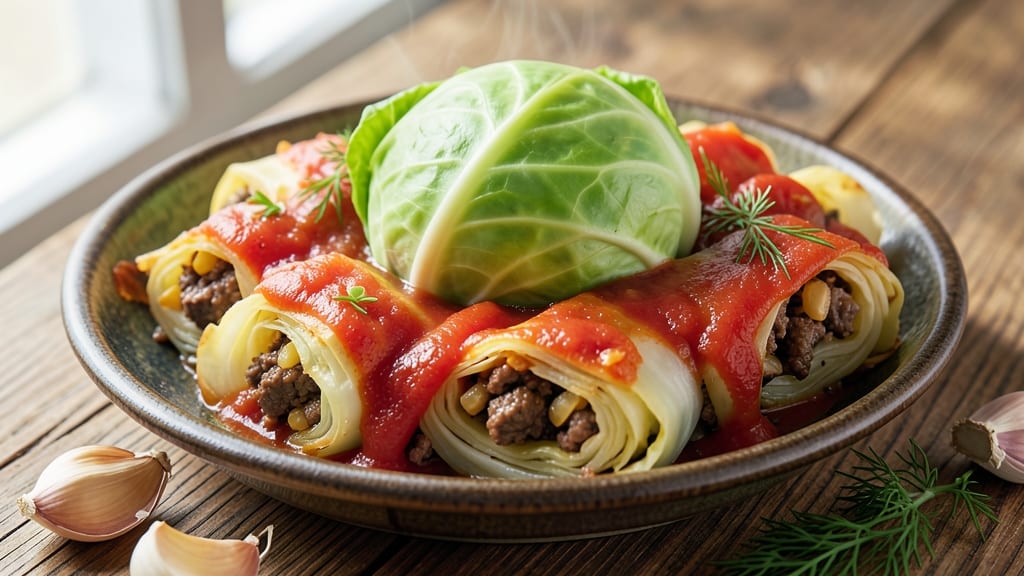
This authentic cabbage roll recipe brings the heart of Eastern European tradition to your kitchen table, where tender cabbage leaves cradle a rich, tomato-infused filling.
The key to authenticity lies in properly blanching the cabbage leaves to soften them just enough to hold their shape while rolling, a technique I've perfected after years of testing.
What sets these apart from many modern versions is the balance of acidity from tomatoes and the subtle sweetness of onions caramelized low and slow.
The filling transforms tough ground meat into succulent, flavor-packed bites through a slow cooking process that develops deep, savory notes. Traditional recipes call for a mix of tomato paste and fresh tomatoes, creating a sauce that clings to the meat rather than pooling at the bottom.
This method ensures every bite delivers that perfect harmony of textures and flavors that make cabbage rolls a comfort food classic.
What you'll achieve is a dish that's both impressive and comforting—golden-brown cabbage rolls with tender meat filling peeking through the edges, all nestled in a rich tomato sauce.
The aroma alone will have your kitchen smelling like Sunday dinner, while the first bite delivers that satisfying combination of textures and flavors that make this recipe a family favorite.
Serve with a dollop of sour cream or a sprinkle of fresh parsley to complete the traditional presentation. This recipe delivers on the promise of authenticity while being approachable enough for weeknight cooking—just follow the steps carefully for that restaurant-quality result at home.
Ingredients for authentic cabbage roll
Sixteen essential ingredients transform simple cabbage leaves into restaurant-quality cabbage rolls with tender filling and rich tomato sauce.
| Ingredient | Amount | Notes |
|---|---|---|
| Green Cabbage 🥬 | 1 whole | Heads, outer leaves removed |
| Ground Beef 🥩 | 1 ½ lb | 80/20 fat ratio preferred |
| Yellow Onion 🧅 | 1 whole | Medium, finely chopped |
| Garlic Cloves 🧄 | 4 cloves | Minced, fresh preferred |
| Tomato Paste 🍅 | ½ cup | High quality, no sugar added |
| Canned Tomatoes 🍅 | 1 can | 28 oz, San Marzano preferred |
| White Rice 🍚 | 1 cup | Long grain, uncooked |
| Beef Broth 💧 | 1 ½ cups | Low sodium preferred |
| Vegetable Oil 🫒 | 2 tbsp | For cabbage blanching |
| Salt 🧂 | 1 ½ tsp | Kosher or sea salt |
| Black Pepper 🌶️ | 1 tsp | Freshly ground preferred |
| Bay Leaves 🍃 | 2 whole | Dried, for flavor depth |
| Allspice Berries 🌶️ | ½ tsp | Crushed, optional but traditional |
| Fresh Parsley 🌿 | ¼ cup | Chopped, for garnish |
| Sour Cream 🧀 | ½ cup | Full-fat for serving |
The cabbage is non-negotiable for authenticity. Look for firm heads with tightly wrapped leaves—avoid any with yellowing or wilted outer leaves. Local farmers markets often have fresher cabbage than grocery stores, and the leaves will be larger, perfect for rolling. If you can't find a whole head, substitute 12 large outer leaves from a head, but blanching will take longer. The beef should be 80/20 fat ratio—the fat keeps the filling juicy during slow cooking. Costco or local butchers often carry this, but most grocery stores stock it too.
No San Marzano tomatoes? Any high-quality canned tomatoes work, but avoid those with added sugar or salt. The tomato paste can be substituted with 2 cups of tomato sauce at half the amount, though fresh paste gives better texture. For the rice, jasmine or basmati can replace long grain, but the texture will differ slightly. Short on allspice? Substitute 1/4 tsp each cinnamon and cloves for a similar warmth. The beef broth should be low sodium—homemade is ideal, but Swanson or Pacific Foods brands are reliable store-bought options. Fresh parsley is best for garnish, but dried works in a pinch at 1/3 the amount.
Blanched cabbage leaves soften quickly but stay fresh for 3 days in the fridge, wrapped in damp paper towels. The filling mixture can be prepped a day ahead and stored in an airtight container. Fully assembled rolls keep for 4 days in the fridge before baking, and the cooked dish reheats beautifully. For best results, reheat gently in the sauce—microwaving dries out the cabbage. Freeze unbaked rolls for up to 3 months; bake straight from frozen, adding 15 minutes to the cooking time.
Why You'll Love This Recipe
- No-Fuss Assembly: I swear by the "boil, trim, stuff" method—no fancy rolling skills needed. Just blanch those cabbage leaves until pliable, then fill with the beef-onion mix and fold. Five minutes of hands-on work, and you’re done.
- Umami Bomb: That tomato paste and garlic combo? It’s where the magic happens. The deep, savory punch from the beef and onions gets a rich, slightly sweet boost—no bland rolls here.
- Leftovers That Shine: These taste just as good reheated as they do fresh. Pack them for lunches or freeze half for when you’re too tired to cook. Honestly, I’ve had them three days later and still craved more.
- Budget Stretch: Ground beef and cabbage are my wallet’s BFFs. A single head of cabbage and a pound of beef feed four, and the onions/garlic add zero cost. This is comfort food that won’t break the bank.
Step-by-step instructions for authentic cabbage rolls
Here's the traditional method for creating flavorful cabbage rolls with a perfectly balanced filling.
Prepare the Cabbage Leaves
Start by removing the outer leaves from the 1 whole green cabbage, discarding any damaged or yellowed leaves. Place the cabbage in a large pot and cover with water, adding the 2 tablespoons vegetable oil. Bring to a boil over high heat, then reduce to medium and simmer for 5-7 minutes until the leaves become tender but still hold their shape when pressed.
Drain the cabbage leaves and let them cool slightly before carefully removing each leaf from the core. Lay them flat on a clean kitchen towel to dry. The leaves should be pliable enough to wrap around the filling without tearing. If any leaves remain too stiff, return them to the pot with fresh water and simmer for another 2-3 minutes. This blanching step is essential for creating tender, flavorful rolls that won't fall apart during cooking.
Cook the Filling Ingredients
In a large skillet, combine the 1.5 pounds ground beef, 1 whole yellow onion (finely chopped), and 4 cloves garlic (minced). Cook over medium-high heat until the beef loses its raw color and begins to brown, breaking it apart with a wooden spoon. This should take about 5-7 minutes. Drain any excess fat, leaving about 1 tablespoon in the pan.
Add the 0.5 cup tomato paste, 1 can canned tomatoes (crushed by hand), 1 cup white rice (uncooked), 1.5 cups beef broth, 1.5 teaspoons salt, 1 teaspoon black pepper, 2 whole bay leaves, and 0.5 teaspoon crushed allspice berries. Stir well to combine all ingredients thoroughly. Bring the mixture to a boil, then reduce heat to low and simmer uncovered for 15-20 minutes, stirring occasionally, until the rice is tender and most of the liquid has been absorbed. The filling should be moist but not soupy—it should hold its shape when packed into cabbage leaves.
Assemble the Cabbage Rolls
Spread about 2 tablespoons of the cooked filling onto the wide end of each cabbage leaf. Fold the sides inward, then roll tightly from the bottom up, tucking in the edges as you go to create neat, compact rolls. Place each completed roll seam-side down in a large baking dish. You should have enough filling for about 12-15 rolls, depending on size. If the filling seems too dry, mix in 1-2 tablespoons of the reserved cooking liquid to restore moisture.
Pour any remaining cooking liquid from the filling into the baking dish, enough to come about halfway up the sides of the rolls. This liquid will help steam the rolls during baking, ensuring they stay tender. Cover the dish tightly with aluminum foil and bake at 350°F for 45 minutes. The rolls are ready when the cabbage leaves are tender and the filling is fully heated through.
Finish and Serve
Remove the foil and continue baking for an additional 10-15 minutes to allow the tops to brown slightly. Stir the 0.25 cup chopped fresh parsley into the 0.5 cup sour cream and spread this mixture over the top of each roll before serving. The parsley adds freshness while the sour cream balances the rich, savory filling. Serve the cabbage rolls hot, with additional sour cream on the side if desired.
For an authentic touch, garnish each serving with a sprinkle of freshly ground black pepper and a bay leaf for presentation. These rolls are best served immediately, as the cabbage leaves soften further as they cool. The combination of tender cabbage leaves, flavorful beef and rice filling, and creamy sour cream topping creates a dish that captures the essence of traditional Eastern European comfort food.
Pro Tips For Making Authentic Cabbage Roll
- BOIL CABBAGE HALVES: Cut the cabbage in half lengthwise before boiling—this keeps the leaves intact and flexible for rolling. I used to tear them apart trying to separate leaves, which made rolling a mess. A 5-minute boil in salted water (just until pliable) is all you need.
- SEAR THE MEAT FIRST: Brown the ground beef in batches before adding onions—this builds flavor and prevents a mushy filling. I learned this the hard way: skipping the sear leaves you with a bland, gray mixture that sticks to the cabbage instead of holding together.
- SALT THE CABBAGE LEAF: Rub each leaf with a pinch of salt before rolling—it softens them further and cuts bitterness. Works best after boiling, while the leaves are still warm. (Yes, even if you’re impatient like me.)
- LAYER RICE BEFORE ROLLS: Spread a thin base of uncooked rice in the baking dish before adding the rolls—it prevents sticking and makes cleanup easier. I was skeptical until I tried it: the rice grains act like a barrier, so nothing burns to the pan.
Dietary considerations for this authentic cabbage roll
Vegetarian Adaptation
Swap the ground beef for a hearty mix of 1 lb lentils and ½ lb crumbled tempeh for plant-based protein. Sauté the lentils with onions and garlic until tender, then combine with the tomato paste, rice, and spices.
The lentils absorb flavors beautifully, while tempeh adds a satisfying meaty texture. Use vegetable broth instead of beef broth to keep it fully plant-based. 🌱
Gluten-Free Option
Replace the white rice with 1 cup cooked quinoa or cauliflower rice to make this gluten-free. Quinoa adds a nutty flavor and holds up well during cooking, while cauliflower rice reduces carbs.
Ensure your broth and tomato paste are certified gluten-free, as some brands contain hidden wheat. The cabbage leaves remain naturally gluten-free, so no other substitutions are needed. ✨
Low-Carb Version
For a lower-carb approach, omit the rice entirely and use 1 cup cooked cauliflower rice or ½ cup diced zucchini mixed into the filling. The cauliflower absorbs the tomato sauce beautifully, while zucchini adds moisture.
Reduce the cooking liquid slightly to prevent the filling from becoming too wet. This version keeps the dish satisfying while cutting carbs significantly. 💪
Dairy-Free Adjustments
Skip the sour cream topping and replace it with a dollop of coconut yogurt or cashew cream (blend soaked cashews with water). Garnish with fresh herbs like dill or parsley instead.
The coconut yogurt adds creaminess without dairy, while the herbs brighten the dish. This works especially well with the vegetarian adaptation for a fully plant-based meal. 🥥
Allergen-Friendly Tips
For nut allergies, use sunflower seed butter instead of cashew cream—mix 2 tbsp with water to thin. Always check labels on broth, tomato paste, and spices for hidden allergens like soy or gluten.
When in doubt, opt for certified allergen-free brands. Cross-contamination is key—use separate utensils and surfaces if multiple allergens are present in your kitchen. 🛡️
Nutrition facts
Frequently asked questions
How do I prevent my cabbage leaves from tearing when rolling?
Blanch the leaves just until tender (5-7 minutes)—they should be soft but still hold their shape. Lay them flat to cool completely before filling, and use about 2 tablespoons of filling per leaf. Start rolling from the stem end, tucking in sides firmly before completing the roll. If leaves tear, try using slightly larger leaves or reducing filling amount.
Can I make cabbage rolls ahead of time?
Assemble rolls and refrigerate them in an airtight container for up to 3 days before baking. For longer storage, freeze unbaked rolls (wrapped tightly) for 3 months. Thaw overnight in the fridge before baking, adding 15 minutes to cooking time if frozen. The flavors deepen when made ahead!
What if my filling is too dry after cooking?
Stir in 1-2 tablespoons of reserved cooking liquid or beef broth to restore moisture. If the filling is still dry, mix in 1 tablespoon of tomato paste with a splash of water to create a quick sauce. The rice should be tender but not mushy—adjust liquid gradually to avoid soggy rolls.
How can I make vegetarian cabbage rolls without losing flavor?
Use 1 lb lentils and ½ lb tempeh for protein, sautéed with onions and garlic until deeply browned. Add 1 teaspoon soy sauce or smoked paprika for umami depth. Cook with vegetable broth and extra tomato paste to compensate for reduced meaty richness. The lentils absorb flavors beautifully!
Why do some recipes use vinegar in the cabbage leaves?
Traditional Eastern European recipes sometimes include 1 tablespoon vinegar in the blanching water to soften leaves faster and add subtle tang. However, it's optional—water and oil alone work perfectly. Vinegar can make leaves slightly more pliable but may alter flavor slightly if overused. Stick to 1 tablespoon per gallon of water for best results.