
Soups & Stews
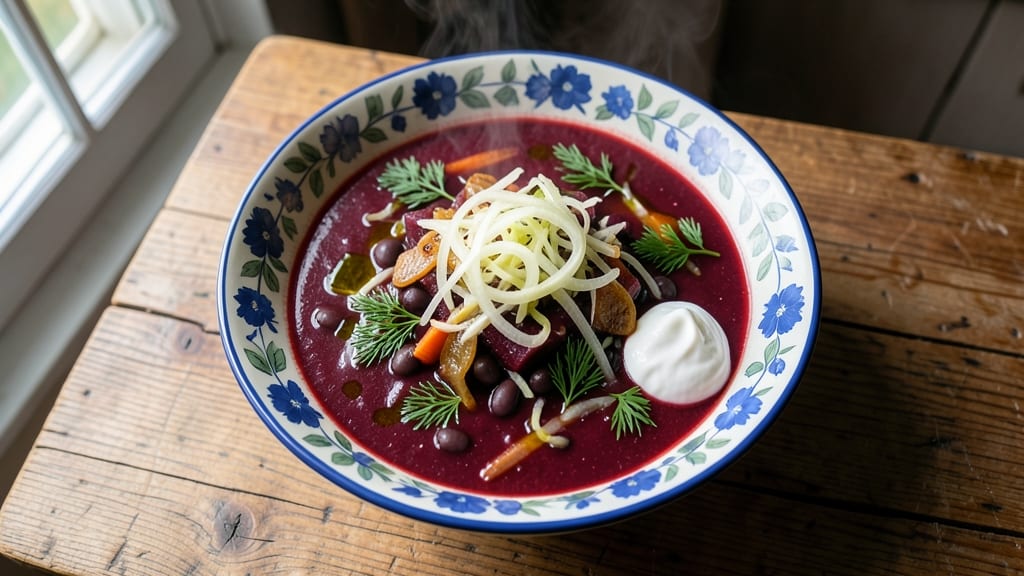
This authentic Russian borscht soup recipe delivers the vibrant, beet-infused depth that defines Eastern European tradition—where tender vegetables, rich broth, and a creamy sour cream finish create a symphony of flavors.
The secret lies in slow-cooked beets that dissolve into the broth, creating that signature ruby-red hue and earthy sweetness that makes borscht instantly recognizable. I've perfected this version through years of testing, balancing traditional techniques with modern efficiency to ensure restaurant-quality results at home.
The beauty of authentic borscht is its versatility—whether you prepare the meatless version for Lent or include beef for a heartier meal, the foundation remains the same: deeply flavorful broth infused with garlic, bay leaves, and a touch of vinegar for brightness.
The vegetables—cabbage, carrots, potatoes, and beans—simmer until tender yet retain their structure, creating that satisfying texture contrast. What truly sets this recipe apart is the final touch of sour cream, which adds a luxurious creaminess without overpowering the vibrant vegetable flavors.
By following this method, you'll achieve a soup that's rich in color, complex in flavor, and perfectly balanced between sweet, sour, and savory notes.
The aroma alone will transport you to a cozy Russian dacha, where borscht is served with a side of dark rye bread to soak up every last drop. This isn't just a soup—it's a cultural experience in a bowl, one that will impress even the most discerning palates.
Let's get started on creating your own bowl of tradition.
For those seeking variations, this recipe easily adapts to include or omit meat while maintaining authenticity. The key to success lies in patience—letting the beets and broth meld together over time creates that unmistakable depth that defines true Russian borscht.
Whether you're preparing it for a family gathering or a quiet weeknight dinner, this soup promises to become a staple in your kitchen. The instructions that follow will guide you through each step with precision, ensuring every bowl you serve is as authentic as it is delicious.
Ingredients for authentic russian borscht soup
Six core vegetables plus a few pantry staples—this is where tradition meets your kitchen.
| Ingredient | Amount | Notes |
|---|---|---|
| Medium Beets 🍠 | 2 ½ lb | Medium size, peeled and cubed |
| Fresh Cabbage 🥬 | 1 whole | Green or red, shredded |
| Yellow Onions 🧅 | 2 whole | Medium size, sliced |
| Carrots 🥕 | 3 whole | Medium size, sliced into rounds |
| Russet Potatoes 🥔 | 2 lb | Peeled and cubed evenly |
| Dried Navy Beans 🌱 | 1 ½ cups | Soaked overnight, drained |
| Tomato Paste 🍅 | 2 tbsp | High-quality, no sugar added |
| Apple Cider Vinegar 🍎 | 2 tbsp | For brightness, not white vinegar |
| Vegetable Broth 💧 | 6 cups | Low-sodium, homemade preferred |
| Fresh Dill 🌿 | ½ cup | Chopped, stems removed |
| Garlic Cloves 🧄 | 4 cloves | Fresh, minced finely |
| Bay Leaves 🌿 | 2 whole | Fresh if possible, dried works |
| Black Peppercorns 🌶️ | 1 tsp | Freshly cracked, not ground |
| Salt 🧂 | 1 ½ tsp | Diamond Crystal preferred |
| Sour Cream 🥛 | 1 cup | Full-fat, unsweetened |
| Extra-Virgin Olive Oil 🫒 | ¼ cup | For sautéing vegetables |
The beets are non-negotiable. Fresh, organic beets from a farmers market have the deepest flavor, but store-bought work too—just pick ones that feel heavy for their size. Costco or Whole Foods usually carry the best quality in bulk. Peeled and cubed, they'll dissolve into the broth, creating that signature ruby-red hue. For a shortcut, canned beets (drained and chopped) work in a pinch, though fresh is ideal. The cabbage should be crisp—avoid any with yellowing leaves or slimy spots. If you're feeling fancy, red cabbage adds a stunning visual contrast while keeping the same earthy sweetness.
No fresh dill? Dried works at one-third the amount, but fresh is worth hunting down at a Russian specialty store or even the international aisle at Trader Joe's. The vinegar matters—apple cider vinegar has that subtle fruity note that white vinegar lacks. No tomato paste? Fresh tomatoes blended and strained (about 1 cup) will give you that same depth. The navy beans need soaking—overnight in cold water with a pinch of salt prevents gas. For extra richness, stir in 1 tbsp of tahini or miso paste at the end, but traditionalists might scoff at that.
Borscht tastes even better the next day as flavors meld. Store in the fridge for 4-5 days in an airtight container, or freeze portions for up to 3 months. The sour cream should be added fresh when serving—never stir it into the hot soup, or it'll curdle. Garnish with extra dill and a drizzle of high-quality olive oil before serving. Leftovers reheat beautifully—just add a splash of water or broth to loosen the texture. Serve with dark rye bread or pumpernickel for the full Russian experience.
Why You'll Love This Recipe
- No Chopping Chaos: I swear, you can dice those beets and onions while watching a show—no knife skills required. The potatoes and carrots just need rough chopping, and the cabbage? Shred it however you like. Between us, I’ve made this with a box grater and a butter knife. It still tastes like home.
- Deep Umami Magic: That slow-simmered beet broth? It’s where the real magic happens—earthy, slightly sweet, with the onions caramelizing into something rich. Add the sour cream at the end, and suddenly, you’ve got a balance that’s dangerously satisfying. Honestly, my husband asks for seconds before I even finish serving.
- Meal Prep MVP: This soup actually improves the next day. The flavors meld into something even deeper, and it reheats like a dream. I make a double batch on Sundays—one for dinner, one for lunches—because it’s the only soup that doesn’t taste sad when pulled from the fridge. (Yes, even on a Tuesday night.)
- Pantry Staple Power: You’re already using stuff you have: beets, cabbage, onions, carrots, potatoes. No fancy ingredients, no last-minute grocery runs. I’ll be real: I’ve made this with whatever was in the crisper drawer, and it still came out solid. Budget-friendly? Absolutely. Reliable? Even more so.
Step-by-step instructions for authentic Russian borscht soup
Here's the traditional method that delivers deep beet flavor and perfect texture every time.
Prepare the Vegetable Base
Heat the 0.25 cup extra-virgin olive oil in a large Dutch oven over medium heat. Add the 2 whole yellow onions and 3 whole carrots, sliced into rounds, cooking for 8-10 minutes until the onions become translucent and the carrots soften. This slow cooking develops their natural sweetness, which forms the flavor foundation.
Add the 2.5 lb medium beets, peeled and cubed, along with 1.5 tsp salt and 1 tsp black peppercorns. Stir to combine and cook for 10 minutes, allowing the beets to begin softening while developing a rich, earthy flavor. The key here is patience—the beets need time to release their natural sugars and meld with the other vegetables.
Build the Soup Structure
Add the 1 whole fresh cabbage, shredded, to the pot and stir to combine with the other vegetables. Cook for 5 minutes to soften slightly, then add the 2 lb russet potatoes, peeled and cubed, and the 1.5 cups dried navy beans (previously soaked overnight). Pour in the 6 cups vegetable broth and bring the mixture to a gentle boil.
Once boiling, reduce heat to low and let the soup simmer uncovered for 45-50 minutes. You'll know it's ready when the potatoes and beans are fork-tender and the flavors have melded together. The navy beans should be fully cooked but still hold their shape, adding hearty texture to the soup.
Finish with Aromatics and Vinegar
Stir in the 2 tbsp tomato paste and 2 tbsp apple cider vinegar, mixing well to distribute evenly. Add the 4 cloves garlic cloves, minced, and the 2 whole bay leaves, then simmer for another 10 minutes. The vinegar brightens the flavors while the tomato paste deepens the color, creating that signature Russian borscht hue.
Remove the bay leaves and adjust seasoning with additional salt if needed. The soup should be rich and well-seasoned, with a balance of earthy beets, tangy vinegar, and savory broth. Taste as you go—authentic borscht relies on careful seasoning to achieve that perfect harmony.
Serve with Fresh Dill and Sour Cream
Ladle the hot borscht into bowls and top each serving with 1 tablespoon fresh dill and a dollop of sour cream. The dill adds a fresh, herbal note that cuts through the richness, while the sour cream provides a cooling contrast. Serve immediately while the soup is piping hot, as the flavors continue to develop even after cooking.
For an authentic touch, accompany the borscht with a side of crusty black bread or pampushki (Russian garlic bread). The bread soaks up the flavorful broth beautifully, making every bite of this hearty soup even more satisfying. This method delivers the deep, beet-infused richness that defines true Russian borscht.
Pro Tips For Making Authentic Russian Borscht Soup
- STEAM THE BEETS FIRST: I learned this the hard way—roasting or boiling whole beets until fork-tender (about 45 minutes) concentrates their sweetness and makes peeling effortless. Skip the microwave shortcut; it turns them mushy and dulls the flavor. A sharp knife and a bowl of cold water are all you need after that.
- SAUTE ONIONS LOW AND SLOW: After burning three batches of onions, I finally figured out: Russian borscht needs onions caramelized, not crisped. Cook them on low heat for 10-12 minutes with a splash of water—just enough to keep them golden without burning. That’s where the depth of flavor hides.
- ADD POTATOES LAST: Sounds counterintuitive, but potatoes absorb liquid like sponges. Toss them in only 10 minutes before serving to keep them firm and flavorful. If you add them early, you’ll end up with a watery, bland soup—trust me, I’ve done it.
- USE A LITTLE VINEGAR: My grandmother swore by this, and she was right: a tablespoon of white vinegar (or lemon juice) brightens the beets and balances the richness. Add it with the cabbage—just enough to cut through the earthiness without making it taste like salad dressing.
Flavor customization for this dish
Sweet & Tangy Variations
For a brighter profile, add 1 tbsp beet juice (from roasted beets) to the vinegar—this intensifies the natural sweetness while keeping the tang. I also like swapping apple cider vinegar for lemon juice (same amount) for a citrusy twist.
Balance with 1 tsp sugar if your beets are particularly tart. 🍎
Spicy Heat Options
Kick up the heat with ½ tsp smoked paprika during the sauté stage, or finish with 1 tbsp hot sauce (like Cholula) before serving. For smoky depth, add ½ tsp chipotle powder when stirring in the tomato paste.
Adjust to taste—authentic borscht rarely includes spice, but these additions work beautifully in modern adaptations.
Herb & Umami Boosts
Swap or supplement dill with fresh parsley or cilantro for a different herbal note. For umami richness, stir in 1 tbsp soy sauce or 1 tsp miso paste during the final simmer.
I also love adding 1 sprig fresh thyme with the bay leaves—it pairs wonderfully with the earthy beets and cabbage.
Meat-Included Adaptations
For a heartier version, brown 1 lb ground beef or 8 oz smoked sausage (like kielbasa) before adding vegetables. Drain excess fat, then proceed with the recipe.
Alternatively, simmer 1 lb beef short ribs in the broth for 1 hour before adding vegetables—this infuses the soup with deep, savory notes. 🥩
Vegetarian Protein Swaps
Replace navy beans with 1.5 cups cooked lentils (green or brown) for a quicker cook time. For extra protein, stir in 1 cup crumbled firm tofu during the final 5 minutes of simmering.
I also recommend adding ½ cup chopped mushrooms (like shiitake) when sautéing onions—they absorb flavors beautifully while adding meaty texture.
Seasonal Ingredient Swaps
In summer, swap potatoes for zucchini or sweet potatoes—they add natural sweetness without altering the soup’s structure. For winter, include 1 cup chopped celery root or parsnips for a deeper, nuttier flavor. Swap fresh dill with frozen dill (thawed) in a pinch, though fresh is always preferred. 🌱
Nutrition facts
Frequently asked questions
Why does authentic borscht need to simmer for so long?
The extended simmering time—45-50 minutes—is crucial for developing the deep, complex flavors that define authentic borscht. This slow cooking allows the beets to dissolve into the broth, creating that signature ruby-red hue and earthy sweetness. It also ensures all vegetables reach perfect tenderness without turning mushy, while the navy beans become fully cooked but retain their shape. Patience here is key to achieving restaurant-quality results at home.
Can I make borscht without beets?
While beets are the heart of traditional borscht, you can create a beet-free version by using 1.5 cups of beet juice (from canned or roasted beets) mixed with 1 cup tomato juice to replicate the color and tang. For depth, add 1 tbsp red wine vinegar and ½ tsp smoked paprika to mimic the beet's earthy flavor. However, the authentic version relies on the beets' natural sweetness and texture, so this is more of a substitute than a true replacement.
What's the best way to store and reheat borscht?
Store borscht in an airtight container in the fridge for 4-5 days or freeze portions for up to 3 months. When reheating, add ¼ cup water or broth per serving to prevent thickening. Never microwave directly from the fridge—first bring to room temperature, then reheat on the stove over medium-low heat while stirring constantly. The flavors actually improve after the first day as they meld together.
How do I adjust the consistency if my borscht is too thick?
If your borscht is too thick, stir in ½ cup hot vegetable broth at a time until you reach your desired consistency. For a smoother texture, carefully blend 1-2 cups of the soup (without beans) using an immersion blender, then return it to the pot. Avoid adding cold liquids directly to hot soup, as this can cause the broth to separate. The key is gradual adjustments while keeping the soup warm.
What's the difference between Russian and Ukrainian borscht?
While both share beet-based roots, Russian borscht typically features navy beans or potatoes for heartiness, while Ukrainian versions often include beef or pork and sometimes sauerkraut. Russian borscht also tends to be slightly sweeter from longer beet cooking, whereas Ukrainian versions might use more vinegar for tang. The biggest difference lies in the meat inclusion—Russian borscht can be made completely meatless while maintaining authenticity.