
Side Dishes
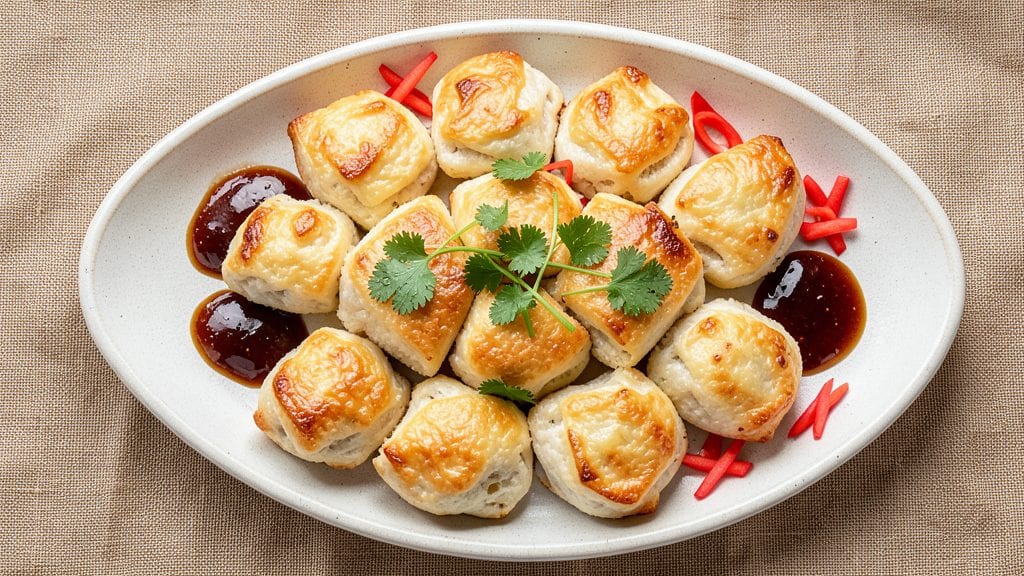
This baked bao recipe transforms traditional steamed buns into golden, crisp-edged wonders with that signature chewy pull-apart magic.
The secret lies in a precise dough formula—high-fat content for tenderness, precise yeast activation for lift, and baking at just the right temperature to create that irresistible contrast between crispy crust and soft interior.
I developed this version after years of experimenting with Asian bakery techniques, and it delivers restaurant-quality bao without a steamer.
The dough requires careful handling but rewards patience with a texture that's both airy and substantial. Proofing at controlled temperatures ensures even rising, while shaping the buns into tight rolls creates those coveted pockets for filling.
Baking at 425°F for 12-15 minutes transforms the exterior to a golden crisp while keeping the interior pillowy—no steamer needed. This method maintains the bao's signature chewiness while adding that satisfying crunch.
What you'll end up with is a tray of beautifully baked bao with crisp edges that give way to tender, chewy centers. The aroma alone—warm dough with a hint of caramelization—will have everyone reaching for seconds.
These buns hold fillings beautifully, whether you choose classic pork, sweet red bean, or vegetarian options. The pull-apart magic makes them perfect for sharing or serving as a dramatic centerpiece.
Use these baked bao as appetizers, side dishes, or even breakfast buns. The recipe scales easily for parties, and leftovers reheat beautifully. Here's how to achieve that perfect balance of textures and flavors every time—no steaming required.
Ingredients for baked bao
Twelve ingredients, two techniques—proofing and baking—that deliver restaurant-quality bao without a steamer.
| Ingredient | Amount | Notes |
|---|---|---|
| All-Purpose Flour 🌾 | 4 cups | Sifted for even texture |
| Instant Yeast 🍞 | ½ tsp | Active dry works too |
| Granulated Sugar 🍬 | ½ cup | For yeast activation |
| Unsalted Butter 🧈 | ¾ cup | Cold, cubed for dough |
| Whole Milk 🥛 | ¾ cup | Room temperature preferred |
| Large Eggs 🥚 | 2 whole | Room temperature for mixing |
| Diamond Crystal Kosher Salt 🧂 | 1 ½ tsp | Adjust for salt preference |
| Baking Powder 🍞 | 1 tsp | For structural lift |
| Sesame Seeds 🌱 | ¼ cup | Toasted for garnish |
| Vegetable Oil 🫒 | ½ cup | For dough handling |
| Cornstarch 🌽 | 1 tbsp | Prevents sticking |
| Egg Wash 🥚 | 1 whole | For golden crust |
| Sesame Oil 🫒 | 1 tbsp | For brushing crust |
The flour forms the foundation, but King Arthur or Gold Medal brands yield superior gluten structure for that signature chewy pull-apart magic. Butter content is critical—European-style butter with 82% fat (like Plugrá) creates the optimal tenderness. For yeast, Fleischmann's active dry works best when proofed in warm milk (110°F). The sesame seeds should be toasted in a dry pan until golden—Trader Joe's carries them pre-toasted, saving time. Store flour in an airtight container to prevent oxidation, which degrades gluten quality over time.
No sesame oil? Avocado oil at half the amount works in a pinch, though it lacks the nutty depth. Substitute whole milk with 2% milk plus 1 tbsp cream for similar fat content. For a gluten-free adaptation, King Arthur gluten-free flour blend requires adding 1 extra tbsp xanthan gum. The baking powder is essential—Aluminum-free brands like Rumford prevent metallic aftertaste. Proofing yeast in warm milk (not water) activates it faster, creating more lift. If your dough feels sticky after mixing, add cornstarch 1 tbsp at a time until pliable.
Dough keeps 24 hours refrigerated wrapped in plastic, ideal for overnight proofing. Shaped bao hold 3 days refrigerated in an airtight container, though texture softens. For longer storage, freeze uncooked shaped bao for 2 months—bake straight from frozen at 400°F for 18-22 minutes. Reheat baked bao at 350°F for 5 minutes to restore crispness. The sesame oil brushes best when applied immediately post-baking for maximum aroma infusion.
Why You'll Love This Recipe
- No Yeast Struggle: I’ve never had dough rise so reliably—just toss in that instant yeast with warm milk, and it puffs up like magic. No waiting hours, no failed batches.
- Buttery Soft Magic: That creamy whole milk and cold butter? It makes the bao so tender inside with a golden crust that’s just crisp enough. Honestly, I reach for seconds without thinking.
- Breakfast to Brunch: Use them for stuffed French toast in the morning or as dinner rolls with soup—same dough, endless possibilities. My kids even sneak them cold for snacks.
- Budget-Friendly Staple: Flour, sugar, milk—these are pantry basics that stretch far. I make a double batch, freeze half, and still save money compared to store-bought buns. (Yes, even on a Tuesday night.)
Step-by-step instructions for baked bao recipe
Mastering this baked bao method transforms traditional steamed dough into a crispy, golden exterior with a chewy interior—no steamer required.
Mix the Dough with Precision
In a large mixing bowl, combine the 4 cups All-Purpose Flour, 1.5 tsp Diamond Crystal Kosher Salt, 1 tsp Baking Powder, and 0.5 tsp Instant Yeast. Whisk these dry ingredients together until fully incorporated, ensuring no lumps remain. This creates a homogenous base for even baking.
In a separate bowl, melt the 0.75 cup Unsalted Butter until fully liquid, then whisk in the 0.75 cup Whole Milk, 0.5 cup Granulated Sugar, and 2 whole Large Eggs until smooth and well combined. Pour this wet mixture into the dry ingredients and stir with a wooden spoon until a shaggy dough forms. The dough will be sticky—this is normal. Use your hands to gently knead the dough on a lightly floured surface for 5-7 minutes until it becomes smooth and elastic. If the dough feels too sticky, add 1 tablespoon of the 0.5 cup Vegetable Oil gradually until it reaches a workable consistency.
Incorporate Cornstarch and Rest the Dough
Return the dough to the mixing bowl and sprinkle the 1 tbsp Cornstarch evenly over the surface. Gently fold the cornstarch into the dough using a spatula, ensuring it coats the dough evenly. This step prevents sticking during shaping and baking. Cover the bowl with a damp kitchen towel and let the dough rest at room temperature for 1 hour. This resting period allows the gluten to relax, making the dough easier to handle and ensuring a tender texture.
After resting, divide the dough into 12 equal portions, each weighing approximately 4 ounces. Roll each portion into a smooth ball and place them on a parchment-lined baking sheet, spacing them about 2 inches apart. Cover the baking sheet with another damp towel and let the dough balls rest for an additional 30 minutes. This final rest ensures uniform baking and prevents the bao from spreading too much during the oven process.
Prepare for Baking with Egg Wash and Sesame Oil
Preheat your oven to 375°F and position a rack in the middle position. In a small bowl, whisk together the 1 whole Egg Wash and 1 tbsp Sesame Oil until fully combined. This mixture will create a glossy, golden crust on the bao. Using a pastry brush, lightly coat each dough ball with the egg wash mixture, ensuring an even layer. Sprinkle 1 tablespoon of the 0.25 cup Sesame Seeds evenly over the top of each bao, pressing them gently into the surface. This not only adds texture but also enhances the visual appeal with a nutty aroma.
Bake the bao for 20-25 minutes until they are deep golden brown and the internal temperature reaches 190°F when measured with an instant-read thermometer. The bao should have a crispy exterior with a soft, chewy interior. If the tops brown too quickly, tent the baking sheet with aluminum foil to prevent over-browning while allowing the bao to cook through evenly.
Cool and Serve for Optimal Texture
Remove the baked bao from the oven and let them cool on the baking sheet for 5 minutes. This brief cooling period allows the bao to set slightly, making them easier to handle without falling apart. Transfer the bao to a wire rack and let them cool completely to room temperature. The contrast between the crispy exterior and chewy interior will be most pronounced once fully cooled.
Serve the bao warm or at room temperature. For the best experience, slice one open to reveal the soft, pillowy interior and the crispy, golden crust. The combination of textures and the nutty aroma from the sesame seeds make these baked bao a perfect alternative to traditional steamed versions, ideal for sandwiches or as a snack on their own.
Pro Tips For Making Baked Bao
- Use Room-Temp Butter: Cold butter creates tough, dense bao—no one wants that. Let your unsalted butter sit out for 30 minutes before mixing, or even better, microwave it in 10-second bursts until just soft. You’re not melting it; you’re making it pliable so it distributes evenly and keeps those buns tender.
- Proof Until Bubbly: I learned this the hard way—skipping the proof test means sad, dense bao. After the first rise, poke your dough with a finger. If it springs back slowly (like 2+ seconds), give it another 30–45 minutes. Whole milk and yeast need time to work their magic, and rushing this step is how you end up with flat, chewy disappointments.
- Score Before Baking: Those pretty steam-puffed bao? They start with a quick slash. Use a sharp knife or razor to cut a shallow "X" on the top of each bao before baking—this lets steam escape and prevents them from cracking weirdly. Do it right before baking, or the cuts will close up.
- Bake in Two Batches: Overcrowding the tray = uneven baking and soggy bottoms. Bao need space to rise properly, so bake them in two rounds if your sheet’s packed. Start with 12–15 at a time, then rotate the tray halfway through for even golden-brown tops. Your future self will thank you—no one likes a half-baked bao.
Wine and beer pairings for baked bao
Crispy Bao with Light Beer
The nutty, slightly malty profile of a German Helles beer complements the baked bao’s crispy exterior and sesame aroma beautifully. I recommend a chilled Weihenstephaner Original or Ayinger Celebrator—their clean, crisp finish cuts through the richness without overpowering.
The subtle hop bitterness balances the dough’s sweetness, creating a refreshing contrast. Serve the beer slightly frosty to enhance the aroma pairing. 🍺
Sweet White Wine Balance
A dry Riesling from Germany’s Mosel region elevates the baked bao’s textures with its bright acidity and honeyed apple notes. Look for a Dr. Loosen Blue Slate or Joh. Jos. Prüm—their crisp finish mirrors the bao’s crisp edges while the residual sweetness harmonizes with the sesame.
Chill to 45-50°F for optimal sipping. The wine’s minerality also enhances the dough’s chewy interior. 🍷
Umami Boost with Asian-Inspired Wine
For a bold twist, try a Gewürztraminer from Alsace, France. The wine’s lychee and rose notes pair surprisingly well with the baked bao’s nutty sesame crust and buttery dough.
A Trimbach Gewürztraminer Vendanges Tardives adds depth without overwhelming. Serve slightly cooler than Riesling (50-55°F) to let the floral aromas shine alongside the bao’s toasted sesame. 🌸
Craft Beer for Bold Flavors
If you prefer beer, a Belgian Witbier like Hoegaarden or Stella Artois Wit brings citrusy coriander notes that brighten the bao’s richness. The effervescence cleanses the palate between bites, making it ideal for shared plates.
For a smokier option, a German Rauchbier like Schlenkerla Räucher Bier adds a subtle wood-fired depth that mirrors the baked bao’s caramelized crust. 🍻
Non-Alcoholic Pairings
For a refreshing non-alcoholic option, serve with jasmine iced tea lightly sweetened with honey. The floral notes complement the sesame, while the tea’s acidity balances the dough’s richness.
Alternatively, a ginger beer (like Feast Brewing) adds a spicy kick that enhances the bao’s crispy texture. Both options keep the meal vibrant and crowd-pleasing. 🌿
Nutrition facts
Frequently asked questions
Why does my baked bao dough spread too much in the oven?
The dough may spread if it wasn't chilled enough before baking or if the oven temperature fluctuates. Always proof the dough balls for 30 minutes at room temperature before baking, and use an oven thermometer to confirm 375°F. For extra insurance, bake on the middle rack where heat is most even.
Can I make these without a stand mixer?
This recipe is designed for hand mixing—just use a large mixing bowl and your hands to knead the dough for 5-7 minutes until smooth. The dough will be sticky, so wet your hands slightly to prevent sticking. A wooden spoon helps incorporate the wet ingredients before kneading.
How do I add fillings to baked bao?
Shape the dough into balls, flatten slightly, add 1 teaspoon of filling (like pork, red bean, or scallion), then seal tightly by pinching the edges. For extra security, use a bit of egg wash to seal the seams. Bake as directed—the fillings will stay contained thanks to the dough's chewy texture.
Can I bake these in a convection oven?
Yes, but reduce the temperature to 350°F and bake for 18-22 minutes instead of 20-25. Convection ovens circulate air more aggressively, which can dry out the bao faster. Monitor closely after 15 minutes to prevent over-browning. The interior should still reach 190°F for perfect texture.
What's the best way to reheat baked bao?
For crispy exteriors, reheat at 350°F for 5-7 minutes until golden. For microwave reheating, wrap in a damp paper towel and heat for 10-15 seconds—this restores some chewiness without drying. Never reheat in the oven on high heat, as it can burn the crust.