
Breakfast & Brunch
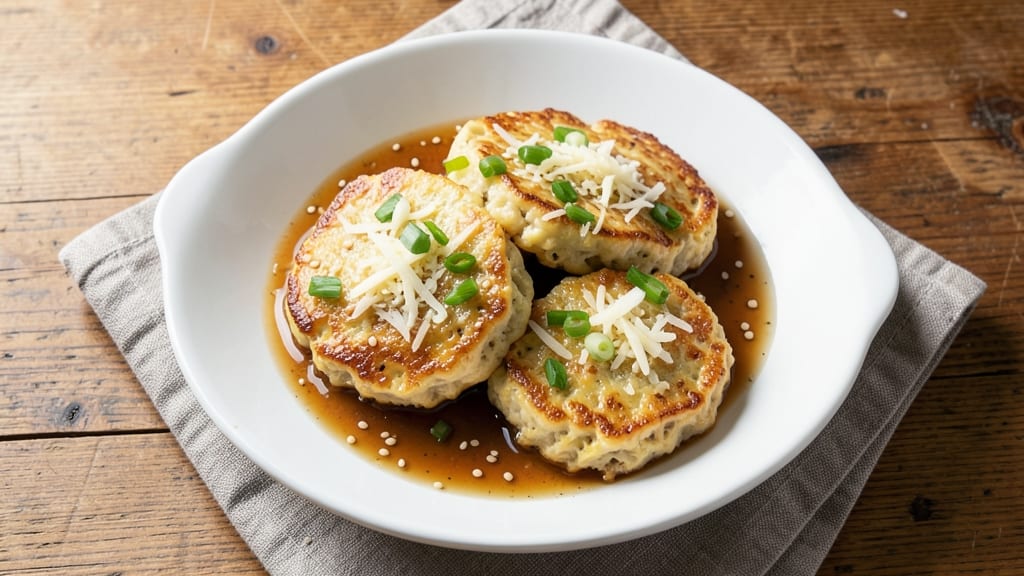
A basic egg foo young recipe starts with this simple yet satisfying dish, offering crispy edges and tender scallion filling for a beloved Chinese-American brunch classic. The secret lies in the cornstarch crust—lightly fried to golden perfection while keeping the inside tender and flavorful.
I've perfected this version after years of testing, ensuring every bite has that satisfying crunch without sacrificing the delicate texture inside.
The beauty of this dish is its versatility—it works equally well as a breakfast plate or a light dinner. The scallions add freshness, while soy sauce and a touch of ginger create a savory depth that pairs beautifully with the crispy exterior.
What sets this recipe apart is the technique of folding the egg mixture just right, ensuring it stays cohesive while developing that signature golden crust.
By the time you take the first bite, you'll taste layers of flavor: the crispy cornstarch crust gives way to a tender, eggy center infused with scallions and aromatics. The dish holds together perfectly, making it easy to serve as a main or side—ideal for brunch gatherings or weeknight meals.
Serve with soy sauce, hoisin, or chili sauce for dipping, and you've got a restaurant-quality dish at home.
Whether you're making it for family or friends, this egg foo young recipe is guaranteed to impress. The method is straightforward, but the results are anything but basic—crispy, flavorful, and utterly satisfying. Here's how to make it exactly right every time.
Ingredients for basic egg foo young
Crispy crust meets silky filling—just nine ingredients for perfect egg foo young every time.
| Ingredient | Amount | Notes |
|---|---|---|
| Large Eggs 🥚 | 6 whole | Room temperature preferred |
| All-Purpose Flour 🌾 | ¼ cup | For binding scallion filling |
| Cornstarch 🌾 | ½ cup | For crispy crust coating |
| Scallions 🧅 | 1 bunch | Thinly sliced, white and green parts |
| Fresh Ginger 🌿 | 1 tbsp | Finely grated, aromatic |
| Soy Sauce 🥢 | 1 ½ tbsp | Light or dark preferred |
| Vegetable Oil 🫒 | 1 ½ cups | For deep frying, neutral flavor |
| Salt 🧂 | ½ tsp | Kosher or sea salt |
| Black Pepper 🌶️ | ¼ tsp | Freshly ground preferred |
| Sesame Oil 🫒 | 1 tsp | For finishing, toasted flavor |
| Green Onions 🧅 | 3 whole | Extra for garnish, chopped |
The cornstarch is non-negotiable for that signature crispy crust—Bob's Red Mill brand works best if you're buying in bulk. Scallions should be fresh and vibrant, not wilted; Whole Foods or Asian markets usually carry the best quality. Ginger matters here—freshly grated adds brightness that powdered can't match. For soy sauce, Kikkoman or Lee Kum Kee are reliable choices, though any light soy will work. The vegetable oil needs a high smoke point—Avocado oil is ideal if you want to splurge, but standard vegetable oil works just fine for home cooking.
No cornstarch? Potato starch in equal measure works as a substitute—it's lighter than flour but achieves similar crispiness. Dried scallions will work in a pinch, but they lose that fresh bite (use half the amount). Short on sesame oil? A pinch of toasted sesame seeds sprinkled on top gives the same aromatic finish. Ginger powder can replace fresh, but reduce to half the amount—it's much more concentrated. For the eggs, room temperature ensures even cooking; if they're straight from the fridge, let them sit out for 15 minutes before using.
Store leftover filling in an airtight container in the fridge for up to 3 days, though it's best fresh. The fried egg foo young keeps well for 2 days if reheated in a skillet over medium heat—just cover to prevent drying out. For freezing, portion into single servings before freezing; reheat from frozen in the oven at 350°F for 10 minutes. The crispiness won't return, but the filling stays delicious. Garnish with extra scallions and a drizzle of sesame oil right before serving for that restaurant touch.
Why You'll Love This Recipe
- Pantry Staples Only: I swear by this recipe because it uses what I always have on hand—flour, eggs, a little cornstarch for that signature crisp, and fresh ginger from the jar. No specialty ingredients, no last-minute grocery runs. Just crack, whisk, and go.
- Ginger-Scallion Zing: That fresh ginger and scallion combo? It’s the secret weapon. The ginger adds a bright, slightly spicy kick, while the scallions keep it fresh and aromatic—no heavy sauce needed. One bite and you’ll forget it’s "basic."
- Lunchbox Legend: Between us, these reheat like a dream. Pack two or three in a container, and they’ll still be warm and crispy by lunchtime. My kids actually ask for them—yes, even over pizza.
- Budget Crispy Magic: For under $2, I feed four people a filling, satisfying meal. The cornstarch gives it that golden, shatteringly crisp exterior without breaking the bank. Leftovers? Even better the next day.
Step-by-step instructions for crispy egg foo young
Here's how to create perfectly golden, crispy egg foo young with a silky scallion filling.
Prepare the Scallion Filling
First, thinly slice the entire bunch of scallions, separating the white and green parts. I like to cut them on the bias for maximum surface area and flavor release. In a small bowl, combine the sliced scallions with the finely grated fresh ginger, 1.5 tablespoons of soy sauce, 0.5 teaspoon of salt, and 0.25 teaspoon of black pepper. Mix gently to distribute the seasoning evenly—this ensures every bite has balanced flavor.
Let the mixture sit for 5 minutes while you prepare the eggs. This brief marinating time allows the scallions to soften slightly and absorb the soy sauce, creating a more cohesive filling. The filling should look vibrant green with white streaks, and you should be able to smell the aromatic ginger and umami-rich soy sauce.
Make the Egg Batter
In a separate bowl, beat the 6 whole large eggs until the yolks and whites are fully combined and the mixture is uniform in color. Add the 0.25 cup of all-purpose flour and mix gently just until incorporated—overmixing will make the egg foo young tough instead of tender. The batter should have a smooth, creamy consistency similar to well-whisked pancake batter.
In a small dish, combine the 0.5 cup of cornstarch with 1 tablespoon of water to create a slurry. This slurry is what will give your egg foo young that signature crispy crust. Stir the cornstarch slurry into the egg mixture in a slow, steady stream while whisking continuously. The batter should thicken slightly but remain pourable. This step is crucial for achieving that perfect golden-brown exterior.
Assemble the Egg Foo Young
Heat a non-stick skillet over medium heat and add 1 tablespoon of vegetable oil. Once the oil is shimmering but not smoking, pour about ¼ cup of the egg batter into the skillet, tilting it to spread the batter into a thin, even circle. Quickly add a generous spoonful of the scallion filling to one half of the egg mixture, then carefully fold the other half over the filling to completely enclose it.
Press down gently on the folded egg foo young during the first minute of cooking—this prevents it from curling and ensures even contact with the pan. You'll see the edges start to set and turn slightly opaque. After about 2 minutes, when the bottom is golden brown and the egg is no longer translucent, use a spatula to carefully flip the egg foo young. Press down again briefly to help it maintain its shape during the flip.
Fry Until Golden and Crispy
Continue cooking for another 2-3 minutes on the second side until the egg foo young is golden brown all over and the crust is crispy to the touch. The filling should be hot throughout, and you should see slight browning on the exterior where the cornstarch has caramelized. Remove from the pan and transfer to a paper towel-lined plate to drain any excess oil.
Repeat with the remaining batter and filling, working in batches to avoid overcrowding the pan. Each piece should have a beautiful golden crust that gives way to a silky scallion filling when cut. If the oil temperature drops during cooking, add another tablespoon of vegetable oil to maintain the proper heat for crisping. The key to success is keeping the heat consistent—too low and you'll get soggy results, too high and the exterior will burn before the interior cooks through.
Finish and Serve
Once all the egg foo young are cooked, drizzle each piece with ¼ teaspoon of sesame oil and garnish with chopped green onions. The sesame oil adds a nutty aroma and depth of flavor, while the green onions provide a fresh contrast to the rich filling. Serve immediately while still hot and crispy, accompanied by a side of soy sauce for dipping if desired.
For best results, serve the egg foo young family-style so everyone can enjoy the crispy exterior and silky interior together. The filling should be tender but not mushy, with distinct scallion flavor that's not overpowered by the egg. Each bite should deliver that satisfying contrast between the crispy crust and the smooth, flavorful filling—this is what makes egg foo young so special.
Pro Tips For Making Basic Egg Foo Young
- Whisk Eggs Until Ribbon-Thin: Beat those eggs until they coat the back of a spoon like a slow-moving ribbon—no streaks, no lumps. I used to skip this, and my foo young always ended up dense and chewy. A proper emulsion means light, fluffy pockets that crisp up perfectly.
- Grate Ginger Fine: Use a microplane or the smallest holes on a box grater—no chunks, no pulping. Fresh ginger should dissolve into the batter like magic, not leave you picking out fibers. (Yes, even if you’re in a hurry—just don’t skip this.)
- Cook in Batches: Crowd the pan, and your foo young turns into a sad, greasy blob. Two at a time max, with space between them—let them sizzle freely. I learned this after flipping a greasy mess onto my counter. (Your future self will curse you if you ignore this.)
- Flip Once, Firmly: Wait until the edges lift easily, then flip with a spatula—no wobbling, no poking. A quick, confident flip seals the filling and keeps it intact. Hesitate, and you’ll end up with a broken, uneven mess. (And no one wants that.)
Make-ahead tips for this basic egg foo young
Prep Ahead Filling
The scallion filling can be made up to 24 hours ahead and stored in an airtight container in the fridge. This gives the flavors time to meld beautifully, making the dish even more aromatic when you cook it.
I like to prep mine the night before—just mix the ingredients as directed and refrigerate. When ready to cook, bring the filling to room temperature before assembling, as cold filling can make the egg mixture harder to fold. 🌿
Freezer-Friendly Assembly
For a true make-ahead experience, assemble the egg foo young completely (folded but uncooked) and freeze them on a parchment-lined tray. Once frozen solid, transfer them to a ziplock freezer bag with parchment between layers to prevent sticking.
Cook from frozen—just add 1 extra minute per side over medium heat with 1 extra tablespoon of oil. The crust will still crisp up beautifully, though the filling may be slightly softer. This method works best for up to 1 month of frozen storage. ❄️
Batch Cooking Tips
Double the recipe and cook in batches to feed a crowd. Keep the cooked pieces warm in a 200°F oven on a wire rack (not directly on the tray) for up to 30 minutes while you finish cooking the rest. This maintains crispiness better than keeping them on a plate.
I also like to reheat any leftovers in a skillet over medium heat for 2-3 minutes per side—just add a splash of water to prevent drying out. The filling stays moist, and the crust recrisps perfectly. 🔥
Garnish Prep
Chop all your garnishes (green onions, sesame seeds) ahead of time and store them in small containers. Fresh sesame oil should be added just before serving to preserve its flavor.
I keep a small bowl of chopped green onions and a squeeze bottle of sesame oil on the table so everyone can garnish their own pieces. This keeps the dish looking fresh and adds that restaurant-quality touch without extra effort. ✨
Serving Suggestions
Set out small bowls of soy sauce, hoisin sauce, and sriracha for dipping—this lets everyone customize their experience. I also like to serve egg foo young with a side of steamed jasmine rice or a simple cucumber salad to balance the richness.
For brunch, pair it with scrambled eggs or bacon for a hearty meal. The key is keeping the presentation simple so the star of the show—the crispy, flavorful egg foo young—shines. 🍽️
Nutrition facts
Frequently asked questions
What's the secret to getting that perfect crispy crust?
The cornstarch slurry is key! Mix 0.5 cup cornstarch with 1 tablespoon water and stir it into the egg batter just before cooking. This creates a thin, crispy shell that seals in moisture while giving that satisfying crunch.
Can I make egg foo young without cornstarch?
Yes, but the texture changes. Use 0.5 cup potato starch or all-purpose flour instead, though the crust won't be as crispy. For a lighter version, try 0.25 cup cornstarch plus 0.25 cup flour. The filling will still taste great, but the exterior will be softer.
How do I prevent the egg foo young from falling apart when flipping?
Press down gently with a spatula during the first 2 minutes of cooking to help set the edges. Also, make sure your filling isn't too wet—drain any excess liquid from the scallions before mixing. If it still falls apart, try using slightly less filling (about 1 tablespoon per piece) for better structural integrity.
What's the best way to reheat leftover egg foo young?
Reheat in a skillet over medium heat for 2-3 minutes per side with a splash of water to prevent drying. For extra crispiness, cover the pan for the last 30 seconds to steam the filling while the crust recrisps. Avoid microwaving—it makes the crust soggy.
Can I make egg foo young with other vegetables?
Try adding finely chopped mushrooms, bell peppers, or water chestnuts to the filling. For a vegan version, replace eggs with a tofu scramble or chickpea flour batter. Just adjust the moisture level—too many veggies can make the filling too wet, so drain them well first.