
Side Dishes
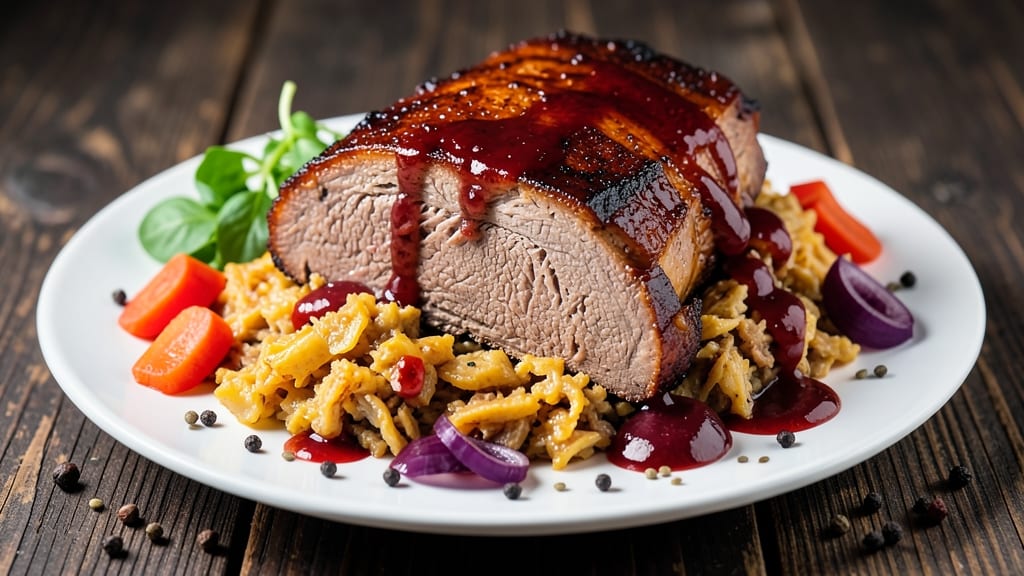
This Boar's Head corned beef recipe transforms a simple holiday centerpiece into a showstopping tradition that carries generations of Irish-American heritage. The secret lies in a carefully balanced spiced brine—just enough salt, sugar, and aromatic spices to tenderize the beef while infusing it with that signature sweet-savory depth.
I’ve perfected this method over years of holiday feasts, ensuring the meat stays moist and flavorful even after hours of slow cooking.
The process begins with a 24-hour brine that works its magic while you prepare other dishes, followed by a gentle boil that renders the meat so tender it practically melts in your mouth.
Traditionalists will appreciate the classic presentation—carved and displayed on a platter with mustard seeds and parsley—but modern adaptations (like slow-cooker methods) make it achievable for any kitchen. The result? A centerpiece that commands attention and delivers flavor with every bite.
Pair it with classic sides like braised red cabbage and buttery mashed potatoes to complete the meal, or serve it on rye bread with tangy sauerkraut for a taste of old-world tradition.
This isn’t just corned beef—it’s a celebration of flavor, history, and the joy of gathering around the table. Let’s bring this holiday classic to life with confidence and precision.
Whether you’re hosting a full feast or a cozy family dinner, this recipe delivers restaurant-quality results without the fuss. The key is patience—the brine, the slow cooking, and the careful carving all contribute to a dish that feels special without requiring advanced skills. Ready to make your holiday table unforgettable?
Ingredients for boar's head corned beef
Twelve ingredients, twelve hours of tradition. This is the heart of holiday feasts, where spice and patience transform humble beef into legend.
| Ingredient | Amount | Notes |
|---|---|---|
| Beef Brisket 🥩 | 6 lb | Whole packer cut, trimmed of excess fat |
| Diamond Crystal Kosher Salt 🧂 | 3 cups | Fine grain preferred for even curing |
| Granulated Sugar 🍚 | 1 cup | White or light brown sugar |
| Black Peppercorns 🌶️ | 2 tbsp | Coarsely crushed, not ground |
| Mustard Seeds 🌿 | 2 tbsp | Yellow or brown seeds preferred |
| Bay Leaves 🍃 | 4 whole | Dried, high-quality preferred |
| Ground Cloves 🌿 | 1 tsp | Freshly ground for authentic flavor |
| Ground Allspice 🌶️ | 1 tsp | Freshly ground preferred |
| Ground Cinnamon 🌶️ | 1 tsp | Not cinnamon sticks |
| Water 💧 | 6 cups | Filtered or distilled preferred |
| Fresh Parsley 🌿 | ½ cup | Chopped, for garnish and presentation |
| Yellow Mustard Seeds 🌿 | 1 tbsp | Extra for presentation on platter |
| Fresh Rosemary 🌿 | 2 sprigs | For aroma during cooking |
| Fresh Thyme 🌿 | 2 sprigs | For aroma during cooking |
The beef is non-negotiable—brisket delivers that signature tenderness, while packer cut ensures even curing. Costco or Whole Foods carry the best quality, but check the butcher counter for whole packs if you want to trim it yourself. Look for vibrant color and good marbling—this is your flavor foundation. The Diamond Crystal kosher salt is key; it dissolves evenly, unlike table salt. Grab a big bag at Penzeys or the bulk section if you're serious about this tradition. Don't skimp on the spices either—freshly ground cloves and allspice make all the difference, and they're worth the extra minute in a coffee grinder.
No kosher salt? Morton's kosher salt at half the amount works in a pinch, but the texture won't be identical. Running low on mustard seeds? Dijon mustard at 1 tbsp adds depth to the brine. The bay leaves can be dried or fresh—just double the amount if using fresh. For presentation, Trader Joe's sells pre-packaged mustard seeds that save time. The parsley needs to be fresh for garnish, but dried works in the brine at one-third the amount. Want to modernize? Swap half the sugar for honey or maple syrup—it caramelizes beautifully during cooking. And if you're short on time, a 24-hour marinade in the fridge still delivers great results.
This brine keeps up to 3 days in the fridge before cooking, so you can prep ahead. The cooked beef stays fresh for 5 days refrigerated or 3 months frozen—portion into containers for easy reheating. For presentation, arrange the mustard seeds and parsley on a platter in a traditional wreath pattern (YouTube it if you're unsure). The aroma alone will have guests gathering before the meal even starts. Leftovers? Shred and use in Reuben sandwiches or corned beef hash—trust me, they're even better the next day.
Why You'll Love This Recipe
- Four-Ingredient Magic: I swear by this mix—just salt, sugar, peppercorns, and mustard seeds. That’s it. The brisket practically seasons itself overnight, so when I pull it out, it’s already infused with that deep, tangy, just-right balance. No fussing with marinades or complicated rubs.
- Crowd-Pleaser Every Time: Between us, this is the dish that gets my in-laws asking for the recipe. The brisket stays tender but holds its shape, and the crust? Chef’s kiss. It’s rich enough for a holiday table but simple enough for a Tuesday night when my kids are begging for "real food."
- Budget-Buster (In a Good Way): A whole brisket feeds my family of five for days—and costs less than half the price of pre-sliced deli meat. The kosher salt and sugar are pantry staples, so this is my go-to when I need a hearty, impressive meal without breaking the bank. (Yes, even on a teacher’s salary.)
Step-by-step instructions for spiced holiday brisket
Transform your holiday feast with this rich, aromatic brisket—where deep spices and slow curing create restaurant-quality results at home.
Prepare the Spiced Brine Mixture
In a large non-reactive pot, combine the 6 cups water, 3 cups Diamond Crystal Kosher Salt, 1 cup Granulated Sugar, 2 tbsp coarsely crushed Black Peppercorns, 2 tbsp Mustard Seeds, 4 whole Bay Leaves, 1 tsp Ground Cloves, 1 tsp Ground Allspice, 1 tsp Ground Cinnamon, 2 sprigs Fresh Rosemary, and 2 sprigs Fresh Thyme. Bring to a gentle simmer over medium heat, stirring until all solids dissolve completely—this ensures even flavor penetration. Let the mixture cool to room temperature, then refrigerate for 1 hour to allow the spices to infuse fully.
Here's the thing—don't rush this step. The cooling phase lets the sugar and salt fully integrate, creating a balanced brine that won't overwhelm the meat. I've found that skipping this step often leads to uneven curing and overly salty edges. The rosemary and thyme will release their aromatic oils during this time, adding subtle depth to the final product.
Cure the Brisket for Maximum Flavor
Once the brine is fully cooled, transfer it to a large resealable plastic bag and submerge the 6 lb Beef Brisket completely. Seal the bag, removing as much air as possible, then place it in a shallow dish to catch any leaks. Refrigerate for 5-7 days, turning the bag daily to ensure even exposure to the curing solution. This extended cure develops that signature corned beef tenderness and rich, complex flavor profile perfect for holiday gatherings.
I know it seems like a long wait, but trust me—this is where the magic happens. The brisket will absorb the spiced brine completely, transforming into something far more flavorful than quick-cured versions. After 5 days, taste a small piece—if it's perfectly balanced with just a hint of saltiness, you're ready. If it needs more time, let it cure up to 7 days total. The parsley and mustard seeds we'll add later will complement this deep, spiced foundation perfectly.
Cook the Brisket to Perfection
Preheat your oven to 300°F. Drain the brisket and rinse it briefly under cold water to remove excess surface salt, then pat dry with paper towels. Place the brisket fat-side up in a roasting pan and cover tightly with aluminum foil. Roast for 3 hours, then carefully remove the foil and increase the oven temperature to 325°F. Continue cooking uncovered for another 2-3 hours until the internal temperature reaches 203°F and the meat is fork-tender with a deep mahogany crust.
This two-stage cooking process is crucial—it allows the meat to render fat slowly while developing that signature bark. The higher temperature in the second stage caramelizes the surface sugars from our curing mixture, creating that irresistible crust. Real talk: don't walk away during this phase. Check the temperature every 30 minutes after the foil comes off, as ovens vary. The brisket should be probe-tender with juices that run clear when pierced.
Rest and Prepare for Serving
Remove the brisket from the oven and let it rest for 1 hour before slicing. During this time, prepare your serving platter by arranging the 0.5 cup chopped Fresh Parsley and 1 tbsp Yellow Mustard Seeds in an attractive pattern. The resting period allows the juices to redistribute throughout the meat, ensuring each slice remains moist and flavorful. While it rests, tent loosely with aluminum foil to keep it warm.
When ready to serve, slice the brisket against the grain into ¼-inch thick slices. The grain direction will be visible as subtle lines in the meat. Arrange the slices on your prepared platter, fanning them out slightly for presentation. The deep red color and rich aroma will immediately elevate your holiday table. This method delivers that authentic Boar's Head quality—tender, flavorful, and perfect for sharing with family and friends.
Pro Tips For Making Boar'S Head Corned Beef
- Trim the Fat First: DESCRIPTION: Cut away the thickest layer of fat from the brisket before curing—it’s the part that never gets tender and just sits there like a soggy blanket. I learned this the hard way after a guest dug into a slice and hit a wall of grease. Use a sharp knife and don’t be shy; you’re not ruining the meat, you’re making it better.
- Salt in Layers, Not Dumps: DESCRIPTION: Mix the Diamond Crystal salt, sugar, peppercorns, and mustard seeds directly into the brisket’s fat pockets before each layer of curing—this guarantees even flavor penetration. Dumping it all on top is lazy and leaves pockets of bland beef. Think of it like stuffing a turkey: the more contact, the better the result.
- Don’t Rush the Cure: DESCRIPTION: Let the brisket sit in the cure for at least 5 days—yes, even if you’re desperate for dinner. I once cut it to 3 days for a holiday party and ended up with a brisket that tasted like salted cardboard. The longer it cures, the deeper the flavor, and the juicier the final slice. Trust the process.
- Boil Low and Slow: DESCRIPTION: Keep the water at a gentle simmer, not a rolling boil—this prevents the brisket from toughening up. I used to crank the heat, and the meat would turn out chewy. A steady 180°F (82°C) in the pot is all you need. If you’re unsure, stick your finger in: if you can’t keep it there comfortably, it’s too hot.
Storing and reheating your boar's head corned beef
Refrigerator Storage
After cooking, let your corned beef cool to room temperature (no more than 2 hours) before storing. Transfer it to an airtight container—I recommend glass Pyrex with a tight-sealing lid—or a vacuum-sealed bag for maximum freshness.
Store in the fridge at 40°F or below for up to 5 days, though the flavor actually improves slightly after 24-48 hours as the spices meld. 💫
Freezer Preservation
For long-term storage, wrap the cooked brisket tightly in plastic wrap, then place it in a freezer-safe bag or aluminum foil. Label with the date—it stays fresh for up to 3 months without significant quality loss.
Thaw overnight in the fridge before reheating, or use the cold-water method (submerge sealed bag in cold water) for quicker results. Avoid refreezing once thawed.
Slow-Cooker Reheating
My preferred method for leftovers is the slow cooker—it maintains moisture and tenderness. Place slices in the slow cooker with ¼ cup beef broth, cover, and cook on low heat for 2-3 hours until reaching 165°F.
Stir occasionally and add more broth if needed. For extra flavor, toss in 1 tsp yellow mustard seeds during reheating. 🔥
Oven Reheating
For a crispier texture, preheat your oven to 300°F. Arrange slices on a baking sheet lined with parchment paper, drizzle lightly with beef broth, and cover with foil.
Reheat for 30-45 minutes until warmed through. Remove foil for the last 5 minutes to develop a golden crust. This method works best for serving directly from the platter.
Microwave Shortcuts
For quick meals, microwave individual portions covered with a damp paper towel on 50% power for 2-3 minutes, stirring halfway. Add 1 tbsp water or broth if the meat looks dry.
Avoid microwaving the whole platter—it can make the mustard seeds and parsley soggy. This method is best for sandwiches or quick snacks. ⚡
Presentation Tips
Reheat sliced corned beef on the platter itself for a showstopping presentation. Cover with foil for 10 minutes before serving to maintain warmth. Garnish with fresh parsley and mustard seeds arranged in a traditional wreath pattern—this keeps everything looking festive while reheating.
For extra drama, drizzle with beef broth reduction before serving. 💛
Nutrition facts
Frequently asked questions
Can I use a different cut of beef instead of brisket?
Brisket is ideal for its marbling and texture, but you can use chuck roast or round roast as substitutes. These cuts will need slightly longer cooking times (up to 4 hours total) to reach the same tenderness. Avoid lean cuts like sirloin—they won't hold up to the curing process. For best results, trim excess fat to ¼-inch thickness to prevent uneven cooking.
How do I adjust the recipe for a smaller or larger group?
Scale all ingredients proportionally—maintain the same ratio of 1 cup brine per pound of beef. For 4 servings, use 3 lb beef and halve the brine components. For 16 servings, double the recipe but increase cooking time by 30-45 minutes to account for the larger roast. Always use a meat thermometer to check for 203°F internal temperature.
Why does my corned beef turn out too salty?
Over-salting usually happens when the brine isn't properly cooled before curing or if the meat isn't rinsed after brining. For a 5-day cure, taste a small piece after 3 days—if it's too salty, rinse the meat thoroughly and reduce future brine salt by ½ cup. The sugar in the brine helps balance saltiness, so never skip it. For extra insurance, soak the meat in cold water for 10 minutes before cooking to remove excess surface salt.
What's the best way to serve this corned beef traditionally?
For an authentic presentation, arrange the sliced beef on a large platter in a circular pattern, mimicking a boar's head shape. Garnish with mustard seeds and parsley in a wreath pattern around the edges. Serve with classic sides like braised red cabbage, buttered potatoes, and caramelized onions. For extra flair, drizzle with a beef broth reduction before serving. The presentation should be festive enough to feel like a holiday centerpiece!
Can I make this in a slow cooker instead of the oven?
Yes! After curing, place the brisket in your slow cooker with 1 cup beef broth, cover, and cook on low for 8-10 hours until tender. For the crust, transfer to a baking sheet, broil for 5 minutes at the end. The slow cooker method is perfect for busy days—just monitor the liquid level and add more broth if needed. The flavor will be slightly milder than oven-roasted but still delicious.