
Sauces & Condiments
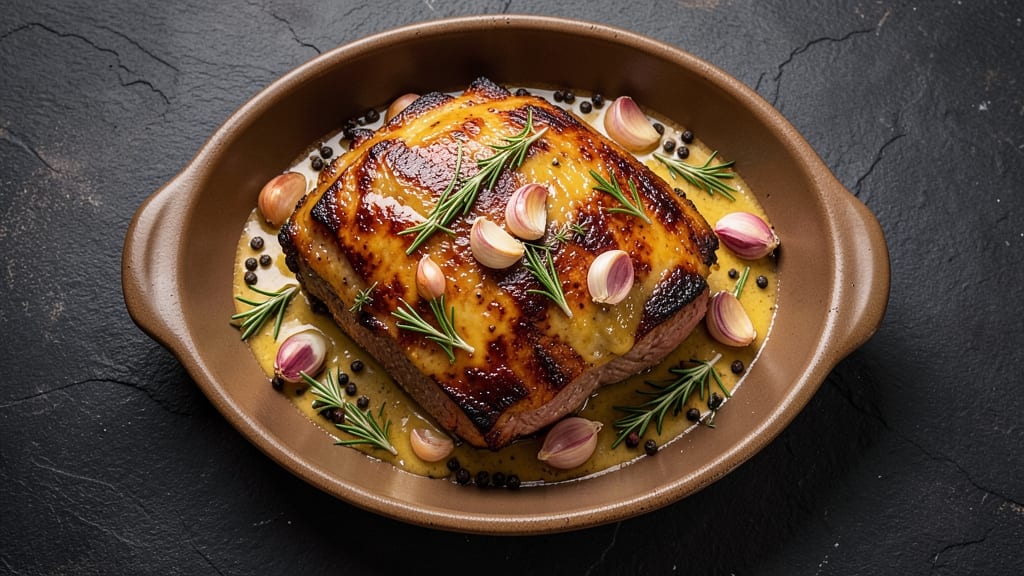
This butter-coated prime rib recipe delivers melt-in-your-mouth tenderness that stays juicy for hours, thanks to a precise technique that transforms tough cuts into restaurant-quality perfection.
The secret lies in a rich garlic-herb butter basting that creates a flavorful crust while locking in moisture, paired with an au jus bath that keeps every slice succulent.
I've perfected this method over years of holiday feasts and special occasions, where the difference between dry and divine comes down to timing and temperature control.
The process begins with a dry-brine overnight, ensuring maximum moisture retention, followed by a high-heat sear that develops deep flavor. Unlike traditional roasting, this method uses a controlled reverse sear approach—starting low and finishing with a crisping basting phase—that guarantees a perfect medium-rare center while maintaining that coveted crust.
What sets this apart is the continuous basting with garlic-herb butter during the final stages, which builds layers of flavor while preventing moisture loss.
By the time you carve into this prime rib, you'll reveal tender, pink centers that practically fall apart with each slice, all surrounded by a golden-brown crust infused with herby, garlicky richness.
The accompanying au jus bath—made from the pan drippings—adds another dimension of savory depth, perfect for basting during cooking or serving alongside. This is the kind of dish that makes weeknight dinners feel like a special occasion, with minimal effort and maximum impact.
Pair it with classic sides like creamy mashed potatoes, roasted root vegetables, or a simple green salad to complete the meal. The leftovers reheat beautifully too, making this an ideal recipe for gatherings where you want to impress without spending hours in the kitchen.
Let's get started on creating your juiciest prime rib yet.
Ingredients for butter coated prime rib
Six ingredients transform tough roast into melt-in-your-mouth perfection—juicy, crusty, and packed with herby richness.
| Ingredient | Amount | Notes |
|---|---|---|
| Prime Rib Roast (Bone-In) 🥩 | 4 lb | Center-cut, 1.5-inch thickness |
| Unsalted Butter 🧈 | ¾ cup | Cold, cubed for basting |
| Garlic Cloves 🧄 | 12 cloves | Fresh, smashed for butter |
| Fresh Rosemary 🌿 | ½ oz | Finely chopped, organic preferred |
| Fresh Thyme 🌿 | ½ oz | Leaves only, stems removed |
| Diamond Crystal Kosher Salt 🧂 | 2 tbsp | For dry brine overnight |
| Black Peppercorns 🌶️ | 1 tbsp | Freshly cracked, coarse grind |
| Beef Tallow or Duck Fat 🧈 | 2 tbsp | For searing, optional |
| Red Wine 🍷 | 1 cup | Dry, bold variety like Cabernet |
| Beef Bone Broth 💧 | 1 cup | Homemade or high-quality store |
| Yellow Onion 🧅 | 1 whole | Chopped for au jus |
| Fresh Parsley 🌿 | ¼ cup | Chopped, for garnish |
| Flour 🌾 | 1 tbsp | All-purpose, for au jus |
The prime rib is everything here. Center-cut, bone-in delivers the best marbling and flavor—Costco or Whole Foods carry excellent cuts, or ask your butcher for a 1.5-inch thick roast. Avoid pre-cut pieces; they lose moisture faster. For the garlic-herb butter, organic herbs from the grocery store's produce section make all the difference—they're fresher than dried and add vibrant flavor. The unsalted butter needs to be cold and cubed for basting, so grab it from the fridge right before you start. Pro tip: Pat the roast dry before brining for maximum crust development.
No red wine? Substitute beef broth with a splash of balsamic—it adds depth without alcohol. Fresh herbs wilt fast, so dried thyme at one-third the amount works in a pinch, but nothing beats the fresh stuff. For the au jus, store-bought bone broth like Kettle & Fire is a game-changer if you're short on time. The flour in the au jus is key—it thickens without making it gluey, so don't skip it. If you're using tallow, duck fat works too—it renders beautifully and adds richness. And yes, the peppercorns must be freshly cracked; pre-ground loses potency fast.
This roast reheats like a dream—350°F for 10-15 minutes in its juices, covered tightly. The au jus keeps for 5 days in the fridge, and you can freeze it for 3 months in ice cube trays for easy portioning. I always make extra butter—store it in a sealed container in the fridge for up to 1 week—because it's perfect for basting leftovers or topping mashed potatoes. The roast itself? Consume within 2 days for peak tenderness, but the flavor only gets better as it rests.
Why You'll Love This Recipe
- I’ll be real: most prime rib leftovers are sad. Not this one. The butter keeps it juicy, and the herbs add freshness even after reheating. I’ve sent slices to work in sandwiches, and no one ever questions why it’s so good.
- One-Pan Magic: I swear by this—just a roast, butter, and herbs on a sheet pan. No fancy gadgets, no stress. The bone-in rib bastes itself in that golden butter as it cooks, so you’re basically hands-off while it transforms into something restaurant-worthy.
- Rich, Unforgettable Crust: That crispy butter crust? It’s the star. The garlic and rosemary melt into the butter, then harden into a flavor bomb with every bite. Honestly, I’ve had people ask if I spent hours on it—nope, just 30 minutes and a little patience.
- Holiday or Tuesday Night: Between us, this is my go-to for both Christmas dinner and lazy Sundays. The leftovers reheat beautifully, and the rich flavor makes it feel special without the fuss. My kids don’t even care it’s not a "fancy" occasion.
Step-by-step instructions for butter-coated prime rib
Here's how to transform a simple roast into melt-in-your-mouth perfection with that signature butter bath.
Dry Brine and Prepare the Butter Compound
Remove the prime rib from the refrigerator and pat it completely dry with paper towels—this is non-negotiable for crispy bark. In a small bowl, combine the cold cubed unsalted butter, smashed garlic cloves, finely chopped fresh rosemary, and fresh thyme leaves. Add the cracked black peppercorns and mix until evenly distributed. This aromatic butter will become the prime rib's flavor shield and moisture lock.
Spread half of the diamond crystal kosher salt evenly over the meat's surface, pressing it into the flesh. Place the roast fat-side up on a wire rack set inside a shallow baking dish. Refrigerate uncovered for 24 hours—this dry brine seasoning transforms tough meat into tender, flavorful perfection. The cold temperature also firms up the butter compound, making it easier to handle later.
Sear and Create the Butter Bath
Preheat your oven to 450°F. Remove the prime rib from the fridge and let it sit at room temperature for 30 minutes. Heat a heavy roasting pan (like a Dutch oven) over medium-high heat until smoking hot. Add the beef tallow or duck fat and swirl to coat the bottom evenly. Place the roast fat-side down in the pan and sear undisturbed for 10 minutes until deep golden brown.
Flip the roast and spoon the rendered fat over the meat. Sprinkle the remaining kosher salt evenly over the surface. Using a spoon, gently press the butter compound all over the meat, ensuring complete coverage. The butter should melt slightly from the residual heat, creating a protective seal that locks in moisture during roasting. This is the secret to that legendary butter-coated crust.
Roast with Au Jus Bath
Transfer the roasting pan to the preheated oven and roast for 45 minutes. Reduce oven temperature to 325°F and continue roasting for an additional 1 hour and 15 minutes, or until the internal temperature reaches 125°F for medium-rare. The butter bath will create a golden, caramelized crust while keeping the interior incredibly tender.
Here's the magic part: after removing the roast, place the roasting pan on the stovetop over medium heat. Add the chopped yellow onion and cook for 3 minutes until softened. Pour in the red wine and scrape up all the browned bits from the bottom of the pan. Add the beef bone broth and bring to a gentle simmer. In a small bowl, whisk together the flour and 2 tablespoons of cold water, then stir this slurry into the pan. Simmer for 5 minutes until thickened to a glossy au jus consistency.
Rest and Serve with Au Jus
Transfer the prime rib to a cutting board and tent loosely with foil. Pour the au jus into a gravy boat and keep warm. Let the roast rest for 20 minutes—this crucial step allows the juices to redistribute throughout the meat. If you cut into it too soon, all that delicious moisture will pool on your plate instead of staying inside where it belongs.
Slice the prime rib against the grain into ½-inch thick portions. The butter coating should be golden and crispy, while the interior remains perfectly pink and juicy. Serve each portion with generous spoonfuls of the rich au jus and garnish with chopped fresh parsley. The combination of the butter crust, tender meat, and flavorful sauce makes every bite unforgettable. Save any leftovers—this recipe makes enough for seconds!
Pro Tips For Making Butter Coated Prime Rib
- CRANK THE HEAT FIRST: That prime rib won’t brown properly if you start gentle—get your pan screaming hot for 3-4 minutes before adding the butter. I learned this the hard way when my first batch turned out pale and sad, no matter how much I bashed the pan afterward.
- SMASH THE GARLIC: Don’t just toss whole cloves in—peel, slice thin, and smash them flat with the side of your knife. This releases more flavor into the butter and keeps the garlic from burning before the meat’s done. (Yes, even if you’re impatient like me.)
- SALT THE MEAT 24 HOURS EARLY: Season the prime rib before you even think about cooking—generously, with kosher salt, and let it sit uncovered in the fridge. This guarantees the crust forms properly and the seasoning penetrates deep. I skip this when I’m lazy, but the difference is noticeable.
- BASTE WITH THE BUTTER, NOT THE JUICES: After the first sear, pull the roast and let it rest 10 minutes before basting—this keeps the juices inside. Then, use only the rendered butter and aromatics (no pan drippings) to coat the meat. The butter’s fat is what gives that rich, glossy finish, not the watery juices.
Flavor customization for these flavors
Herb Variations
Swap out the rosemary and thyme for other aromatic herbs based on your preference. For a Mediterranean twist, use 1 oz each of fresh oregano and marjoram—they pair beautifully with the butter's richness.
If you love earthy flavors, try ½ oz of fresh sage and ½ oz of fresh tarragon for a sophisticated touch. I’ve also had great success with ½ oz of fresh rosemary and ½ oz of fresh basil for a brighter, more vibrant profile. 🌿
Spice Infusions
Add warmth with spices that complement the butter without overpowering the prime rib. A pinch of smoked paprika (½ tsp) in the butter compound adds depth, while freshly cracked cardamom (¼ tsp) brings a subtle floral note.
For heat lovers, mix ½ tsp of cayenne pepper into the butter—it caramelizes beautifully during basting. I also like adding a pinch of cinnamon (⅛ tsp) for a surprising sweet-spice balance. 🔥
Sweet Enhancements
Balance the savory butter with subtle sweetness that caramelizes during roasting. A 1 tbsp of brown sugar mixed into the butter compound creates a sticky, glossy crust. For a luxurious touch, add 2 tbsp of finely chopped crystallized ginger—it adds a bright, spicy-sweet contrast.
A splash of orange zest (1 tsp) in the butter infuses citrus notes that brighten the dish. 🍊
Umami Boosters
Deep umami flavors elevate the butter’s richness and the meat’s natural taste. Stir 1 tbsp of soy sauce or Worcestershire sauce into the butter compound for a salty, savory kick. For a luxury upgrade, add 1 tsp of fish sauce—it’s subtle but adds incredible depth.
A pinch of MSG (¼ tsp) amplifies the meaty flavor without altering the taste. I’ve also had success with 1 tbsp of miso paste in the au jus for a silky, fermented richness. 💡
Regional Twists
Adapt the butter coating to reflect global flavors while keeping the technique intact. For a French bistro style, add 1 tbsp of Dijon mustard to the butter and garnish with chopped shallots. A Mexican-inspired version swaps rosemary for cilantro and adds ½ tsp of cumin to the butter.
For Italian flair, use ½ oz of fresh basil and ½ oz of fresh parsley with a splash of white wine in the au jus. 🗺️
Texture Play
Experiment with textures that contrast or complement the butter’s creaminess. Sprinkle toasted breadcrumbs (2 tbsp) over the butter-coated rib before the final sear for a crispy crust.
For a crunchy finish, top with crushed pistachios or pecans—they add a nutty crunch that pairs well with the tender meat. A honey drizzle** (1 tsp) over the butter before basting creates a sticky, caramelized glaze. 💫
Nutrition facts
Frequently asked questions
Why does this recipe use a dry brine instead of wet brine?
A 24-hour dry brine creates a perfect crust while keeping the meat incredibly tender. Unlike wet brining, it doesn't dilute the meat's natural flavors or leave it soggy. The salt penetrates deeply, enhancing both texture and taste without adding moisture that could interfere with the butter coating's crispiness.
Can I cook this prime rib without a Dutch oven?
Yes! Use a heavy roasting pan or even a cast-iron skillet for searing. For the au jus, transfer the pan to the stovetop after roasting. If your pan isn't deep enough, use a separate saucepan for the au jus—just scrape up all those flavorful browned bits from the roasting pan first. The key is maintaining high heat for that perfect crust.
What's the best way to reheat leftovers?
Slice the prime rib and reheat in its au jus bath at 350°F for 10-15 minutes, covered tightly. The au jus prevents drying while keeping the butter coating intact. For individual portions, wrap slices in foil with a spoonful of au jus and microwave for 30-45 seconds—this preserves the juiciness better than oven reheating.
How do I know when the prime rib is perfectly cooked?
Use a meat thermometer for accuracy: 125°F for medium-rare (recommended), 135°F for medium, or 145°F for well-done. The butter coating should be golden and crispy, while the interior should feel slightly springy when pressed. For extra confidence, cut into a small section—juices should run clear, not red or pink.
What if my butter coating turns out greasy instead of crispy?
This usually happens if the butter melted too much during searing. Next time, use colder butter cubes and sear at slightly lower heat (medium-high instead of high). Also ensure your roasting pan is hot enough before adding the meat—it should be smoking when you place the prime rib in. The butter should melt just enough to coat without pooling.