
Main Courses
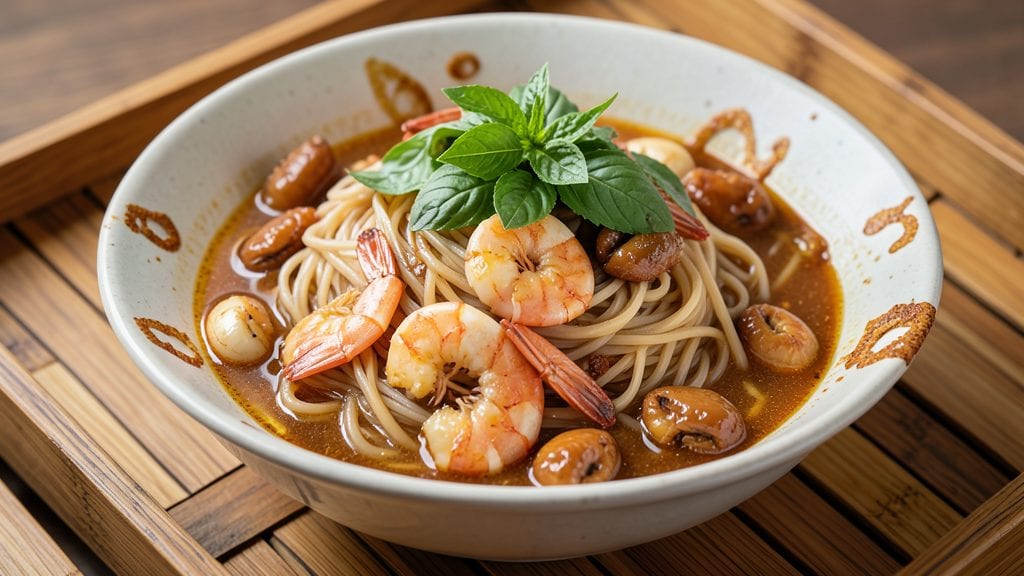
This Vietnamese canh chua recipe delivers the perfect balance of tangy, sweet, and umami flavors that define Central Vietnam’s signature soup. The tamarind-based broth transforms simple ingredients into a complex, restaurant-quality dish that’s both comforting and vibrant.
I first discovered this recipe during a trip to Hue, where street vendors served it piping hot with crisp bean sprouts and fresh herbs.
The secret lies in the broth—slow-cooked with tamarind paste, shrimp shells, and aromatic spices until it develops a deep, caramelized richness. Unlike milder soups, canh chua’s signature tang comes from tamarind, which cuts through the shrimp’s natural sweetness while enhancing the umami from fermented shrimp paste.
The result is a broth that’s both bold and balanced, with just the right amount of heat.
What makes this dish truly special is how the textures and flavors come together: tender shrimp, crisp bean sprouts, and fresh herbs like Thai basil and mint create contrast with every spoonful.
The tamarind broth coats the shrimp in a glossy, tangy glaze, while the bean sprouts add a satisfying crunch. Served with steamed rice noodles, it becomes a complete, hearty meal that’s light enough for lunch but substantial enough for dinner.
This recipe stays true to its roots while adapting for home kitchens—no special equipment needed, just patience for building the broth’s depth. The key is balancing the tamarind’s acidity with just enough sugar and shrimp paste to round out the flavors.
Once you taste the first spoonful of that fragrant, tangy broth, you’ll understand why canh chua is a staple in Vietnamese households and street food stalls alike.
Ingredients for canh
Tamarind and shrimp paste create this dish's signature tangy depth with fresh herbs and crisp sprouts.
| Ingredient | Amount | Notes |
|---|---|---|
| Shrimp Shells 🦐 | 1 ½ cups | From 1 lb fresh shrimp, reserved |
| Tamarind Paste 🍯 | ½ cup | Thick, unsweetened variety |
| Shrimp Paste 🧂 | 2 tbsp | Fermented, strong umami flavor |
| Dried Shrimp 🦐 | ¼ cup | Rehydrated for broth depth |
| Fresh Shrimp 🦐 | 1 ½ lb | Medium size, peeled, deveined |
| Thai Basil Leaves 🌿 | ½ cup | Fresh, stems removed |
| Mint Leaves 🌿 | ¼ cup | Fresh, torn by hand |
| Bean Sprouts 🌱 | 3 cups | Fresh, crisp variety |
| Rice Noodles 🍜 | 8 oz | Flat, medium width |
| Garlic Cloves 🧄 | 8 cloves | Minced, aromatic |
| Shallots 🧅 | 4 whole | Thinly sliced, not chopped |
| Galangal 🌿 | 1 piece | 1-inch thick slice, peeled |
| Turmeric Root 🧅 | 1 piece | 1-inch thick slice, peeled |
| Fish Sauce 💧 | 1 tbsp | Red Boat preferred |
| White Sugar 🍚 | 2 tbsp | Granulated, balances tang |
| Lime Juice 🍋 | ½ cup | Freshly squeezed |
| Vegetable Oil 🫒 | ¼ cup | Neutral high smoke point |
| Salt 🧂 | 1 tsp | Kosher or sea salt |
The tamarind paste is non-negotiable here—Thai Kitchen brand or Asian markets carry the best quality. Look for thick, block-style tamarind that requires soaking, not the sweetened paste in tubes. Shrimp paste should smell intensely funky, like the ocean and fermented soy combined. Thai or Vietnamese markets stock authentic versions, but Costco occasionally carries it in the Asian foods section. If you can't find shrimp shells, save them from your fresh shrimp purchase—they're the secret to a rich, umami-packed broth. Galangal and turmeric root are available frozen at Whole Foods or Asian grocery stores, and they're worth the hunt for that authentic flavor.
No tamarind paste? Lime juice plus a pinch of sugar mimics the tang, though it won't have the depth. Shrimp paste unavailable? Anchovy paste at half the amount works in a pinch, but add a splash of soy sauce to compensate for the missing funk. Fresh herbs can't be skipped—they're what make this dish sing. Thai basil has a licorice-like note that's essential, but if you're desperate, regular basil plus mint gets you close. Bean sprouts should be crisp and fresh—wilted ones will turn mushy in the hot broth. For the noodles, rice vermicelli can substitute if flat noodles aren't available, but they'll have a different texture.
This broth tastes even better the next day as the flavors meld. Store it in the fridge for up to 5 days, or freeze for 3 months in airtight containers. The noodles keep for 1 month in the pantry, and fresh herbs last 5 days wrapped in damp paper towels. For meal prep, cook the shrimp and broth ahead, then assemble with fresh herbs and sprouts just before serving. The shrimp cooks in under 3 minutes—don't overcook, or it'll turn rubbery.
Why You'll Love This Recipe
- Shrimp Shells Shortcut: I swear by using shrimp shells here—no waste, all flavor. Simmer them for 10 minutes, strain out the bits, and boom: rich, umami-packed broth without extra shopping.
- Tamarind Tang Magic: That sticky-sweet tamarind paste? It’s the secret weapon. One spoonful balances the funky shrimp paste, giving you a bright, complex broth that’s addictive after just one sip.
- Leftover Reinvention: Turn yesterday’s canh into today’s rice bowl or noodle stir-fry. The broth freezes like a dream, so I always make double—because reheating this is basically a free meal.
- Budget-Friendly Luxury: Dried shrimp and shrimp paste stretch my grocery budget, but they pack serious flavor. Fresh shrimp feels fancy, yet the dish still tastes incredible even with just dried—honestly, it’s my go-to for tight weeks.
Step-by-step instructions for Vietnamese canh chua
This tangy tamarind broth delivers bright, complex flavors with just the right balance of sweet, sour, and umami.
Prepare the Broth Base
Heat the 0.25 cup vegetable oil in a large pot over medium heat. Add the 1 piece galangal and 1 piece turmeric root, sliced into thin pieces, and cook for 3 minutes until fragrant. Add the 8 cloves minced garlic cloves and 4 whole thinly sliced shallots, cooking for another 2 minutes until softened.
Stir in the 2 tbsp shrimp paste and cook for 1 minute until the raw aroma dissipates. Add the 1.5 cups shrimp shells, 0.25 cup dried shrimp, and 1 tbsp fish sauce, stirring to combine. Pour in 4 cups water and bring to a boil. Reduce heat to low and simmer for 20 minutes, skimming off any foam that rises to the surface. This step builds the aromatic foundation of your broth.
Develop the Tangy Flavor
While the broth simmers, dissolve the 0.5 cup tamarind paste in 1 cup hot water in a small bowl until smooth. Strain through a fine-mesh sieve to remove any fibrous bits. Add this mixture to the simmering broth along with the 2 tbsp white sugar and 0.5 cup lime juice. Stir well and continue simmering for 10 minutes to allow the flavors to meld.
Taste the broth and adjust seasoning if needed—add more fish sauce for saltiness or lime juice for tang. The broth should be bright, slightly sweet, and tangy with a deep umami base. Keep it simmering gently while you prepare the remaining ingredients.
Cook the Shrimp and Noodles
Add the 1.5 lb fresh shrimp to the simmering broth and cook for 3-4 minutes until they turn pink and opaque. Remove the shrimp with a slotted spoon and set aside. In the same broth, add the 8 oz rice noodles and cook according to package instructions (usually 5-7 minutes) until tender but still slightly chewy. Drain any excess water but reserve 1 cup of the broth for adjusting consistency.
Return the shrimp to the pot with the noodles and stir gently to combine. The noodles should be coated in the tangy broth but not swimming in excess liquid. If the broth appears too thick, add some of the reserved noodle cooking water to reach your desired consistency.
Assemble and Finish
Divide the 3 cups bean sprouts, 0.5 cup Thai basil leaves, and 0.25 cup mint leaves among four bowls. Ladle the hot noodle and shrimp mixture evenly over the greens. Sprinkle with the remaining 1 tsp salt if needed, though the broth should already be well-seasoned.
Serve immediately while hot, with each bowl offering a perfect balance of tender shrimp, chewy noodles, and crisp bean sprouts in a bright, tangy broth. The combination of fresh herbs and the complex broth creates a dish that's both refreshing and deeply satisfying.
Pro Tips For Making Canh
- Bloom the Shrimp Shells: Toss them in boiling water for 30 seconds first—just until they float. This pulls out the bitter starches without overcooking. I used to skip this and wondered why my broth always tasted off.
- Toast the Shrimp Paste: Fry it in a dry pan for 20 seconds until fragrant and slightly darkened. That smoky depth is what makes the tamarind sing—don’t rush it, or you’ll just burn it.
- Soak Dried Shrimp Right: Use warm water (not cold) and let them sit for 10 minutes before adding to the pot. Cold water leaves them rubbery, and you’ll end up chewing instead of savoring.
- Balance the Tamarind: Start with half the paste called for, taste, then add more. Tamarind’s sourness lingers—better to fix it than regret it later. (Yes, even if you’re impatient like me.)
Regional styles of canh
Hue's Signature Style
In Hue, the birthplace of canh chua, the broth is richer with dried shrimp and fermented black shrimp paste—about 3 tbsp instead of 2—for deeper umami. Locals use thinner rice noodles (like bánh phở) and add sliced green onions as a garnish.
The tang comes from more tamarind (up to ¾ cup) and a splash of rice vinegar for brightness. I once had it at a street stall where they simmered the broth for 45 minutes to caramelize the flavors further. 🌶️
Central Vietnam's Spicy Twist
Regions like Da Nang and Qui Nhon crank up the heat with chili oil drizzled on top or sliced Thai chilies in the broth. They also incorporate lemongrass (about 2 stalks) into the broth base for a citrusy aroma.
The noodles here are often thicker (like bánh canh) to handle the extra spice. I recommend adding 1 tsp chili oil per bowl if you love heat—it cuts through the tang beautifully. 🔥
Northern Vietnam's Lighter Take
Up north, canh chua leans lighter with less tamarind (just ¼ cup) and more fish sauce for saltiness. They use wheat noodles instead of rice and often add shredded cabbage for crunch.
The broth simmers for only 15 minutes, keeping it brighter and less caramelized. I’ve found this version works well if you prefer a milder, herb-forward soup. 🌿
Southern Adaptations
In Ho Chi Minh City, the dish gets a tropical twist with coconut milk (about ½ cup) swirled into the broth for creaminess. They also use thicker shrimp paste and more lime juice (up to ¾ cup) to balance the richness.
The noodles are often rice vermicelli, and they garnish with fresh cilantro instead of Thai basil. This version feels lighter but still bold—perfect for hot weather. 🥥
Vegetarian Versions
For a plant-based take, swap shrimp for mushrooms (like shiitake or oyster) and use soy sauce instead of fish sauce. Boost umami with 1 tbsp miso paste in the broth.
I’ve had a great version with tofu and wood ear mushrooms—the texture contrast works surprisingly well. Garnish with extra herbs and a squeeze of lime to keep it vibrant. 🌱
Modern Fusion Twists
Chefs today experiment with smoked paprika (½ tsp) for depth or a splash of stout beer (¼ cup) in the broth for maltiness. I’ve seen canh chua with grilled lemongrass chicken instead of shrimp and avocado slices as a garnish.
For a fusion twist, try adding a pinch of cumin to the broth base—it adds an unexpected earthy note that pairs well with the tang. 💡
Nutrition facts
Frequently asked questions
What makes canh chua different from other Vietnamese soups?
The signature tang comes from tamarind paste, which creates a bright, sour-sweet balance unlike milder soups. Unlike phở or bún bò Huế, canh chua uses rice noodles instead of wheat, and the broth relies on shrimp paste and galangal for umami depth. The crisp bean sprouts and fresh herbs add a refreshing contrast to the rich broth.
Can I substitute tamarind paste if I can't find it?
Yes! Mix ¼ cup lime juice with 1 tbsp sugar for a similar tangy effect, though it won't have the same depth. For a closer match, try 1 tbsp vinegar (rice or apple cider) plus 1 tsp sugar. The broth will be brighter but less complex.
How do I adjust the spice level in canh chua?
For heat lovers, add 1-2 sliced Thai chilies or 1 tsp chili oil per bowl. If you prefer mild, omit the shrimp paste's natural spice or reduce it by ½ tbsp. The tang from tamarind already balances heat, so adjust gradually.
What's the best way to store leftovers?
Store the broth separately (up to 5 days refrigerated or 3 months frozen) and noodles/herbs separately. Reheat broth gently, then add fresh noodles and herbs to preserve texture. Never reheat shrimp—it's best eaten fresh or cold in salads.
Can I make this vegetarian?
Replace shrimp with shiitake mushrooms or tofu, use soy sauce instead of fish sauce, and add 1 tbsp miso paste for umami. Keep the tamarind and herbs for that signature brightness. The broth will still shine with these swaps.