
Main Courses
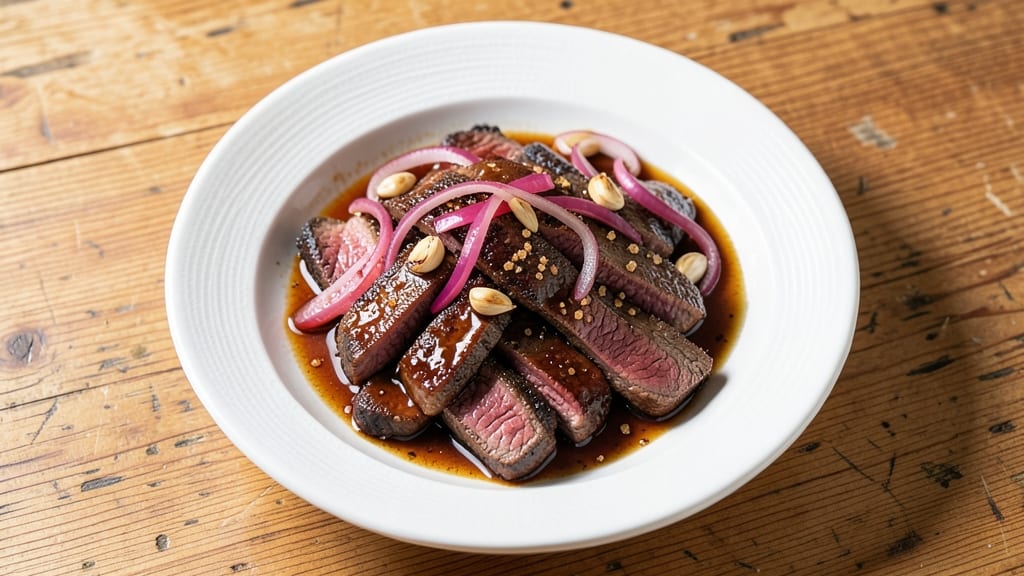
This Canton steak recipe delivers restaurant-quality wok-seared beef with a signature sweet-chili tang that balances tender meat and bold flavors. The dish originates from Hong Kong's Cantonese cuisine, where thinly sliced beef transforms through quick searing and a tangy sauce.
My version keeps the tradition alive while adapting it for home cooks—no wok required.
The secret lies in the beef's preparation: thinly sliced against the grain for maximum tenderness, then seared in a hot pan until perfectly browned. The sauce, a perfect marriage of ketchup, brown sugar, and aromatic spices, caramelizes beautifully while coating each piece of beef.
This method ensures every bite delivers that signature Cantonese harmony of sweet, tangy, and umami.
What you'll achieve is tender beef with a glossy, caramelized finish, served over steamed rice or noodles. The sauce clings to each slice, creating pockets of sweet-chili flavor that contrast beautifully with the meat's savory depth.
This dish is equally impressive for dinner parties or weeknight meals—just adjust the sauce quantity to taste.
For added texture, consider including mushrooms in the sauce, though traditional versions often omit them. The key is balancing the sauce's sweetness with a touch of vinegar for brightness. Once you master this technique, you'll understand why Canton steak remains a beloved staple across Asia.
Ingredients for canton steak
Thinly sliced beef meets aromatic sauce—this Canton steak delivers authentic wok-seared tenderness with minimal effort.
| Ingredient | Amount | Notes |
|---|---|---|
| Flank Steak 🥩 | 1 ½ lb | Thinly sliced against grain |
| Ketchup 🍅 | ½ cup | High-quality, unsweetened preferred |
| Light Brown Sugar 🍚 | ¼ cup | Packed measurement |
| Rice Vinegar 🍶 | ¼ cup | White or seasoned |
| Soy Sauce 🥢 | ¼ cup | Light or all-purpose |
| Garlic Cloves 🧄 | 6 cloves | Minced finely |
| Fresh Ginger 🌿 | 2 tbsp | Finely grated |
| Sesame Oil 🫒 | 1 tbsp | Toasted sesame preferred |
| Cornstarch 🌾 | 1 tbsp | For tenderizing beef |
| Neutral Oil 🫒 | ½ cup | Vegetable or canola |
| Diamond Crystal Kosher Salt 🧂 | 1 tsp | For seasoning |
| Black Pepper 🌶️ | ½ tsp | Freshly cracked |
| Green Onions 🧅 | 4 whole | Sliced thin for garnish |
| Steamed White Rice 🍚 | 2 cups | Cooked, for serving |
The flank steak is non-negotiable for texture—look for well-marbled cuts at Whole Foods or your local butcher. Thinly slicing against the grain ensures maximum tenderness, so take your time here. If you're short on time, ask the butcher to slice it for you. The ketchup should be high-quality; brands like Heinz or Hunts work well, but avoid the ultra-sweet varieties. For the brown sugar, packed measurement is critical—don't scoop it. The rice vinegar should be white or seasoned; Kikkoman or Mushroom brands are reliable choices. Fresh ginger is essential—no substitutes here. The sesame oil should be toasted; Kadoya or La Choy are solid options.
No rice vinegar? Substitute apple cider vinegar at the same amount, though the flavor will differ slightly. Short on soy sauce? Coconut aminos work in a pinch, but reduce to 0.2 cup to avoid overpowering the dish. The cornstarch is crucial for tenderizing—don't skip it. If you're using pre-sliced beef, marinate it for 30 minutes to enhance tenderness. The neutral oil should have a high smoke point; Avocado oil is ideal. For the green onions, use both the white and green parts—discard the roots. The steamed rice should be long-grain; jasmine or basmati work perfectly.
Store the flank steak in the fridge for up to 3 days before slicing. Once sliced, keep it in an airtight container with paper towels to absorb moisture. The sauce components (ketchup, vinegar, soy sauce, sugar) can be pre-mixed and stored in the fridge for up to 1 week. The fresh ginger keeps well in the freezer for 3 months—just grate it frozen. This dish reheats beautifully; microwave for 1-2 minutes or warm in a skillet with a splash of water. For best results, serve immediately after searing.
Why You'll Love This Recipe
- Here’s what sold me: the brown sugar caramelizes into that sticky glaze while the rice vinegar keeps it bright. Not too sweet, not too salty—just that perfect tangy-sweet bite that makes you reach for seconds. (Yes, even on a Tuesday night.)
- Five-Ingredient Magic: The pantry’s already stocked—flank steak, ketchup, sugar, vinegar, soy. That’s it. No fancy prep, no last-minute grocery runs. I’ve made this on days when I forgot to meal prep and forgot to order takeout.
- Sweet-Savory Balance: Here’s what sold me: the brown sugar caramelizes into that sticky glaze while the rice vinegar keeps it bright. Not too sweet, not too salty—just that perfect tangy-sweet bite that makes you reach for seconds. (Yes, even on a Tuesday night.)
- Lunchbox Hero: Between us, this is my go-to for packed lunches. Slice it thin, toss with rice or noodles, and it stays fresh for days. My kid brings it to school and comes home raving—no sad leftovers here.
Step-by-step instructions for Canton steak recipe
Master this wok technique for perfectly seared beef with a sweet-chili glaze that balances rich umami and bright acidity.
Prep the Flank Steak for Maximum Tenderness
Begin by slicing the 1.5 lb flank steak thinly against the grain into ¼-inch thick strips. This is critical—thin slices cook quickly and remain tender. Place the sliced steak in a large bowl and add 1 tablespoon cornstarch, then toss gently to coat evenly. The cornstarch creates a light barrier that prevents over-browning and adds subtle texture.
In a separate small bowl, whisk together 1 teaspoon diamond crystal kosher salt, ½ teaspoon black pepper, 6 cloves minced garlic, and 2 tablespoons finely grated fresh ginger. Pour this mixture over the cornstarch-coated steak and toss again until fully distributed. Let the marinated steak sit at room temperature for 20-30 minutes—this ensures even cooking and deeper flavor penetration.
Build the Sweet-Chili Glaze
In a medium bowl, combine ½ cup ketchup, ¼ cup packed light brown sugar, ¼ cup rice vinegar, and ¼ cup soy sauce. Whisk vigorously until the sugar dissolves completely and the mixture becomes smooth. This glaze should coat the back of a spoon—if it's too thick, add 1 teaspoon water to reach the right consistency. Set aside while you prepare the wok.
The balance of sweetness, acidity, and umami in this glaze is what makes Canton steak special. The ketchup provides depth, the brown sugar caramelizes beautifully, and the vinegar brightens the final dish. Taste the mixture now—it should be tangy with a hint of sweetness, not cloying.
Wok-Sear the Steak to Perfection
Heat a 14-inch wok or large skillet over high heat until smoking, then add ½ cup neutral oil. Once the oil shimmers but doesn't smoke excessively, add half of the marinated steak in a single layer. Cook undisturbed for 1-2 minutes until the edges turn deep golden brown—this creates the signature wok-seared crust. Stir-fry for an additional 30-45 seconds until the steak is 80% cooked (it will finish in the glaze), then transfer to a plate.
Repeat with the remaining steak, working in batches if needed to avoid overcrowding. The key here is high heat and minimal movement—crowding steams the meat instead of searing it. If the oil cools significantly between batches, add 1 teaspoon neutral oil to maintain proper temperature.
Finish with the Glaze and Garnish
Return the cooked steak to the wok and pour the prepared glaze over the top. Stir-fry for 1-2 minutes until the sauce thickens slightly and coats the steak evenly. The steak should reach 145°F internally—use an instant-read thermometer to verify. If the sauce reduces too quickly, add 1 tablespoon rice vinegar to maintain balance.
Remove from heat and drizzle with 1 tablespoon sesame oil, tossing gently to distribute. Garnish with 4 whole green onions, sliced thin on the bias. The sesame oil adds nutty aroma, while the green onions provide fresh contrast to the rich, sweet-savory flavors. Serve immediately over 2 cups steamed white rice to soak up every last bit of that glossy glaze.
Pro Tips For Making Canton Steak
- SEAR FIRST, SAUCE LATER: Flank steak loves a good crust, so hit the pan with high heat—no waiting for it to warm up. Once you’ve got those golden sear marks (about 2-3 minutes per side), pull it out and let the sauce work its magic without overcrowding the pan. I learned this the hard way—trying to cook the steak in the sauce just makes it steam instead of sear.
- DON’T SKIP THE MARINADE TIME: This isn’t just a sauce slather—give that flank steak at least 30 minutes in a mix of soy sauce, rice vinegar, and a splash of water. The acid and salt break down the tough fibers, and the vinegar adds that signature tang. I was skeptical until I tried it: the steak stays tender even when sliced thin.
- WATCH THE SUGAR BURN: Light brown sugar caramelizes fast, and once it turns bitter, there’s no fixing it. Stir the sauce frequently on medium-low heat, and if it starts darkening too quickly, pull the pan off the heat for a minute. A quick taste test is your best friend—sweet should dominate, not burnt notes.
- UPGRADE WITH GARLIC: The classic Canton steak sauce is great, but a minced garlic clove or two (added with the soy and vinegar) adds depth that changes the whole dish. Sauté it briefly in the pan before adding the ketchup and sugar—just enough to wake up the flavors without overpowering. Yes, even if you’re not a garlic lover, trust me on this one.
Regional styles of this canton steak
Hong Kong-Style
This is the most traditional version, where the beef is thinly sliced and quickly seared in a wok with a minimal amount of oil. The sauce is typically lighter, using just ¼ cup ketchup, 2 tbsp soy sauce, and 1 tbsp brown sugar per serving.
Hong Kong chefs often finish the dish with a splash of Shaoxing wine (about 1 tbsp) for depth. I’ve found that using high-heat wok searing creates those signature caramelized edges that define this style. 🔥
Taiwanese Twist
In Taiwan, Canton steak often includes shiitake mushrooms (about ½ cup sliced) in the sauce for added umami. The sauce also incorporates 1 tbsp hoisin sauce and a touch of chili oil (about ½ tsp) for a spicier kick.
Taiwanese versions sometimes use ribeye steak instead of flank, which stays juicier due to its higher fat content. I like to add 1 minced shallot to the glaze for extra sweetness.
Singapore-Inspired
Singaporean diners often enjoy Canton steak with a sweet chili sauce twist, incorporating 1 tbsp chili crisp (like Lao Gan Ma) into the glaze. The sauce also includes 1 tbsp lime juice for brightness and ½ tsp five-spice powder for complexity.
This version pairs beautifully with cucumber slices on the side to balance the richness. I’ve noticed this adaptation works especially well with sirloin steak for a slightly richer texture. 🌶️
Modern Fusion
For a contemporary take, I’ve experimented with adding 1 tbsp molasses to the sauce for depth and a handful of baby bok choy that’s quickly wok-fried with the beef. The molasses enhances the caramelization, while the bok choy adds a fresh, slightly bitter contrast.
This version also works well with quinoa or jasmine rice for a gluten-free option. The fusion approach lets you play with flavors while keeping the dish’s core identity intact.
Vegetarian Adaptation
For a meat-free version, replace the beef with extra-firm tofu pressed and sliced into ¼-inch strips. Toss the tofu in 1 tbsp cornstarch and pan-fry until crispy. The sauce remains the same, but I recommend adding 1 tbsp nutritional yeast to mimic the umami of beef.
Serve with mushroom stems for texture. This adaptation proves the dish’s versatility while keeping its signature sweet-tangy profile. 🌱
Nutrition facts
Frequently asked questions
Can I use flank steak substitutes for this recipe?
Yes! Flank steak is ideal, but sirloin or ribeye work well too. For best results, slice against the grain to ¼-inch thickness. Ribeye stays juicier due to its fat content, while sirloin offers a leaner option. Avoid tough cuts like chuck—thin slicing won't compensate for poor marbling.
How do I adjust the sauce for spicier or sweeter preferences?
For extra heat, add ½ teaspoon chili flakes or 1 teaspoon sriracha to the glaze. To sweeten, increase brown sugar to ⅓ cup (packed). For tangier flavor, add 1 extra tablespoon rice vinegar. Always taste the sauce before adding to the steak—adjust gradually to avoid overpowering the beef.
Why did my steak turn out chewy instead of tender?
Chewy steak usually means overcooking or incorrect slicing. Always slice against the grain and cook only until 80% done (it finishes in the sauce). Use a meat thermometer—145°F is perfect. For extra tenderness, marinate the beef for 30-60 minutes before cooking. Avoid crowding the pan to prevent steaming.
Can I make this recipe in a slow cooker?
Not recommended—this dish relies on high-heat searing for its signature texture. The slow cooker would turn the steak tough. Instead, try pan-searing the beef first, then adding it to the sauce for 10-15 minutes on low heat to absorb flavors. For a similar effect, use a Dutch oven with a tight lid for 5 minutes after searing.
What’s the best way to reheat leftover Canton steak?
Reheat gently in a skillet over medium-low heat with 1 teaspoon neutral oil and 1 tablespoon water for 2-3 minutes. Microwaving works too—cover with a damp paper towel for 1 minute. Avoid high heat to prevent drying out. The sauce may thicken further—thin with a splash of water or vinegar if needed.