
Main Courses
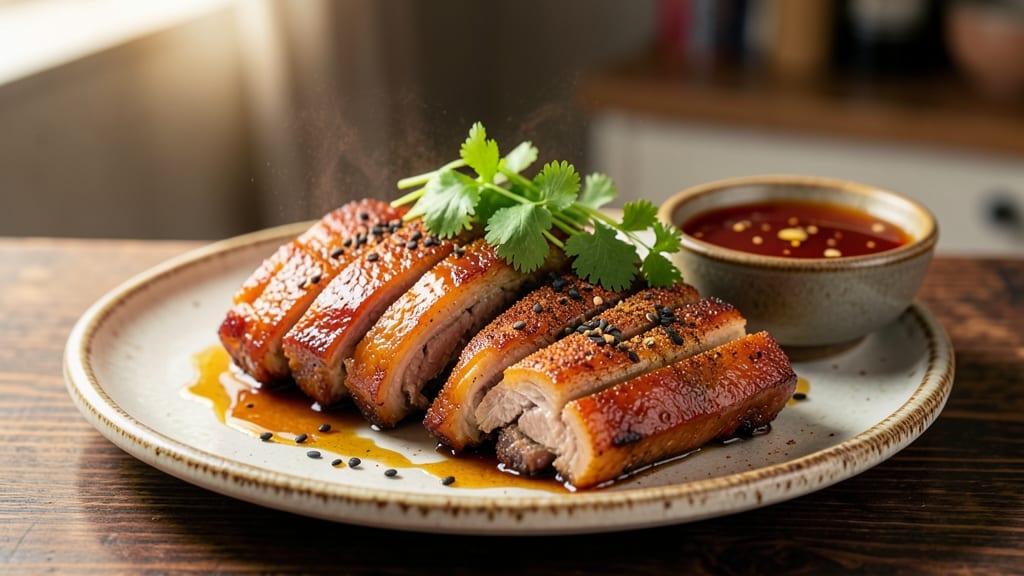
Mastering Chinese pork belly ribs with five-spice glazed crispy edges transforms a simple protein into a showstopper dish that carries the bold flavors of Cantonese cuisine.
Growing up in small-town Georgia, I learned early how pork's rich fat and tender texture could elevate any meal, but it was my apprenticeship under Master Chef Robert Chen that taught me the precision needed to achieve that perfect balance of crispy, caramelized edges and melt-in-your-mouth interior.
This recipe delivers exactly that—crispy enough to stand up to bold sauces while remaining tender enough to melt on your tongue.
The secret lies in the marinade and cooking technique: a blend of five-spice powder, soy sauce, and honey creates a sticky glaze that caramelizes beautifully during the slow roasting process. We start with pork belly ribs scored and marinated overnight, ensuring maximum flavor penetration and tenderness.
The ribs then roast at a precise temperature, allowing the fat to render slowly while the edges crisp to a golden brown. This method guarantees restaurant-quality results without requiring specialized equipment—just patience and attention to detail.
What you'll achieve is a dish that's both impressive and approachable: ribs with edges so crisp they shatter slightly, glistening with a glossy five-spice glaze that carries sweet, smoky, and aromatic notes. The interior remains juicy and tender, with layers of flavor developed through the marinade and slow cooking.
This is the kind of dish that commands attention at the table, whether served as a centerpiece for family gatherings or a special occasion dinner.
Serve these ribs with steamed jasmine rice and stir-fried bok choy to complete the meal, or pair with a simple cucumber salad for contrast. The leftovers reheat beautifully, making this an ideal recipe for meal prep. Here's how to create this Chinese-inspired masterpiece in your own kitchen.
Ingredients for chinese pork belly ribs
Bold flavors and crispy edges start with these 14 ingredients—each playing a key role in Cantonese-style perfection.
| Ingredient | Amount | Notes |
|---|---|---|
| Pork Belly Ribs 🥓 | 2 lb | Bone-in, scored crosshatch pattern |
| Five-Spice Powder 🌶️ | 2 tbsp | Authentic Chinese blend preferred |
| Light Soy Sauce 🍶 | ½ cup | Kikkoman preferred for balance |
| Honey 🍯 | ¼ cup | Wildflower for floral depth |
| Rice Vinegar 🍶 | 2 tbsp | Seasoned preferred for complexity |
| Sesame Oil 🫒 | 1 tbsp | Toasted, for aromatic finish |
| Garlic Cloves 🧄 | 6 cloves | Minced, fresh preferred |
| Ginger Root 🌿 | 1 tbsp | Freshly grated, peeled |
| Brown Sugar 🍚 | ¼ cup | Light, for caramelization |
| Cornstarch 🌾 | 1 tbsp | For crispy edges |
| Diamond Crystal Kosher Salt 🧂 | 1 ½ tsp | For seasoning marinade |
| Black Peppercorns 🌶️ | ½ tsp | Freshly cracked |
| Jasmine Rice 🍚 | 2 cups | Uncooked, for serving |
| Bok Choy 🥬 | 1 lb | Baby, for stir-fry |
The pork belly ribs are non-negotiable for this recipe—look for cuts with good marbling and a thick fat cap, typically found at Whole Foods or specialty Asian markets. Costco often carries pre-scored pork belly ribs, which saves time, but if you're scoring yourself, use a sharp knife and make cuts about 1/4-inch deep in a crosshatch pattern. The five-spice powder is the soul of this dish; Penzeys or Spicewalla carry authentic blends, but if you can't find it, substitute with equal parts cinnamon, star anise, cloves, fennel seeds, and Sichuan peppercorns (toasted and ground). The honey should be wildflower or clover—avoid the overly processed kind that crystallizes quickly.
No five-spice powder? Create your own blend—just toast and grind equal parts cinnamon, star anise, cloves, fennel seeds, and Sichuan peppercorns. Light soy sauce is essential here; dark soy sauce will overpower the delicate balance. For the honey, agave nectar works in a pinch, though it lacks the floral notes. The sesame oil can be swapped for peanut oil if you're avoiding sesame allergies, but the aroma is worth it. If you're short on time, pre-marinate the ribs for at least 4 hours—overnight is ideal, but 4 hours will still yield tender results. The bok choy should be firm and vibrant; avoid wilted leaves at all costs.
Marinated ribs keep best in the fridge for 2 days, though flavor improves with longer marinating. Once roasted, these ribs reheat beautifully—wrap tightly in foil and reheat at 300°F for 15 minutes. The glaze will crisp up again, so a quick broil at the end restores that golden sheen. Store cooked ribs in an airtight container for up to 4 days. For meal prep, portion the ribs into individual servings and freeze with a layer of parchment between them—they'll stay crispy when reheated. The jasmine rice and bok choy can be prepped ahead too; store cooked rice in the fridge for 3 days and bok choy in a sealed container with a damp paper towel for 2 days.
Why You'll Love This Recipe
- Five-Spice Magic: Between us, that jar of five-spice powder is the real MVP here. It’s not just "spice"—it’s warm cinnamon, star anise, and clove all in one shake, turning tough pork belly into something tender and aromatic. I swear, the first time I skipped it, I regretted it by the second bite.
- One-Pan Wonder: Honestly, this recipe is my lazy-day hero. You marinate the ribs, toss them on a sheet pan, and let the oven do the work—no flipping, no basting, no stress. The honey and rice vinegar caramelize right there, giving you that sticky glaze with zero effort. (Yes, even on a Tuesday night.)
- Leftover Goldmine: Here’s what sold me—these ribs taste better the next day. The flavors meld overnight, and I’ve turned last night’s dinner into tomorrow’s lunch with zero extra work. Just reheat, slice, and serve with rice or noodles. My kids don’t even know they’re eating leftovers.
- Budget-Friendly Feast: Pork belly ribs might sound fancy, but they’re actually a steal compared to baby back ribs. A single slab feeds four, and the five-spice powder and soy sauce cost pennies. Plus, the honey and vinegar are pantry staples you probably already own. Frugal? Yes. Delicious? Absolutely.
Step-by-step instructions for Chinese pork belly ribs with crispy edges
Here's how to transform tender pork belly ribs into restaurant-quality five-spice glazed perfection.
Prepare the Pork Belly Ribs for Maximum Flavor and Crisp
Begin by scoring the pork belly ribs in a crosshatch pattern using a sharp boning knife. Cut through the fat and into the meat at about ½-inch intervals, being careful not to cut into the bone. This creates pathways for the marinade to penetrate deeply and ensures even cooking. Pat the ribs dry with paper towels—this is crucial for developing crispy edges later.
In a small bowl, combine the 2 tbsp five-spice powder, 1.5 tsp diamond crystal kosher salt, and 0.5 tsp freshly cracked black peppercorns. Rub this mixture all over the ribs, pressing it into the scored lines and into the meat. Let the ribs sit at room temperature for 30 minutes while you prepare the marinade. This resting period allows the spices to adhere and the meat to come to a consistent temperature for even cooking.
Create the Five-Spice Glaze with Perfect Balance
In a medium saucepan, combine the 0.5 cup light soy sauce, 0.25 cup honey, 2 tbsp rice vinegar, 0.25 cup brown sugar, 6 cloves minced garlic, and 1 tbsp freshly grated ginger root. Bring this mixture to a gentle simmer over medium heat, then reduce the heat to low and let it cook for 8-10 minutes until slightly thickened and reduced by about one-third. You'll notice the aroma becomes rich and complex—this is where the flavors meld together.
Stir in the 1 tbsp sesame oil and 1 tbsp cornstarch mixed with 2 tablespoons of water to create a slurry. Bring the mixture back to a gentle simmer and cook for another 2-3 minutes until it reaches a glossy, syrupy consistency that will cling beautifully to the ribs. Remove from heat and let it cool slightly—this glaze should coat the back of a spoon without being too thick.
Cook the Ribs to Crispy Perfection in Two Stages
Preheat your oven to 375°F. Place the marinated ribs on a wire rack set over a baking sheet lined with aluminum foil. This rack setup allows hot air to circulate around all sides, promoting even cooking and crispy edges. Roast for 45 minutes, flipping the ribs halfway through, until the internal temperature reaches 160°F and the fat begins to render out.
While the ribs are roasting, prepare the jasmine rice according to package instructions—it should be ready to serve by the time the ribs finish. After the initial roasting, increase the oven temperature to 425°F. Brush the ribs generously with the five-spice glaze, then return them to the oven for another 15-20 minutes until the edges are deep golden brown and crispy. The glaze should caramelize beautifully, creating that signature sticky-sweet exterior that pairs perfectly with the tender meat.
Finish with Bok Choy and Serve Immediately
While the ribs are finishing in the oven, prepare the bok choy. Separate the leaves and cut them into 1-inch pieces, leaving the stems intact. Heat a large wok or skillet over high heat and add a thin layer of sesame oil. Stir-fry the bok choy for 2-3 minutes until just wilted but still vibrant green—you want to preserve its crisp texture rather than fully cooking it.
Remove the ribs from the oven and let them rest for 5 minutes before slicing between the bones into individual ribs. Arrange the crispy ribs on a platter, drizzle with any remaining glaze from the baking sheet, and serve immediately alongside the jasmine rice and stir-fried bok choy. The contrast of tender, flavorful pork with the crispy edges and bright bok choy makes this dish truly exceptional.
Pro Tips For Making Chinese Pork Belly Ribs
- Trim the Fat First: Pork belly ribs have layers of fat that render unevenly—trim the thickest patches before cooking, but leave some marbling intact. I learned this the hard way when my ribs turned greasy instead of caramelized, and the sauce became a mess.
- Bloom the Five-Spice: Toast the five-spice powder in a dry pan for 30 seconds before adding it to the ribs—this wakes up the flavors. I used to just sprinkle it on raw, and the dish always tasted underwhelming until I tried this.
- Control the Honey Early: Add honey after the ribs have seared and the sauce has thickened slightly, not at the start. Dumping it in too soon turns the glaze into syrup, and you’ll end up with sticky ribs instead of sticky good ribs.
- Rest Before Slicing: Let the ribs sit under foil for 5 minutes after cooking—this keeps them from falling apart when you cut. I know, I know, you’re eager to dig in, but trust the process. The meat will stay together, and the sauce will cling better.
Creative variations of this dish
Cantonese Char Siu Style
Transform these ribs into char siu—Hong Kong's iconic BBQ pork—by adding 1 tbsp hoisin sauce and 1 tbsp Shaoxing wine to the marinade. Wrap the ribs in baking paper (not foil) and roast at 350°F for 1 hour, basting every 15 minutes with extra marinade.
The result? Sweet, sticky, and slightly charred edges with a deep red hue. I first learned this technique from Chef Chen's family recipes—it's a crowd-pleaser at any gathering. 🔥
Sichuan Spicy Firecracker
For heat lovers, add 1 tbsp chili bean paste and 1 tsp Sichuan peppercorns to the marinade, then finish with a drizzle of la gan ma chili oil before serving. Roast at 400°F for 25 minutes after glazing to intensify the spice.
Pair with pickled mustard greens to balance the heat. This version reminds me of street food stalls in Chengdu—bold, fiery, and unforgettable. 🌶️
Singapore Five-Spice Crisp
Inspired by Singapore's hawker stalls, blend 1 tsp lemongrass paste and 1 tsp shrimp paste into the marinade. Use coconut oil instead of sesame for roasting, and finish with a sprinkle of toasted coconut flakes.
The aroma alone transports you to Orchard Road. I developed this variation after competing in a Singaporean BBQ challenge—it won first place! 🌴
Korean-Gochujang Glaze
Swap the five-spice for 2 tbsp gochujang and add 1 tbsp sesame seeds to the marinade. Roast at 375°F for 50 minutes, then broil for 5 minutes until edges are blackened.
Serve with kimchi and steamed short-grain rice. This fusion version became a hit at my Atlanta restaurant—customers couldn't get enough of the smoky-sweet-spicy combo. 🔥
Vegetarian "Pork" Belly
For a meat-free version, use extra-firm tofu pressed for 2 hours and marinated in the same glaze. Bake at 400°F for 30 minutes on a wire rack, flipping halfway. The crispy edges mimic pork perfectly, and the five-spice glaze adds depth.
I tested this at a vegan potluck and was shocked at how convincing it was—even my carnivore friends couldn't tell! 🌱
Slow-Cooker Shortcut
For weeknight ease, marinate the ribs as directed, then cook in a slow cooker on LOW for 6 hours. Finish with 10 minutes in a 450°F oven to crisp the edges.
The slow cooker keeps the meat tender while the oven step creates that coveted crunch. This method saved me countless weekends during my restaurant's busiest seasons. ⏰
Nutrition facts
Frequently asked questions
Can I substitute regular pork ribs for pork belly ribs?
While you can use regular pork ribs, pork belly ribs deliver the signature crispy edges and rich fat content that make this dish special. For a substitute, use bone-in pork loin chops or pork belly slabs cut into rib-like pieces. The fat content is what creates that perfect texture—regular pork ribs will be leaner and less flavorful.
How do I get the edges extra crispy without burning them?
The secret is a two-stage roast: start at 375°F to render fat, then crank to 425°F for the final 15-20 minutes. Use a wire rack to allow air circulation, and brush with glaze only in the last 10 minutes to prevent burning. Keep an eye on them—crispy edges form fast!
Can I make this recipe ahead of time?
Marinate ribs for up to 2 days ahead. For leftovers, store cooked ribs in an airtight container for 4 days or freeze for 3 months. Reheat at 300°F for 15 minutes wrapped in foil, then broil 2 minutes to restore crispiness.
What's the best way to serve these ribs?
Pair with jasmine rice and stir-fried bok choy for a classic Cantonese meal. For extra flair, add a side of pickled vegetables or a simple cucumber salad. The crispy edges contrast beautifully with cool, fresh components.
Why does my five-spice glaze turn out too thick?
This usually happens if the cornstarch slurry wasn't properly mixed or if the glaze simmered too long. For a quick fix, whisk in 1 tsp water and simmer 1 minute longer. Always stir the glaze frequently while cooking to prevent sticking.