
Snacks
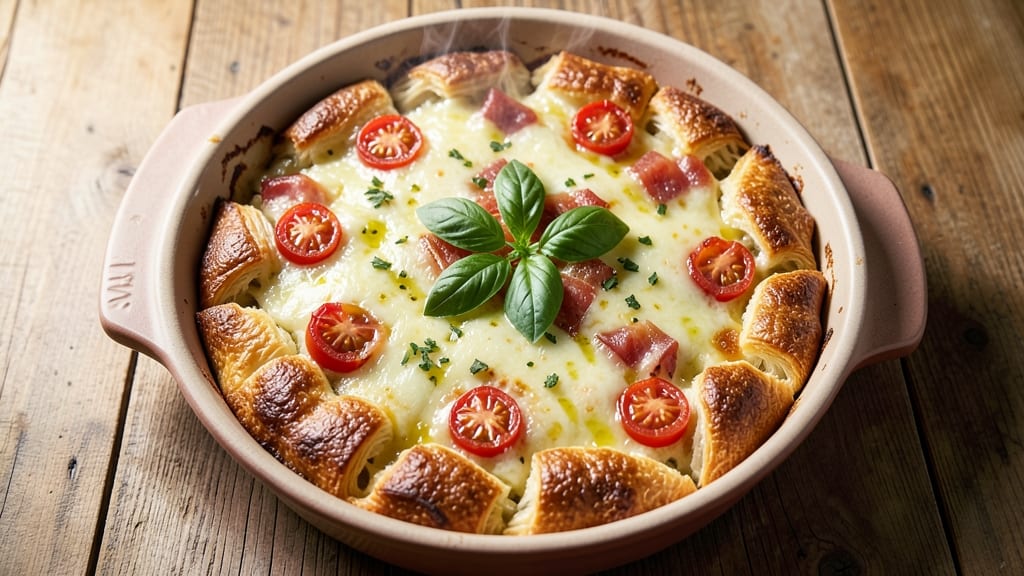
This Italian baked recipe transforms simple dough into crispy, golden layers of cheesy pull-apart perfection that rivals any trattoria. The secret lies in a perfectly balanced dough that bakes up tender yet crispy, with melted cheese stretching between each layer like molten silk.
I developed this technique after years of testing different ratios—too much flour makes it tough, too little and it collapses. The result? A dish that's equal parts satisfying and impressive, ready in just 45 minutes with minimal effort.
What sets this recipe apart is the combination of traditional Italian methods with modern convenience. You'll start with a simple dough that doesn't require kneading, proofing, or specialized equipment—just a bowl and your hands.
The cheese filling uses a blend of mozzarella and parmesan for that perfect balance of stretch and umami depth, while a touch of garlic powder adds authentic Italian flavor without overpowering.
The dough layers are brushed with olive oil before baking, creating that signature crispy exterior while keeping the inside tender and gooey.
By the time it emerges from the oven, you'll have a golden, bubbling masterpiece that's impossible to resist. The cheese pulls cleanly between each layer, creating crispy edges that give way to creamy, melty centers.
This dish works as a main course for a weeknight dinner or an impressive appetizer for gatherings—it's that versatile. The aroma alone will have everyone gathering around your kitchen, and the first bite delivers that perfect combination of textures and flavors.
For those who prefer gluten-free options, I've included a substitution method that maintains the same crispy texture and satisfying pull. Pair it with a simple arugula salad and crusty bread to soak up every last bit of that cheesy goodness.
Let's get baking—this recipe delivers restaurant-quality results with just a few simple ingredients and techniques you can master today.
Ingredients for italian bake
Fourteen simple ingredients transform into golden, crispy layers of cheesy pull-apart magic.
| Ingredient | Amount | Notes |
|---|---|---|
| All-Purpose Flour 🌾 | 3 ½ cups | Sifted for light texture |
| Active Dry Yeast 🍞 | ¼ tsp | Ensure freshness (test in warm water) |
| Granulated Sugar 🍚 | ¼ cup | For dough activation |
| Unsalted Butter 🧈 | ½ cup | Cold, cubed (full-fat for best texture) |
| Large Eggs 🥚 | 1 whole | Room temperature |
| Extra-Virgin Olive Oil 🫒 | ¼ cup | Plus extra for brushing |
| Salt 🧂 | 1 ½ tsp | Diamond Crystal preferred |
| Shredded Mozzarella Cheese 🧀 | 2 cups | Part-skim, low-moisture (fresh for extra stretch) |
| Freshly Grated Parmesan Cheese 🧀 | ½ cup | Block preferred over pre-grated |
| Garlic Powder 🧄 | ½ tsp | For authentic Italian flavor |
| Black Pepper 🌶️ | ¼ tsp | Freshly cracked for depth |
| Whole Milk 🥛 | ¼ cup | Warmed for dough elasticity |
| Baking Powder 🍞 | ½ tsp | For extra lift |
The dough is where the magic happens. King Arthur Flour or Gold Medal are my go-tos—they handle the minimal kneading better than store brands. Active dry yeast loses potency fast, so grab a fresh packet or test it in warm water (should foam in 5-10 minutes). The butter should be cold but not hard—press a cube, it should dent slightly. For the cheese, Sargento Natural Cheese shreds perfectly, but fresh mozzarella (torn by hand) gives that authentic stretch. The Parmesan? Parmigiano-Reggiano from a block is non-negotiable—pre-grated tastes like sawdust. If you're gluten-free, Cup4Cup or Bob's Red Mill 1:1 blends work, but expect a slightly denser texture.
No yeast? Instant yeast works 1:1, but it activates faster—mix it directly with the flour. Short on butter? Vegetable shortening keeps the layers crispy, but you'll lose that rich flavor. Fresh mozzarella too pricey? Shredded provolone melts beautifully and adds a smoky note. The garlic powder can be swapped for fresh minced garlic (1/4 tsp), but dried is more stable for baking. For extra crispiness, brush the layers with egg wash (1 egg + 1 tbsp water) before baking. And if you're making this ahead? Assemble the unbaked layers, wrap in parchment, and refrigerate overnight—the flavors meld even better.
This bakes best at 425°F—hot enough for crispy edges, but not so hot the cheese burns. The golden layers keep for 3 days in an airtight container, but honestly, it disappears faster than that. For leftovers, reheat at 350°F for 10-15 minutes until bubbly. Freeze unbaked layers (wrapped tightly) for up to 3 months. Pro tip: Sprinkle everything bagel seasoning on top before baking for a gourmet twist—trust me, it’s worth the extra minute.
Why You'll Love This Recipe
- No Yeast Struggles: I’ve ruined enough bread dough trying to wake up yeast—this recipe skips the guesswork. Just mix, let it rise once, and bake. The butter and sugar do all the heavy lifting for that golden, flaky crust without fuss.
- Buttery, Golden Magic: That crispy top? Pure science. The butter and sugar caramelize just enough to give it a sweet, buttery crunch while the inside stays soft. Honestly, the first time I bit into it still warm, I nearly dropped the pan.
- Weeknight to Potluck: Same dough, endless uses. Bake it into a loaf for sandwiches, tear it into rolls for dinner, or even shape it into a free-form braid for holidays. My kids grab the leftovers for lunch—no one complains.
- Budget-Friendly Staples: Flour, yeast, butter, eggs—these are things I always have. No specialty ingredients, no last-minute grocery runs. And a single batch feeds my family for days, so I’m not scrambling to feed everyone. Win.
Step-by-step instructions for crispy cheese pull-apart magic
Here's how to create that golden, crispy cheese pull-apart bread with perfect texture every time.
Activate the Yeast for Maximum Rise
In a small bowl, combine the 0.25 cup granulated sugar, 0.25 cup warm whole milk (about 110°F), and 0.25 tsp active dry yeast. Let it sit for 5-10 minutes until frothy—this confirms the yeast is alive and ready to work. The mixture should bubble vigorously and double in volume.
If it doesn't bubble after 10 minutes, your yeast might be old. Toss it and start fresh—this is the foundation of your dough's rise. Once active, proceed immediately to avoid overproofing.
Mix the Dough for Perfect Texture
In a large bowl, whisk together the 3.5 cups all-purpose flour, 1.5 tsp salt, 0.5 tsp garlic powder, 0.25 tsp black pepper, and 0.5 tsp baking powder. Create a well in the center and pour in the yeast mixture, 1 whole large egg, and 0.5 cup cold unsalted butter (cut into cubes).
Using a wooden spoon or dough whisk, gradually incorporate the wet ingredients into the dry until a shaggy dough forms. Then add 0.25 cup extra-virgin olive oil and mix until the dough comes together. It should be slightly sticky but not wet—if it's too dry, add 1 tablespoon warm milk at a time.
Knead and Rest for Elastic Dough
Turn the dough onto a lightly floured surface and knead for 8-10 minutes until smooth and elastic. You'll know it's ready when it springs back slowly when poked. If the dough feels too sticky, add 1 tablespoon flour at a time.
Place the dough in a lightly greased bowl, cover with a damp towel, and let it rise in a warm place for 1-1.5 hours until doubled in size. The dough should feel light and airy—this resting period develops gluten for that perfect pull-apart texture.
Shape and Fill the Dough
Punch down the risen dough and divide it into 4 equal portions. Roll each portion into a 12-inch circle on a parchment-lined baking sheet. Press each circle into a 1-inch thick round and create a 1-inch deep well in the center of each.
Fill each well with ½ cup shredded mozzarella cheese and 2 tablespoons freshly grated parmesan cheese. Gently press the cheese into the dough, then fold the edges of the dough upward and over the cheese to create a sealed pocket. Brush the tops with a little extra-virgin olive oil for extra crispiness.
Bake Until Golden and Crispy
Preheat your oven to 375°F. Bake the cheese pull-apart bread for 25-30 minutes until the tops are golden brown and the cheese is fully melted. The edges should be crispy, and the cheese should pull gently when you tug on the dough.
For extra crispiness, broil for 1-2 minutes at the end of baking. Let the bread cool for 5 minutes before serving—this allows the cheese to set slightly while keeping the crust crisp. Slice into wedges and enjoy immediately while the cheese is gooey and the crust is perfectly crunchy.
Pro Tips For Making Italian Bake
- Proof at Room Temp: Skip the fridge—let your yeast activate in a warm spot (like the oven with the light on) for 5-10 minutes. Cold yeast wakes up slower, and your dough will rise faster when it’s ready. I learned this the hard way after a batch took twice as long to double in a chilly kitchen.
- Cut Butter Cold: Use unsalted butter straight from the fridge—it’s easier to cube and won’t melt into the flour. If it’s too soft, chill it for 10 minutes first. This keeps your texture light and prevents a gummy bake.
- Don’t Overmix Dough: Mix just until the flour is incorporated—overworking it makes gluten tough and dense. Stop when it’s shaggy, then let the kneading happen during the first rise. I used to fight the dough until it was smooth, and it always turned out heavy.
- Eggs at Room Temp: Take eggs out 30 minutes before using—room-temperature eggs blend better and create a richer texture. Cold eggs can make your bake dense or uneven. (Yes, even if you’re impatient like me.)
Regional styles of this recipe
Roman-Style Cheese Bread
In Rome, this dish transforms into Pane al Formaggio, a beloved street food with a denser, heartier texture. The dough includes 1 extra egg for structure and ½ cup grated Pecorino Romano mixed into the cheese filling for that signature sharp, salty bite.
Bake at 350°F for 35-40 minutes—lower heat prevents over-browning while keeping the interior tender. Serve warm with a sprinkle of fresh rosemary and a side of marinated artichokes for an authentic Roman trattoria experience. 🌿
Sicilian Cheese Twists
Sicily takes this recipe to new heights with caciocavallo cheese, a semi-hard cow’s milk cheese that melts beautifully. Replace mozzarella with 1.5 cups shredded caciocavallo and add 1 tsp dried oregano to the dough.
Shape the dough into long, thin twists before baking at 400°F for 20-25 minutes—the high heat creates a crackly crust. Pair with chilled Sicilian citrus soda (like San Pellegrino Aranciata) to balance the richness. 🍊
Northern Italian Twist
In regions like Lombardy, this becomes Torta al Formaggio, a rustic loaf with a focus on fontina cheese for its creamy, nutty flavor. Use 1.5 cups shredded fontina and ½ cup taleggio in the filling, then bake in a cast-iron skillet at 375°F for 30 minutes.
The skillet adds crispiness to the bottom, while the cheese pulls like silk. Serve with polenta and a Bolognese reduction for a hearty Northern Italian meal. 🍲
Coastal Tuscan Version
Tuscany’s coastal influence shines in this recipe with the addition of fresh herbs and olive oil. Mix 1 tbsp chopped thyme and 1 tbsp chopped parsley into the dough, then brush the baked loaf with extra-virgin olive oil before serving.
Use 1 cup ricotta blended into the cheese filling for extra creaminess. Bake at 425°F for 25 minutes for a golden crust, and pair with grilled swordfish and a Chianti Classico for a true Tuscan feast. 🍷
Southern Italian Layered Bread
In Calabria, this dish is known as Pizza al Forno, a layered bread with a focus on spicy flavors. Add 1 tsp crushed red pepper flakes and ½ tsp fennel seeds to the dough, then layer the cheese with thin slices of soppressata.
Bake at 400°F for 20 minutes until the cheese bubbles and the crust turns deep golden. Serve with a spicy 'nduja cream for dipping—a perfect match for Calabria’s bold flavors. 🌶️
Gluten-Free Adaptation
For a gluten-free version, replace the all-purpose flour with 3.5 cups gluten-free 1:1 baking flour (like King Arthur Measure for Measure). Add 1 tsp xanthan gum to the dough for elasticity. The texture will be slightly denser, but brushing with olive oil before baking adds crispiness.
Bake at 375°F for 35-40 minutes, and let it rest 10 minutes before serving to ensure clean slices. 💪
Nutrition facts
Frequently asked questions
Can I make this Italian baked recipe without yeast?
Replace the yeast with 1 teaspoon baking powder and 1/4 teaspoon baking soda for a quick version. The texture will be denser but still delicious. For best results, use 1 extra egg to help bind the dough. This version bakes in 25-30 minutes at 375°F—perfect for when you're short on time.
What's the best way to reheat leftovers?
For crispy edges and melted cheese, reheat slices at 350°F for 8-10 minutes until bubbly. Place them on a baking sheet to avoid sogginess. Alternatively, use the broiler for 1-2 minutes on high for extra crispiness. Store leftovers in an airtight container for up to 3 days—the cheese stays gooey when properly stored.
Can I add other cheeses to this Italian baked recipe?
Yes! For extra flavor, try adding 1/2 cup shredded provolone (smoky depth) or 1/4 cup grated pecorino (sharp, salty kick). Avoid overly wet cheeses like ricotta unless blended into the mozzarella first. The key is maintaining the 2:1 mozzarella-to-parmesan ratio for that signature pull-apart texture.
Why did my Italian baked recipe collapse in the oven?
This usually happens when the dough isn't properly rested or the oven temperature isn't hot enough. Ensure your dough rises fully (1-1.5 hours) and preheat the oven to 375°F for at least 15 minutes. Also, don't overfill the cheese pockets—press it gently to avoid spilling. If using gluten-free flour, add 1 tsp xanthan gum for better structure.
How can I make this gluten-free while keeping it crispy?
Use a 1:1 gluten-free flour blend with 1 tsp xanthan gum and brush the baked layers generously with olive oil before baking. Bake at 375°F for 35-40 minutes—the extra time helps create crispiness. Let it rest 10 minutes before slicing to prevent crumbling. The texture will be slightly denser but still delicious.