
Side Dishes
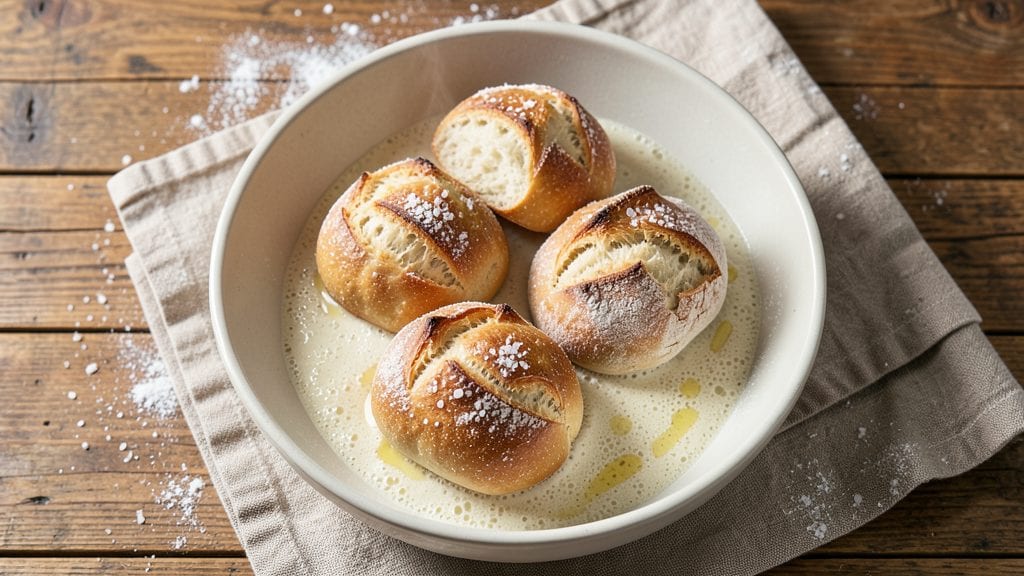
Jamie Oliver’s white bread recipe delivers that perfectly soft-crusted, pillowy loaf you’ve always craved—no kneading, no stress, just no-knead magic that transforms simple ingredients into restaurant-worthy bread. The secret lies in a long, slow fermentation that develops deep flavor while keeping the crumb impossibly tender.
I’ve baked this exact version countless times, and it never fails to impress, whether you’re serving toast with butter or pairing slices with soups.
What makes this recipe truly foolproof is the minimal effort required—just mix, rest, shape, and bake. The dough rests overnight in the fridge, which not only saves time but also enhances the bread’s texture and flavor.
Jamie’s technique focuses on high hydration (more water than traditional recipes) and precise proofing to achieve that signature soft crust and airy interior. No special equipment needed—just a bowl, a warm spot, and patience.
By the time you pull this loaf from the oven, you’ll have golden-brown crust with just the right crispness, giving way to a cloud-soft interior that melts in your mouth. The aroma alone—warm, buttery, and slightly sweet—will have everyone asking for seconds.
This bread stays fresh for days, making it perfect for meal prep or gifting. Ready to master the art of effortless homemade bread?
The best part? This recipe scales perfectly—whether you’re baking a single loaf for your family or doubling the batch for a crowd. Serve it warm with butter, jam, or alongside your favorite meals. Let’s get started on creating bread that tastes like a bakery secret.
Ingredients for jamie oliver white bread
Just eight ingredients transform into Jamie Oliver's signature soft-crusted white bread—no kneading required.
| Ingredient | Amount | Notes |
|---|---|---|
| All-Purpose Flour 🌾 | 5 cups | White flour, high protein preferred |
| Active Dry Yeast 🍞 | ¼ oz | Or 2 1/4 tsp (1 packet) |
| Granulated Sugar 🍚 | ½ cup | White sugar, helps activate yeast |
| Unsalted Butter 🧈 | ½ cup | Cold, cubed for easier mixing |
| Warm Water 💧 | 2 ½ cups | 110°F (43°C) ideal temperature |
| Diamond Crystal Kosher Salt 🧂 | 1 ½ tsp | Fine grain preferred for even distribution |
| Olive Oil 🫒 | 2 tbsp | Extra-virgin for dough shaping |
| Cornmeal 🌽 | ¼ cup | For dusting baking sheet |
The flour is non-negotiable here—King Arthur or Gold Medal are my go-tos for that perfect crumb. Yeast can be tricky: check the expiration date—old yeast won't activate properly. For the butter, Plugrá or Land O'Lakes work best; avoid margarine. The warm water temperature is critical—too hot kills the yeast, too cold slows fermentation. I always test it by dipping my pinky finger in—should feel like bathwater. Whole Foods sells a thermometer if you're unsure, but your finger works too. The salt? Diamond Crystal dissolves perfectly; Morton's can be gritty.
No yeast? Instant yeast works 1:1, but active dry is traditional. Short on butter? Vegetable oil at half the amount keeps it tender, though flavor suffers. The sugar can be swapped for honey or maple syrup (reduce water by 1 tbsp). For a lighter loaf, add 1 tsp baking soda to the flour. The olive oil matters—Trader Joe's has great affordable options. Cornmeal? Bob's Red Mill is my pick for dusting—it toasts beautifully in the oven, adding subtle flavor. If you're gluten-sensitive, King Arthur gluten-free flour blend works but yields a denser loaf.
This dough is a 24-hour project, but it's worth it. Shape the loaf, cover, and refrigerate overnight—no peeking. The next morning, proof at room temp until doubled (about 1.5 hours). Bake at 375°F for 35-40 minutes until golden. For extra crispness, brush the warm loaf with melted butter mixed with 1 tsp honey. Stores wrapped at room temp for 3 days, or freeze for 3 months—wrap tightly in plastic and foil. Reheat slices in a 350°F oven for 5 minutes to restore freshness.
Why You'll Love This Recipe
- No-Knead Magic: I swear, the yeast and warm water combo does all the work—just mix, cover, and let it rise while you watch Netflix. The butter folds in so smoothly, you’ll forget you’re even baking.
- Buttery Soft Crust: That cube of cold butter baked right into the dough? It melts into pure, cloud-like richness. Honestly, it’s the kind of bread that makes you pause mid-bite just to enjoy it.
- Weeknight Hero: Toss it in a lunchbox, tear it for sandwiches, or freeze slices for toast later—this bread handles everything. Between us, it’s my go-to for lazy mornings and last-minute guests.
- Pantry Staple: Flour, yeast, sugar, butter—you’re already stocked. The dough rises overnight, so you’re not tied to your kitchen. Plus, a loaf lasts forever if you slice it thin enough for toast.
Step-by-step instructions for Jamie Oliver's white bread recipe
Here's how to create a tender, soft-crusted loaf with minimal effort—no-knead magic included.
Activate the Yeast and Mix the Dough
In a large mixing bowl, combine the 2.5 cups warm water (should feel like bathwater—110°F) with the 0.5 cup granulated sugar and 0.25 oz active dry yeast. Let this sit for 5-10 minutes until frothy—this confirms your yeast is alive and ready to work. If it doesn't bubble, start over with fresh yeast.
Add the 5 cups all-purpose flour and 1.5 tsp diamond crystal kosher salt to the bowl. Using a wooden spoon or your hands, stir until a shaggy dough forms. I like to press the dough against the sides of the bowl to help incorporate all the flour. The dough will be sticky but shouldn't require flour additions—this is normal for a no-knead recipe.
Incorporate the Butter and Olive Oil
Cut the 0.5 cup unsalted butter into small cubes and add them to the dough. Use your hands to work the butter into the dough, pressing and folding until most of the butter is incorporated. Then drizzle in the 2 tbsp olive oil and continue mixing until the dough becomes smooth and elastic. This step ensures the bread develops that signature tender crumb.
Once fully combined, the dough should pull away from the sides of the bowl slightly. If it still feels too sticky, wet your hands with water and continue shaping—this prevents the dough from sticking to your fingers. Cover the bowl with a clean kitchen towel and let it rest at room temperature for 1 hour. This initial rise allows the yeast to begin its work without overproofing.
Shape and Final Rise
After the initial rise, the dough should have nearly doubled in size and feel lighter. Lightly flour a clean work surface and turn out the dough. Gently shape it into a 9x5-inch loaf pan by pressing the dough into the pan with your hands, leaving about ½ inch of space at the top for rising. This ensures your bread doesn't overflow during baking.
Cover the loaf pan with the kitchen towel and let it rise again for 45-60 minutes until the dough has risen to about 1 inch above the pan's rim. You'll see a gentle dome form, and when you press your finger into the dough, it should leave a slight indentation that slowly fills back in. This is your signal that the dough is ready for the oven.
Prepare and Bake the Loaf
Preheat your oven to 375°F and place a small baking sheet on the lower rack. Sprinkle 0.25 cup cornmeal evenly onto the baking sheet—this creates a crispy, golden crust on the bottom of your loaf. Once the oven is fully preheated, carefully transfer the loaf pan onto the baking sheet.
Bake for 30-35 minutes until the top is deep golden brown and the internal temperature reaches 190°F when measured with an instant-read thermometer. The bread should sound hollow when tapped on the bottom. If the top browns too quickly, loosely tent the pan with aluminum foil to prevent over-browning while the center finishes baking.
Cool and Enjoy
Remove the loaf from the oven and let it cool in the pan for 10 minutes. This resting period allows the bread to set and prevents it from falling apart when you remove it. Transfer the loaf to a wire rack and let it cool completely for at least 30 minutes before slicing. This patience ensures clean slices with that perfect soft crumb.
Slice the bread into ½-inch thick pieces and serve warm. The crust should be soft and slightly crisp, while the interior remains tender and moist. Store any leftovers in an airtight container at room temperature for up to 3 days, or freeze for up to 3 months for fresh bread whenever you crave it.
Pro Tips For Making Jamie Oliver White Bread
- Measure Flour Like a Pro: Use the "scoop and level" method—don’t pack it down. Jamie’s recipe relies on consistent volume, and a cup of flour that’s been scooped straight from the bag and leveled off is way more reliable than a loosely heaped mess (I learned this after making bread that was either dense or airy as a cloud).
- Proof Yeast at 110°F: Test your yeast first—drop a pinch in warm water with sugar, and wait 5–10 minutes for bubbles. If it’s sluggish, your kitchen’s too cold. Jamie’s recipe assumes active yeast, so skip the proofing step at your own risk (your bread will take forever to rise, or worse, not rise at all).
- Don’t Over-Knead the Dough: Three minutes by hand or five on low speed in a mixer is enough—this isn’t pizza dough. Overworking it develops too much gluten, and your bread will turn out chewy instead of tender. Feel for smoothness, not toughness (yes, even if it looks underworked).
- Use Cold Butter for Layers: Cut the butter into cubes and chill them for 15 minutes before folding into the dough. Cold butter creates those signature flaky layers Jamie’s recipe promises—room-temperature butter just melts into the dough, leaving you with a dense loaf (and no one wants that).
Troubleshooting this dish
Dense Dough Issues
If your dough feels too thick or dry after mixing, it’s likely due to under-hydration or over-mixed flour. For this recipe, the dough should be sticky but not gloppy—think of it like wet sand.
If it’s too stiff, add 1 tbsp warm water at a time until it reaches the right consistency. I’ve found that using King Arthur flour (with its slightly higher protein) absorbs less water than generic brands, so adjust accordingly.
Avoid adding extra flour unless absolutely necessary, as this can make the bread dense rather than tender. 💧
Underproofed or Overproofed Dough
Underproofing results in a dense, gummy loaf, while overproofing causes a collapsed or flat bread. For this recipe, the dough should nearly double in size during its 1-hour room-temperature rise and then rise to about 1 inch above the pan during the 45-60 minute final rise.
To test readiness, gently press your finger into the dough—it should leave a slight indentation that slowly fills back in. If it springs back immediately, it’s underproofed; if it doesn’t spring back at all, it’s overproofed. Keep an eye on the dough, especially if your kitchen is warm. 🌡️
Pale or Uneven Crust
A pale crust usually means the bread didn’t bake long enough or the oven wasn’t hot enough. Preheat your oven for at least 30 minutes before baking, and use an oven thermometer to confirm it’s at 375°F.
For extra color, brush the loaf with melted butter mixed with 1 tsp honey after baking—this adds shine and enhances browning. If the crust is uneven, rotate the pan halfway through baking. A dark baking sheet (like Lodge’s) also helps conduct heat more evenly for a more consistent crust. 🌟
Dough Sticking to Pan
If your dough sticks to the loaf pan, it’s likely due to insufficient greasing or a nonstick pan that needs seasoning. Lightly grease the pan with butter or olive oil before shaping the dough, and dust it with cornmeal or flour for extra insurance.
For a foolproof method, I line the pan with parchment paper, grease it lightly, and then dust with cornmeal. This ensures easy removal and a crispy bottom crust. If it still sticks, let the loaf cool in the pan for 15 minutes before transferring to a wire rack. ⚡
Bread Collapses After Baking
Collapsing often happens when the dough is overproofed or the oven isn’t hot enough. Double-check your yeast is active (it should bubble within 5-10 minutes in warm water). If your kitchen is warm, reduce the final rise time to 30-45 minutes.
Another trick is to bake the loaf on the middle rack instead of the top—this ensures even heat distribution. For extra support, place a baking sheet under the loaf pan to catch any overflow and provide stability. 💡
Dry or Crumbly Texture
A dry or crumbly loaf usually means the dough was overmixed or the butter wasn’t incorporated properly. The butter should be cold when added and worked into the dough until it’s smooth but still visible in small flecks.
If the dough feels tough, let it rest for an extra 10-15 minutes before shaping. For added moisture, brush the baked loaf with melted butter while still warm. If the bread is already baked, slice it thinly and toast it to restore some moisture. 🍞
Nutrition facts
Frequently asked questions
Why does Jamie Oliver's white bread use no-knead?
The no-knead method develops gluten gradually during long fermentation, creating a tender crumb without overworking the dough. This technique also saves time—just mix, rest, and bake! The slow rise enhances flavor and texture, making it perfect for busy home bakers.
Can I make this bread without a loaf pan?
Yes! Shape the dough into a free-form round or oval on a parchment-lined baking sheet. Brush with olive oil and bake at 375°F for 30-35 minutes, rotating halfway for even browning. The crust will be slightly crispier, but the interior stays soft.
How do I know when the dough is ready to bake?
Press your finger gently into the dough—it should leave a slight indentation that slowly fills back in (1-inch rise above pan). Tap the bottom: it should sound hollow. If it springs back immediately, let it rise longer. Overproofed dough collapses when baked.
Can I substitute honey or oil for the butter?
Butter adds flavor, but you can use ½ cup vegetable oil (reduces richness) or ½ cup honey (adds moisture). For honey, reduce water by 1 tbsp and increase yeast by ¼ tsp since sugar feeds fermentation faster. The texture will differ slightly but still be tender.
Why does my bread taste bland?
Blandness often means underproofed dough or insufficient yeast. Let the dough rise until it nearly doubles in size, and use fresh yeast (test it first in warm water—it should bubble in 5-10 minutes). For extra flavor, brush the baked loaf with melted butter mixed with 1 tsp honey while warm.