Breakfast & Brunch
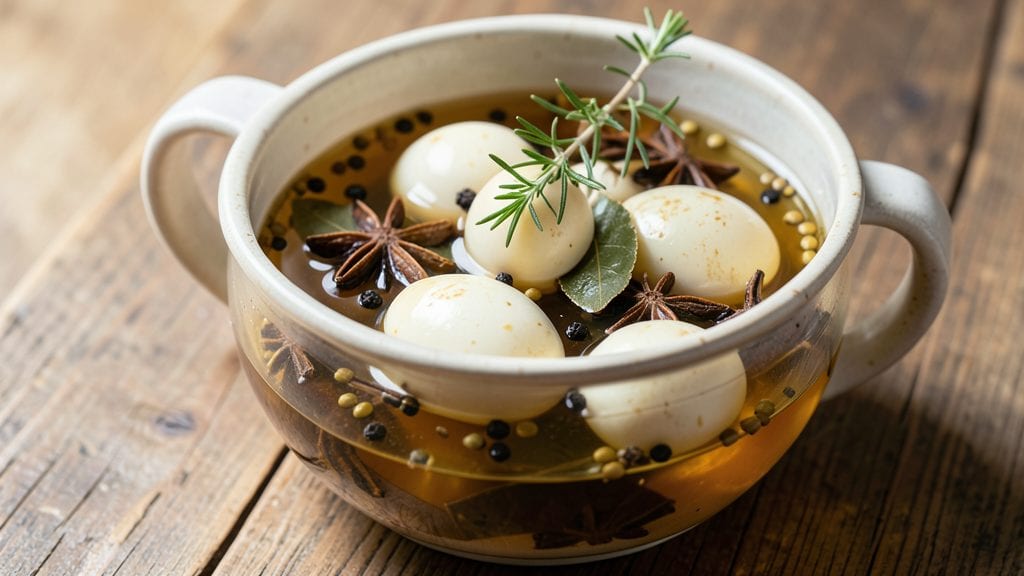
This Louisiana pickled quail eggs recipe transforms delicate quail eggs into vinegar-bright bites with herby zing—just like those you'd find at a Cajun roadside stand.
The secret lies in the balance of white vinegar, mustard seeds, and bay leaves, which create that signature tangy crunch while preserving the eggs' tender centers.
I first discovered this technique while researching Creole traditions, and it quickly became a staple in my kitchen for adding a sophisticated touch to charcuterie boards or brunch spreads.
The process is straightforward but requires patience—quail eggs need 24 hours of pickling to develop that perfect vinegar bite while maintaining their delicate texture.
You'll use simple pantry staples like white vinegar, water, and a blend of mustard seeds, bay leaves, and black peppercorns to create a briny, aromatic marinade that infuses the eggs with Louisiana charm. The result?
Eggs that stay crisp yet tender, with a flavor profile that's both tangy and subtly spiced.
What makes these pickled quail eggs truly special is their versatility—they elevate any dish they touch. Serve them as a crunchy appetizer with crusty bread, add them to salads for a briny crunch, or use them as a garnish for shrimp or crab dishes to bring that authentic Louisiana flair.
The flavor develops over time, so the longer they sit, the more complex and delicious they become.
The key to success is maintaining the right vinegar-to-water ratio and ensuring the eggs are fully submerged during the pickling process. Once perfected, this recipe delivers restaurant-quality bites that are surprisingly easy to make at home.
Let's get started on creating these vinegar-bright treasures that capture the essence of Louisiana cuisine.
Ingredients for louisiana pickled quail eggs
Simple pantry staples transform delicate quail eggs into tangy Louisiana bites perfect for brunch or charcuterie.
| Ingredient | Amount | Notes |
|---|---|---|
| Quail Eggs 🥚 | 24 whole | Fresh, unwashed for best adhesion |
| White Vinegar 🍶 | 2 cups | Distilled, 5% acidity preferred |
| Water 💧 | 2 cups | Filtered or bottled for clarity |
| Mustard Seeds 🌶️ | 1 tbsp | Yellow or brown preferred |
| Bay Leaves 🍃 | 2 whole | Fresh for stronger flavor |
| Black Peppercorns 🌶️ | 10 whole | Crushed lightly for aroma |
| Dried Thyme 🌿 | 1 tsp | Or 1 tbsp fresh thyme |
| Salt 🧂 | 1 ½ tsp | Kosher or sea salt |
| Dried Red Pepper Flakes 🔥 | ½ tsp | Adjust for heat preference |
| Garlic Cloves 🧄 | 2 cloves | Smashed for infusion |
| Fresh Dill 🌿 | 2 tbsp | Chopped, optional for brightness |
| Cayenne Pepper 🌶️ | ¼ tsp | For subtle heat |
The quail eggs are the star, so freshness is key. Look for eggs with clean, unbroken shells—local farms or specialty markets often carry them, though some grocery stores stock them too. If you can't find quail eggs, duck eggs work in a pinch, but the texture and flavor will differ slightly. The vinegar should be white distilled vinegar—apple cider vinegar adds sweetness that doesn't match the classic Louisiana tang. For the spices, Penzeys or bulk bins at Whole Foods are great for quality, but regular grocery store dried herbs work fine if they're not ancient. The mustard seeds? Yellow or brown—avoid the powdered kind, which won't give you that satisfying crunch.
No mustard seeds? Substitute with 1 tsp ground mustard, but you'll lose the texture. Fresh thyme unavailable? Dried works at one-third the amount. Want more heat? Double the cayenne or add a pinch of crushed red pepper. The garlic cloves can be skipped if you dislike the flavor, but they add a subtle depth. For a sweeter twist, some cooks add a 1 tsp sugar to the brine. The dill is optional but adds that bright, herby note that ties it all together. If you're making this ahead, add the dill just before serving so it stays vibrant.
Store the pickled eggs in their brine in the fridge for up to 3 weeks, though they're best within the first week. The longer they sit, the more complex the flavor becomes—24 hours is minimum, 48 hours ideal. For serving, drain the eggs and pat them dry with a paper towel. They keep their crunch for about 2 days once drained, so use them quickly. I like to portion the brine into small jars for easy snacking or garnishing. The brine itself is delicious on deviled eggs or in cocktails—don't waste it!
Why You'll Love This Recipe
- No-Fuss Preserving: I swear, this takes less time than boiling water for pasta—just crack, simmer, and let the vinegar work its magic. The quail eggs stay whole, the brine does all the heavy lifting, and honestly? No peeling, no fuss, no stress.
- Tangy Southern Crunch: That first bite—crisp shell, bright vinegar kick, mustard seeds popping like tiny firecrackers—it’s the kind of flavor that makes you reach for seconds without thinking. The bay leaves add this earthy depth that feels fancy, even though it’s just pantry staples.
- Party Snack Hero: I’ve used these as appetizers for Mardi Gras gatherings, tucked them into sandwiches for tailgates, and even served them chilled with charcuterie—no one ever asks what they are, they just keep eating. Perfect for when you want to impress but not slave over a stove.
- Zero-Waste Pantry Magic: The brine lasts weeks, so I make a big batch and use it for everything—dipping, topping, or just snacking straight from the jar. Quail eggs are cheaper than chicken eggs, and the vinegar? You probably already have it. Budget-friendly, shelf-stable, and no leftovers here—just happy eating.
Step-by-step instructions for Louisiana pickled quail eggs
Transform simple quail eggs into bold, tangy bites with this Southern-inspired method.
Prepare the Brine Mixture
In a medium saucepan, combine the 2 cups white vinegar and 2 cups water over medium heat. Bring to a gentle simmer while you prepare the remaining ingredients—this ensures everything integrates smoothly. Once simmering, add the 1.5 teaspoons salt, 1 teaspoon dried thyme, 0.5 teaspoon dried red pepper flakes, and 0.25 teaspoon cayenne pepper. Stir just until fully dissolved, about 30 seconds. The liquid should smell bright and aromatic with a hint of heat.
Remove the pan from heat and add the 2 smashed garlic cloves, 2 whole bay leaves, 10 whole black peppercorns, and 1 tablespoon mustard seeds. Let the mixture steep for 5 minutes while uncovered—this infuses the brine with deep, complex flavors. You'll notice the garlic and thyme releasing their oils into the liquid, creating a fragrant, golden-tinged brine ready for the eggs.
Hard-Boil the Quail Eggs
While the brine steeps, place the 24 whole quail eggs in a separate saucepan and cover them with cold water by about 1 inch. Bring to a rolling boil over high heat, then immediately reduce to medium-low heat and maintain a gentle simmer. Cook for exactly 6 minutes—this ensures perfectly set whites while keeping the yolks tender. Set a timer and don't peek; opening the lid releases steam and can lead to uneven cooking.
After 6 minutes, transfer the eggs to an ice bath for 5 minutes to halt the cooking process. This step prevents overcooking and ensures clean, easy-to-peel eggs. Once cooled, gently tap each egg on a hard surface to crack the shell all over, then peel under running water. The shells should slide off effortlessly, revealing pristine eggs ready for pickling.
Assemble and Pickle the Eggs
In a clean, airtight quart-sized jar, layer the peeled quail eggs in a single layer. Pour the warm brine over the eggs, ensuring they're fully submerged. Add the 2 tablespoons chopped fresh dill to the jar, pressing it gently against the eggs to release its bright flavor. The dill will float and infuse the brine as it cools, adding a fresh herbal note that balances the vinegar's tang.
Seal the jar tightly and let it cool to room temperature. Once cooled, refrigerate for at least 24 hours before serving—this allows the flavors to meld completely. The eggs will develop a glossy sheen and absorb the vinegar's sharpness, while the spices and herbs create a complex, Southern-inspired profile. For best results, store in the fridge for up to 2 weeks, though they'll likely disappear in days!
Serve with Confidence
When ready to serve, remove the eggs from the jar and pat them dry with a paper towel. The shells should be completely clean, and the eggs will hold their shape beautifully. Serve chilled as a standalone appetizer, on charcuterie boards, or alongside grilled meats and fresh bread. The balance of vinegar, herbs, and subtle heat makes these eggs irresistibly bright and satisfying.
If you prefer a slightly milder flavor, reduce the dried red pepper flakes or cayenne pepper by half. For extra depth, add a pinch of smoked paprika to the brine. These pickled quail eggs are a showstopper—elegant, flavorful, and perfect for any occasion where you want to impress with minimal effort.
Pro Tips For Making Louisiana Pickled Quail Eggs
- BOIL EGGS FIRST: Hard-boil the quail eggs for 5 minutes before pickling—this prevents them from cracking when submerged in the vinegar-water mix. I learned this the hard way when my first batch turned into a floaty, sad mess.
- USE 5% VINEGAR SOLUTION: Mix equal parts white vinegar and water (1:1 ratio) instead of straight vinegar—it’s gentler on the eggs and keeps them firm without turning them rubbery. Louisiana-style pickles rely on acidity, not harshness.
- CRUSH SEEDS, NOT POWDER: Lightly crush the mustard seeds with the flat of a knife before adding them—this releases their flavor without turning the brine bitter. I used ground seeds once; the result was a weird, sharp aftertaste.
- STACK EGGS NEATLY: Pack the quail eggs into the jar in a single layer, nestled snugly like eggs in a carton—this ensures even pickling and no wasted space. Crowding them leads to uneven pickling and a messy jar.
Best sauces and condiments for these flavors
Classic Remoulade Dip
This Louisiana staple transforms your pickled quail eggs into a showstopping appetizer. Mix ½ cup mayonnaise, 2 tablespoons Creole mustard, 1 tablespoon hot sauce (like Crystal or Tabasco), 1 teaspoon Worcestershire sauce, and 1 teaspoon lemon juice.
Stir in 1 chopped celery stalk and 1 tablespoon chopped green onion for texture. Serve the eggs chilled in this creamy, tangy dip—it’s the perfect balance to their vinegar bite. 🍽️
Spicy Creole Aioli
For a bold dip that complements the pickled eggs' heat, blend ½ cup aioli base (like Duke’s or homemade), 1 tablespoon Creole seasoning, 1 teaspoon smoked paprika, and ½ teaspoon cayenne. Thin with a splash of water if needed.
The smoky, spicy aioli cuts through the vinegar while adding depth. I love serving this with the eggs on toasted baguette slices for a brunch-worthy bite. 🌶️
Herbed Butter Spread
Create a rich, herby butter by mixing ½ cup softened butter with 1 tablespoon chopped fresh dill, 1 teaspoon chopped chives, ½ teaspoon garlic powder, and a pinch of salt.
Spread on warm crusty bread or crackers alongside the pickled eggs. The butter’s richness contrasts beautifully with the vinegar’s sharpness, making it a crowd-pleaser. ✨
Sweet & Tangy Glaze
For a sweet contrast, simmer ¼ cup honey, 2 tablespoons balsamic vinegar, and 1 teaspoon Dijon mustard until thickened. Drizzle over the eggs just before serving. The caramelized glaze adds a glossy finish and balances the pickled eggs’ acidity.
This works especially well for a dessert-like appetizer or as a garnish for grilled meats. 🍯
Cajun-Inspired Cocktail Garnish
Use the pickled eggs as a garnish in cocktails like the Sazerac or Hurricane. Skewer an egg with a toothpick and place it on the rim of the glass.
The vinegar’s tang enhances the cocktail’s complexity, while the egg adds a surprising crunch. For extra flair, rim the glass with smoked salt or chili powder. 🍸
Mustard-Herb Vinaigrette
Whisk together ¼ cup olive oil, 2 tablespoons Dijon mustard, 1 tablespoon apple cider vinegar, 1 teaspoon honey, and 1 teaspoon chopped fresh tarragon.
Toss with mixed greens or serve as a dipping sauce for the eggs. The mustard and herbs echo the pickling spices while adding a fresh, bright note. 🥗
Nutrition facts
Frequently asked questions
Can I use chicken eggs instead of quail eggs?
While you can substitute chicken eggs, the texture and presentation won't be the same. Quail eggs are perfect for pickling because their small size absorbs the brine quickly and maintains a satisfying crunch. Chicken eggs would need longer pickling time (3-4 days) and would be too large for elegant appetizer platters. If you must use them, reduce the brine quantity by half to maintain proper proportions.
What's the secret to getting crispy pickled quail eggs?
The crispness comes from two key steps: proper hard-boiling (exactly 6 minutes in boiling water) and complete submersion in cold water afterward. After pickling, pat the eggs dry with a paper towel and let them air-dry for 10 minutes before serving. The longer they sit in the brine (up to 2 weeks), the more they develop that satisfying crunch.
Can I make this recipe without vinegar?
Vinegar is essential for authentic Louisiana pickled eggs—it creates that signature tangy crunch. If you're avoiding vinegar, try a lemon juice and water mixture (1:1 ratio) with extra salt (2 tsp), but the flavor will be milder. For a fermented alternative, use lacto-fermented brine (1:1 water to non-iodized salt) and add the spices after 5 days of fermentation.
How do I store leftover pickled quail eggs?
Store them in their original brine in an airtight container in the fridge for up to 3 weeks. The flavor actually improves over time! For longer storage, transfer to a sterilized jar with fresh brine (same ratio) and keep refrigerated. Once drained, they'll stay crisp for 2 days in the fridge—best enjoyed fresh from the jar for maximum crunch.
What's the best way to serve these at a party?
Arrange them on a chilled slate board with toothpicks for easy grabbing. Pair with toasted baguette slices, herbed butter, and a small bowl of the leftover brine for dipping. For a Cajun twist, serve alongside shrimp remoulade or andouille sausage. The contrast of warm bread and cold eggs makes them irresistible as appetizers.