
Main Courses
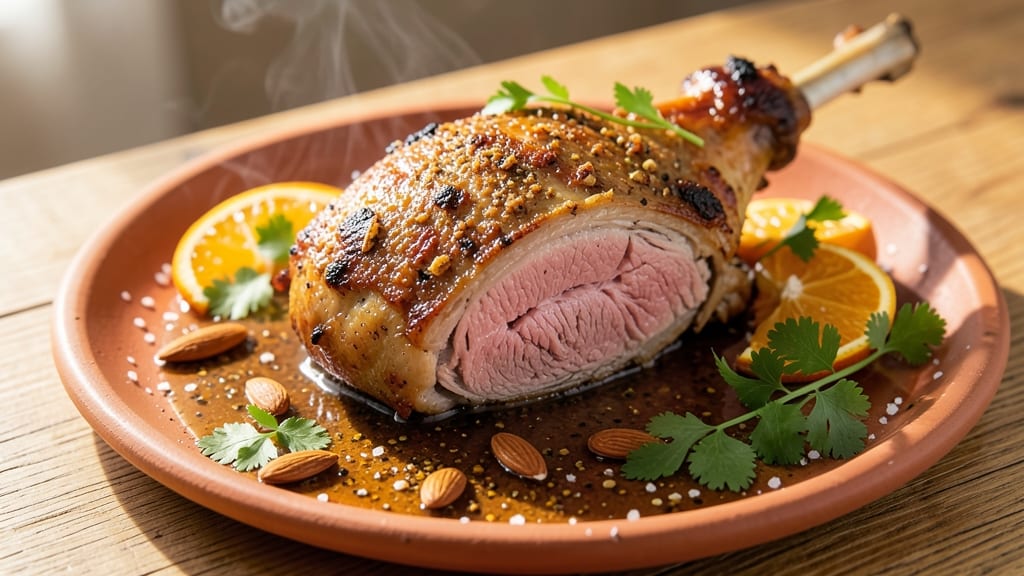
This Moroccan roast lamb leg recipe transforms a simple cut into a showstopping centerpiece with layers of warm spices and melt-in-your-mouth tenderness. The key lies in a carefully balanced blend of cumin, coriander, and cinnamon that creates a fragrant crust while keeping the meat impossibly tender.
After years of perfecting this technique, I’ve developed a method that delivers restaurant-quality results without requiring hours of active cooking.
The process begins with a dry rub of aromatic spices that penetrate the lamb as it roasts, creating a caramelized crust that’s both flavorful and visually stunning.
Unlike traditional recipes that call for hours of marinating, this version relies on precise timing and basting to achieve fall-off-the-bone tenderness in just under three hours. The result is a lamb leg that’s rich, deeply spiced, and so tender it practically dissolves with each bite.
What makes this recipe truly special is how it elevates the entire meal—pair it with fluffy couscous, roasted root vegetables, and a bright harissa yogurt sauce for a complete Moroccan feast.
The spices not only infuse the lamb but also infuse the air with an irresistible aroma that will have everyone gathering around the table. This is the kind of dish that turns a regular weeknight into a celebration.
Ready to impress your guests? The secret is in the balance of spices and the patience of low-and-slow roasting. With just a few simple ingredients and a little time, you’ll create a lamb leg that’s worth every minute of effort. Let’s get started on this unforgettable centerpiece.
Ingredients for moroccan roast lamb leg
Sixteen ingredients. One unforgettable centerpiece. The aromatic spice blend transforms humble lamb into a fragrant, tender masterpiece.
| Ingredient | Amount | Notes |
|---|---|---|
| Bone-In Lamb Leg 🐑 | 5 lb | French-style, fat cap intact |
| Ground Cumin 🌿 | 2 tbsp | Freshly toasted for depth |
| Ground Coriander 🌿 | 1 ½ tbsp | Not coriander seeds |
| Ground Cinnamon 🌿 | 1 tbsp | Ceylon preferred |
| Smoked Paprika 🌶️ | 1 ½ tbsp | For deep color |
| Turmeric Powder 🌿 | 1 tsp | Brightens crust |
| Ground Ginger 🌿 | ½ tsp | Warmth without bite |
| Diamond Crystal Kosher Salt 🧂 | 1 ½ tbsp | Coarse grain preferred |
| Freshly Ground Black Pepper 🌶️ | 1 tsp | Cracked peppercorns |
| Extra-Virgin Olive Oil 🫒 | ¼ cup | For basting |
| Garlic Cloves 🧄 | 8 cloves | Smashed, not minced |
| Fresh Lemon Juice 🍋 | 2 tbsp | Bright acidity |
| Fresh Rosemary 🌿 | ¼ cup | Chopped stems included |
| Fresh Thyme Leaves 🌿 | ¼ cup | Stems removed |
| Honey 🍯 | 2 tbsp | Wildflower preferred |
The lamb leg is non-negotiable—French-style with bone and fat cap ensures maximum flavor and moisture. Source from a reputable butcher who can trim excess fat while preserving the natural cap. Costco or Whole Foods typically carry high-quality cuts, but local specialty butchers often provide superior marbling. Look for lamb with a vibrant red hue and minimal yellowing fat. The 5-pound size balances yield and roasting time, delivering ample portions for six with leftovers for sandwiches. Freshly ground spices are essential—Penzeys or Spicewalla offer premium options, but toast your own cumin and coriander in a dry pan for 30 seconds to enhance their aromatic profiles.
No Ceylon cinnamon? Substitute regular cassia at half the amount—it's stronger but still effective. Smoked paprika unavailable? Regular paprika plus a pinch of liquid smoke mimics the depth. The honey can be swapped for date syrup or maple syrup for a different nuance, though it may alter the caramelization slightly. Fresh herbs wilt quickly—dried thyme at one-third the amount works in a pinch, but fresh delivers superior aroma. For the garlic, roast whole cloves with the lamb for an intensified flavor without the sharpness of mincing. The olive oil should be high-quality extra-virgin—cheap oils can produce bitter fumes when heated.
Prep the spice rub 1 day ahead and store in an airtight container to maximize aroma infusion. The lamb leg reheats beautifully—350°F for 20 minutes covered with foil restores moisture without overcooking. Leftovers keep 4-5 days refrigerated or 3 months frozen when portioned in vacuum-sealed bags. For presentation, slice against the grain at room temperature—10 minutes out of the fridge ensures clean cuts. The crust will be spectacularly crisp, so serve immediately after carving for the full sensory experience.
Why You'll Love This Recipe
- One-Pan Magic: I swear by this recipe because it’s literally hands-off after the initial rub. Just slather that bone-in lamb leg with cumin, coriander, cinnamon, and smoked paprika—no chopping, no fuss—then let the oven do the work while you sip tea or watch a show. The bone renders into golden, crispy shards that taste like they’ve been slow-cooked for hours, but honestly? It’s ready in under two hours.
- Spice Bomb Flavor: Between us, the combo of ground cinnamon and smoked paprika on lamb is chef’s kiss—warm, earthy, with just a hint of smoky kick. The cumin and coriander add this bright, citrusy depth that makes every bite feel special, like you’ve snuck a little Moroccan café into your kitchen. (Yes, even on a Tuesday night.)
- Budget-Friendly Feast: Bone-in lamb leg is cheaper than you’d think, and the spices? A tiny pinch goes a long way. Honestly, this is my go-to for feeding a crowd without breaking the bank—imagine serving it at a potluck or holiday dinner. The rich, spiced aroma alone makes the room smell like a Moroccan market, and the cost per serving is ridiculously fair.
Step-by-step instructions for Moroccan roast lamb leg
Master this technique and you'll achieve lamb with a fragrant spice crust and fall-off-the-bone tenderness.
Prepare the Lamb with the Spice Rub
Remove the lamb leg from the refrigerator and let it sit at room temperature for 30 minutes before cooking. This ensures even cooking throughout. Pat the lamb dry with paper towels, pressing firmly to remove all moisture—this step is critical for developing that coveted crispy crust.
In a small bowl, combine the 2 tablespoons ground cumin, 1.5 tablespoons ground coriander, 1 tablespoon ground cinnamon, 1.5 tablespoons smoked paprika, 1 teaspoon turmeric powder, 0.5 teaspoon ground ginger, 1.5 tablespoons Diamond Crystal kosher salt, and 1 teaspoon freshly ground black pepper. Rub this mixture generously over the lamb, pressing the spices into the meat and working them into the fat cap. The rub should adhere evenly and leave a visible coating.
Next, mix 0.25 cup extra-virgin olive oil, 2 tablespoons fresh lemon juice, and 2 tablespoons honey in a separate bowl. Brush this mixture all over the lamb, coating it evenly. The acidity of the lemon juice and the sweetness of the honey will balance the spices and help caramelize the crust during roasting.
Sear the Lamb for Depth of Flavor
Preheat your oven to 325°F. Place a rack in a large roasting pan and position the lamb leg fat-side up on the rack. This allows heat to circulate evenly around the lamb and prevents the fat from pooling at the bottom of the pan.
Before roasting, sear the lamb to lock in juices and add depth of flavor. Heat a large oven-safe skillet over medium-high heat until it's very hot. Add the lamb leg and sear on all sides, including the fat cap, for 3-4 minutes per side until the fat begins to render and the meat develops a deep golden-brown crust. Transfer the seared lamb to the roasting pan, fat-side up.
Place the roasting pan in the preheated oven and roast the lamb for 2 hours. This low-and-slow approach ensures the meat becomes tender without drying out. After 1 hour, check the internal temperature using a meat thermometer. It should read around 145°F—this is when the lamb begins to break down collagen and become tender.
Add Aromatics and Continue Roasting
While the lamb roasts, prepare the aromatics. In a small bowl, combine 0.25 cup chopped fresh rosemary and 0.25 cup fresh thyme leaves. Smash the 8 garlic cloves lightly with the flat side of a knife to release their flavor without mincing them. Scatter the rosemary, thyme, and garlic cloves over the lamb in the roasting pan.
Continue roasting the lamb for an additional 1-1.5 hours, or until the internal temperature reaches 160-165°F. The lamb is done when a probe inserted into the thickest part of the meat slides in easily and the juices run clear. The total roasting time should be approximately 3-3.5 hours, depending on the size and cut of your lamb.
During the last 30 minutes of roasting, baste the lamb with its juices and rendered fat every 15 minutes. This ensures the crust remains moist and flavorful. The lamb should have a deep golden-brown crust and a rich, aromatic aroma filling your kitchen.
Rest and Carve for Maximum Tenderness
Once the lamb reaches the desired internal temperature, remove it from the oven and transfer it to a cutting board. Tent loosely with aluminum foil and let it rest for 20-30 minutes. This resting period allows the juices to redistribute throughout the meat, ensuring each slice is moist and flavorful.
To carve, use a sharp carving knife and cut the lamb against the grain for maximum tenderness. The grain will be visible as fine lines running through the meat. Serve the lamb with the pan juices spooned over the top, and garnish with additional fresh rosemary and thyme if desired. Each bite should deliver a harmonious blend of spiced crust, tender meat, and aromatic herbs.
The result is a lamb leg with a beautifully caramelized crust, infused with warm spices and brightened by the lemon and honey. The meat should be so tender it falls apart with minimal effort, and the flavors should be rich and complex, with notes of cumin, coriander, and cinnamon.
Pro Tips For Making Moroccan Roast Lamb Leg
- SEAR THE FAT FIRST: Walk the lamb leg through a hot pan until the fat renders and the meat develops a deep brown crust—this locks in flavor and prevents dryness later. I used to skip this, and the lamb always tasted more like seasoning than itself.
- TOAST YOUR SPICES: Dry-toast the ground cumin, coriander, and cinnamon in the same pan for 30 seconds before adding oil—this wakes up their aroma and cuts through the smokiness of the paprika. Sounds weird, but it works: the spices taste alive afterward.
- SKIP THE OVERCROWDED PAN: Don’t pile all the lamb bones and meat in one pan at once—cook in batches if needed. I learned this the hard way when my first batch steamed instead of seared, and the spices just sat there, flavorless.
- TEST DONENESS BY TOUCH: After roasting, press the thickest part of the lamb—it should yield slightly but still feel firm, like pressing your thumb against a ripe peach. A meat thermometer is great, but this trick works even when you’re distracted.
Best sauces and condiments for this moroccan roast lamb leg
Harissa Yogurt Sauce
This cooling sauce cuts through the richness of the lamb beautifully. Mix 1 cup plain Greek yogurt with 1 tbsp harissa paste (like Bouillabaisse Harissa), 1 tbsp lemon juice, and ½ tsp ground cumin.
For extra depth, add a pinch of smoked paprika. Serve as a dip or drizzle over sliced lamb. The yogurt softens the spices while the harissa adds a subtle kick. 🌶️
Caramelized Onion Jam
Slow-cook 3 cups thinly sliced onions in 2 tbsp olive oil with 1 tbsp honey and ½ tsp cinnamon for 45 minutes until deep golden. Stir in 1 tbsp balsamic vinegar at the end.
This sweet-savory jam adds complexity to each bite and pairs perfectly with the lamb's spiced crust. Use 1-2 tbsp per serving.
Fresh Mint-Cucumber Salad
Toss 2 cups diced cucumber with ¼ cup chopped fresh mint, 2 tbsp olive oil, 1 tbsp lemon juice, and ½ tsp salt. The crisp, cool flavors refresh your palate after each rich bite of lamb.
For extra zing, add 1 minced garlic clove and a pinch of red pepper flakes. Serve chilled alongside the main dish. 🌿
Spiced Olive Oil Drizzle
Infuse ½ cup extra-virgin olive oil with 1 tbsp ras el hanout (or the spice blend from your rub) and 1 crushed garlic clove. Heat gently for 5 minutes, then strain.
Drizzle over sliced lamb just before serving to enhance the spice crust without overwhelming the natural flavors. Store leftovers in an airtight container for up to 1 week.
Date and Walnut Compote
Simmer 1 cup pitted dates with ½ cup water, 2 tbsp chopped walnuts, and ½ tsp cinnamon for 10 minutes until the dates soften. Blend until smooth or leave chunky for texture.
This sweet-tart compote adds a Middle Eastern touch and balances the lamb's savory-spiced profile. Serve as a side or spoon over individual portions. 🍯
Nutrition facts
Frequently asked questions
Can I use bone-in lamb shoulder instead of a leg?
Yes, but adjust your cooking time and method. A 5-pound bone-in lamb shoulder will require about 4-5 hours at 300°F with frequent basting. The shoulder has more connective tissue, so the low-and-slow approach breaks it down beautifully. Just increase the roasting time by 1 hour and check for tenderness at 195°F internal temperature. The flavor will be even richer due to the extra fat and collagen.
How do I store leftover spiced lamb?
Store cooked lamb in an airtight container in the refrigerator for 4-5 days or freeze for 3 months. For reheating, cover with foil and warm in a 350°F oven for 20-30 minutes or until heated through. The crust may become slightly softer after reheating, so serve fresh if possible. Portion leftovers before freezing for easier reheating.
What's the best way to make this recipe vegetarian?
For a plant-based version, use a portobello mushroom crown (4-5 large mushrooms) or jackfruit as the base. Marinate the mushrooms in the same spice blend for 30 minutes, then roast at 375°F for 25-30 minutes until tender. Add 1 cup cooked lentils mixed with the spices for extra substance. The texture won't be identical, but the aromatic flavors will shine through beautifully.
Can I make the spice rub ahead of time?
Prepare the dry spice rub 1-2 days ahead and store in an airtight container in a cool, dark place. The spices will develop deeper flavors over time. For the wet ingredients (olive oil, lemon juice, honey), mix them just before using to prevent the lemon from curdling. The rub keeps its potency for up to 1 month if stored properly.
Why does my lamb turn out dry?
Overcooking is the most common cause. Always use a meat thermometer and remove the lamb when it reaches 160-165°F—it will continue cooking as it rests. Another culprit is not patting the lamb dry before seasoning, which prevents proper crust formation. Finally, avoid cutting into the meat during roasting to check doneness, as this releases precious juices. Let it rest 20-30 minutes before carving.