
Main Courses
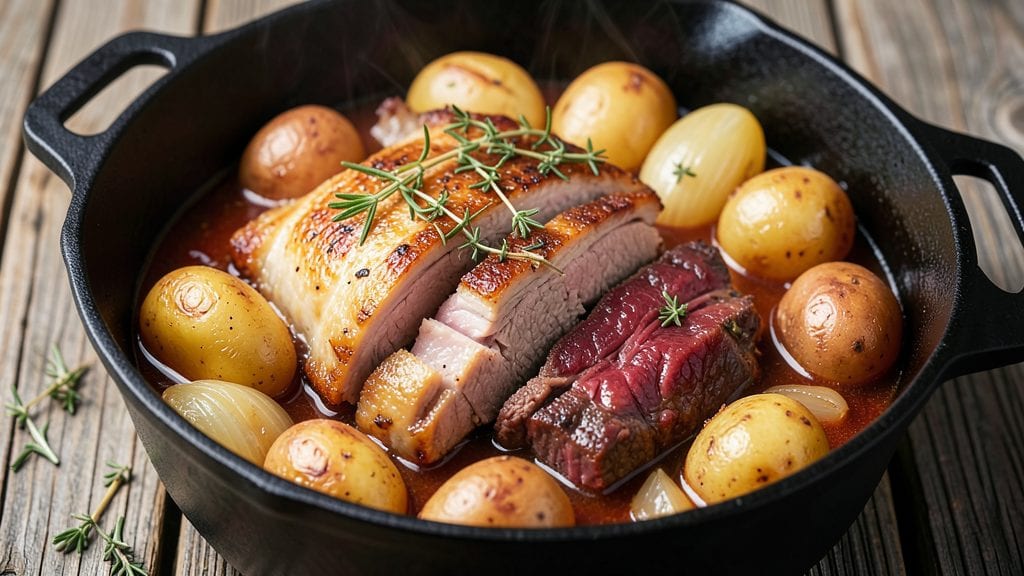
This Schlemmertopf recipe transforms humble ingredients into a hearty German one-pot wonder that tastes like a hug from your grandmother’s kitchen. 💛 After years of perfecting slow-cooked dishes, I’ve developed a method that delivers tender meat, caramelized onions, and fluffy potatoes—all baked together in a single dish.
The secret lies in layering flavors over hours of gentle cooking, creating that signature German comfort.
The beauty of Schlemmertopf is its simplicity: just a few ingredients, minimal prep, and one-pot magic. You’ll start with potatoes and onions at the bottom, then layer in meat (traditionally pork or beef) and pour on a savory broth.
As it bakes, the potatoes soften into a creamy base while the meat becomes fork-tender. This dish is perfect for weeknight dinners when you want restaurant-quality results without the fuss.
By the time it emerges from the oven, you’ll have a dish that’s rich, aromatic, and deeply satisfying—with crispy edges on the potatoes and perfectly seasoned meat. The aroma alone will have everyone gathering around the table, and the leftovers reheat beautifully for lunch the next day.
This is the kind of meal that turns ordinary evenings into memorable family gatherings.
Whether you’re feeding a crowd or just craving a comforting classic, this recipe delivers. The method is foolproof, and the variations—like adding apples or mushrooms—keep it exciting. Let’s get baking!
Ingredients for schlemmertopf
Six core ingredients transform into a German one-pot masterpiece with tender meat and caramelized onions.
| Ingredient | Amount | Notes |
|---|---|---|
| Russet Potatoes 🥔 | 2 ½ lb | Cut into 1-inch cubes, peeled |
| Yellow Onions 🧅 | 2 whole | Thinly sliced, caramelized |
| Pork Shoulder 🥩 | 2 lb | Bone-in, cut into 2-inch chunks |
| Beef Chuck Roast 🥩 | 1 ½ lb | Alternative to pork, cubed |
| Chicken Broth 💧 | 2 cups | Low-sodium preferred |
| Apple Cider 🍎 | 1 cup | For subtle sweetness |
| Heavy Cream 🥛 | ½ cup | Full-fat for richness |
| Fresh Thyme 🌿 | ¼ cup | Leaves only, stems removed |
| Bay Leaves 🌿 | 2 whole | Fresh preferred |
| Garlic Cloves 🧄 | 6 cloves | Smashed, not minced |
| Salt 🧂 | 1 ½ tsp | Diamond Crystal preferred |
| Black Peppercorns 🌶️ | 1 tsp | Freshly cracked |
| Extra-Virgin Olive Oil 🫒 | ¼ cup | For layering potatoes |
| Fresh Parsley 🌿 | ⅛ cup | Chopped, for garnish |
The potatoes are the foundation—russets break down perfectly while maintaining texture. Organic potatoes from a local market have superior flavor, but any russet variety works. For the meat, pork shoulder delivers the most tender results, but beef chuck adds a satisfying depth. Both should be cut into even chunks for consistent doneness. The onions? Yellow onions caramelize best—avoid red or white varieties. Fresh thyme and bay leaves elevate the dish beyond basic seasoning, while the apple cider adds a subtle sweetness that balances the richness. For the broth, low-sodium chicken broth prevents over-salting, though you can adjust seasoning later if needed.
No pork? Beef chuck or even lamb shoulder work beautifully—just increase baking time by 15-20 minutes. Short on thyme? Fresh rosemary at half the amount offers a similar earthy note. The apple cider can be swapped for dry white wine (like Riesling) or even more broth if you prefer. For a vegetarian twist, replace the meat with portobello mushrooms or hearts of palm. The heavy cream can be reduced to half-and-half for a lighter version, though traditional Schlemmertopf relies on its richness. Pre-caramelized onions from the store save time, but fresh caramelized onions add a depth that’s worth the effort.
This dish tastes even better the next day—reheat gently with a splash of broth to restore moisture. Store in an airtight container for up to 4 days in the refrigerator, or freeze for 3 months. For make-ahead convenience, prep all ingredients the night before and assemble in the morning. The potatoes can be parboiled ahead of time to speed up baking. Garnish with fresh parsley just before serving to keep the dish vibrant. Leftovers reheat beautifully for lunches, making this a perfect meal-prep candidate for busy weeks.
Why You'll Love This Recipe
- One-Pot Magic: I swear by this—just toss everything in one deep dish, cover it, and walk away. No chopping like a fine-dining chef, no fancy techniques. The onions caramelize right there while the meat falls apart, and the potatoes soak up all that rich flavor without a single extra pan.
- Meat-Lover’s Dream: That combo of pork shoulder and beef chuck? It’s like a hug for your taste buds. The broth keeps it juicy, the onions add sweetness, and by the end, you’ve got tender meat that practically melts in your mouth—no dryness in sight.
- Leftovers That Shine: Between us, this dish only gets better the next day. The flavors meld even more, and reheating it? Just a splash of broth in the microwave. Honestly, I make it on Sundays just so I can have it for lunch all week—no sad desk lunches here.
- Budget-Friendly Feast: You’re feeding a crowd for less than takeout. Russets and onions are cheap, and that pork shoulder? It stretches across three meals easily. My college roommates and I lived on this—now my family does too. (Yes, even on a Tuesday night.)
Step-by-step instructions for schlemmertopf recipe
This German baking technique transforms humble ingredients into a rich, layered masterpiece.
🍳 Step 1: Layer the Potatoes and Meat Base
Preheat your oven to 350°F. In a large, oven-safe Dutch oven, combine the 2.5 lb russet potatoes (cubed) and 2 whole yellow onions (thinly sliced) in the bottom. This foundational layer will form the creamy base of your schlemmertopf.
Drizzle the potato-onion mixture with 0.25 cup extra-virgin olive oil and sprinkle with 1 tsp salt and 0.5 tsp black peppercorns. Toss gently to coat evenly, ensuring each potato cube gets oiled. Press down lightly to create a compact first layer—this prevents shifting during baking.
👨🍳 Step 2: Build the Meat and Aromatic Layers
Arrange the 2 lb pork shoulder (cut into 2-inch chunks) and 1.5 lb beef chuck roast (cubed) directly over the potato layer. The meat should touch but not overcrowd—this ensures even cooking and maximum flavor transfer.
In a small bowl, combine the 6 cloves garlic cloves (smashed), 0.25 cup fresh thyme leaves, and 2 whole bay leaves. Sprinkle this aromatic blend evenly over the meat. Pour the 1 cup apple cider and 2 cups chicken broth around the edges of the pot, creating a moat that will braise the meat as it bakes.
🔥 Step 3: Bake and Braise to Perfection
Cover the Dutch oven tightly with a lid or foil and transfer to the preheated oven. Bake for 2 hours at 350°F, maintaining the seal to trap steam and flavors. After 1 hour 30 minutes, carefully remove the lid and spoon any accumulated juices over the meat—this keeps everything moist.
You'll know it's ready when the meat is fork-tender and the potatoes are soft enough to pierce with a knife. The schlemmertopf should have a rich, golden-brown crust on top with bubbling edges. If the liquid hasn't reduced significantly, uncover and bake 15 minutes longer to thicken the sauce.
🥘 Step 4: Finish with Cream and Garnish
Remove the schlemmertopf from the oven and let it rest for 10 minutes before proceeding. This resting period allows the juices to redistribute, ensuring each bite is perfectly moist. Discard the bay leaves and thyme stems, then stir in the 0.5 cup heavy cream.
Return to the oven (uncovered) for 5-10 minutes at 350°F to heat through and create a velvety finish. Garnish with 0.125 cup chopped fresh parsley just before serving. The final dish should present with a glossy, golden crust and layers of tender meat and creamy potatoes.
Pro Tips For Making Schlemmertopf
- Parboil Potatoes First: Russets turn to mush if you toss them raw into the pot—trust me, I’ve made that mistake. Boil them whole for 8-10 minutes first, then slice. They’ll stay firm and soak up the broth like a dream.
- Brown the Meat: Skip this, and your schlemmertopf will taste like stew. Sear pork shoulder and beef chuck in batches until deeply browned—those crusty bits dissolve into the broth and add depth. (Yes, it takes 15 minutes, but it’s worth it.)
- Layer Onions Thin: Thick onion slices stay tough and undercooked. Slice them paper-thin before adding them to the pot so they melt into the potatoes and meat instead of sitting like rubbery chunks. (Use a mandoline if you’re impatient like me.)
- Simmer Covered, But Loose: A tight lid traps steam and turns your schlemmertopf into a sad, watery mess. Use foil with a few holes or a lid slightly ajar to let moisture escape—just enough to keep it tender, not drowned. (I learned this after three soggy batches.)
Pro cooking tips for great schlemmertopf
Oven Temperature Control
The key to perfect Schlemmertopf is maintaining a steady 350°F throughout the entire baking process. I use an Oven Thermometer from Thermoworks to verify my oven’s accuracy—many home ovens run 25-50°F hotter than set.
If your oven tends to run hot, reduce the temperature to 325°F to prevent overcooking the potatoes while the meat finishes. 🌡️
Layering for Even Cooking
Arrange the potatoes in a single layer at the bottom of your Dutch oven—this ensures they cook evenly without steaming too much. I press them down gently with a spoon to create a compact base that won’t shift during baking.
For the meat, place the largest chunks on the bottom and smaller pieces on top to ensure even doneness. This layering technique prevents the meat from floating in broth and guarantees that every bite has that signature tender texture.
Basting for Moisture
After 1 hour 30 minutes of baking, remove the lid and spoon the accumulated juices over the meat and potatoes. This basting step is crucial—it redistributes flavors and prevents drying. I like to use a basterspoon for precision, but a regular spoon works too.
If the liquid hasn’t reduced enough by the end, uncover the dish for the final 15 minutes to thicken the sauce naturally. 💡
Resting Before Serving
Never skip the 10-minute rest after removing the Schlemmertopf from the oven. This allows the juices to redistribute, ensuring each forkful is moist and flavorful. I cover the dish loosely with foil during this time to retain heat.
The resting period also helps the potatoes firm up slightly, making them easier to serve without falling apart. Trust me, this small step makes a huge difference in texture.
Cream Finishing Trick
Stirring in the heavy cream just before the final 5-10 minutes of baking creates a velvety finish that elevates the dish. For an extra touch of richness, I sometimes add a splash of apple cider> or white wine along with the cream.
This not only enhances the flavor but also adds a subtle gloss to the top layer, making it look as delicious as it tastes. The cream should be warmed slightly before adding to prevent cooling the dish too quickly.
Garnish Like a Pro
Fresh parsley isn’t just for looks—it adds a bright, herbaceous note that cuts through the richness. I chop it just before serving to preserve its vibrant color and fresh flavor.
For an extra touch, a sprinkle of freshly cracked black pepper or a drizzle of extra-virgin olive oil adds another layer of depth. Presentation matters, especially when you’re serving a dish that’s meant to feel like home. 🌿
Nutrition facts
Frequently asked questions about schlemmertopf
Can I make Schlemmertopf without meat?
Swap the pork and beef for 2.5 lb portobello mushrooms or hearts of palm to create a vegetarian version. Use the same layering technique and add 1 tbsp soy sauce or 1 tsp smoked paprika for depth. The potatoes and onions will still form the creamy base, while mushrooms absorb the flavors beautifully.
How do I know when the meat is done?
Use a meat thermometer to check for doneness: pork should reach 145°F and beef 160°F. The meat should also pull away from bones easily and be fork-tender. If the potatoes are still firm after the meat is done, uncover and bake 10-15 minutes longer to finish them.
Can I prepare this ahead of time?
This dish tastes even better the next day! Assemble it completely and refrigerate for up to 24 hours before baking. For make-ahead convenience, parboil the potatoes ahead and store all ingredients separately. Reheat gently in the oven with a splash of broth to restore moisture.
What if I don't have a Dutch oven?
Any oven-safe pot with a tight-fitting lid works—opt for a heavy cast-iron skillet or stainless steel pot. If your pot isn't deep enough, use a baking dish and cover tightly with foil. The key is maintaining moisture, so avoid glass dishes that can't withstand high heat.
How should I serve Schlemmertopf?
This hearty dish is perfect with crusty German bread, buttered noodles, or a simple green salad. For extra flair, serve with apple sauce or pickled vegetables. The creamy potatoes and tender meat make it a complete meal that satisfies any crowd.