
Snacks
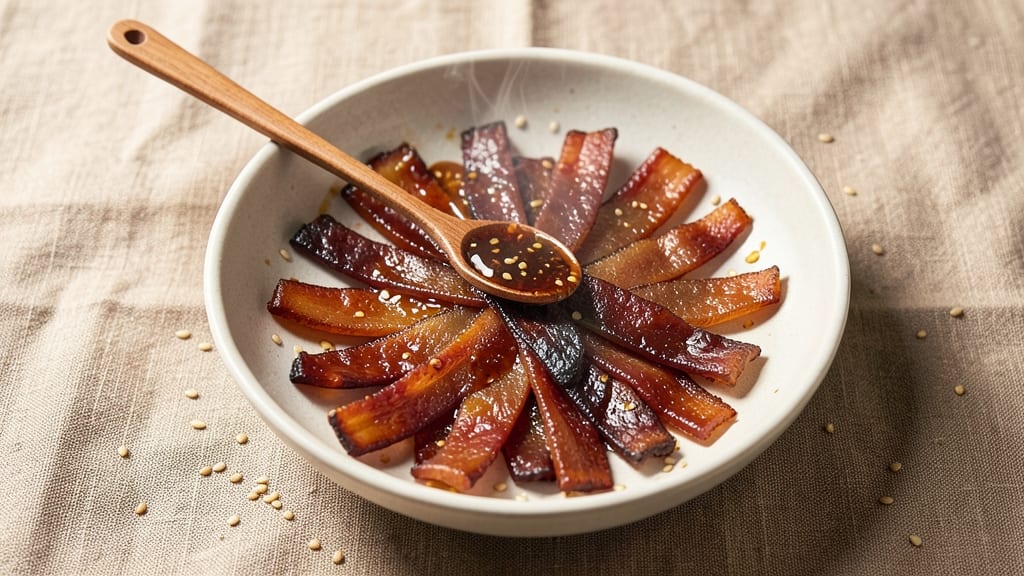
Transforming lean deer meat into sweet teriyaki deer jerky delivers a perfect balance of protein and caramelized flavor that’s ideal for snacks or charcuterie boards. This recipe combines traditional curing techniques with a modern sweet teriyaki glaze, ensuring a glossy finish and satisfying chew.
The process is straightforward but requires precision—thin slicing, proper curing salt, and controlled dehydrating temperatures are key to achieving restaurant-quality results at home.
The secret to this jerky lies in the marinade, where soy sauce, brown sugar, and ginger create a sweet-savory profile that penetrates the meat while maintaining its natural tenderness. Unlike store-bought jerky, this version uses real deer meat, which stays lean and flavorful without added fillers.
With just 5 simple ingredients and 12 hours of prep time (including curing), you’ll end up with jerky that’s crispy on the edges and perfectly chewy inside.
What sets this recipe apart is the caramelized gloss that forms during dehydrating, giving each piece a professional finish that’s both visually appealing and delicious. The sweet teriyaki flavor pairs beautifully with salty snacks, fresh fruit, or even as a protein boost in salads.
Whether you’re meal prepping for the week or preparing for a gathering, this jerky is a foolproof way to enjoy wild game year-round.
Safety is critical when making jerky, so we’ll cover proper curing times, temperature guidelines, and storage tips to ensure your jerky stays fresh and safe to eat. Ready to turn raw deer meat into a versatile, protein-packed snack? Let’s get started.
Ingredients for sweet teriyaki deer jerky
Lean deer meat meets sweet teriyaki magic—just five core ingredients for restaurant-quality jerky.
| Ingredient | Amount | Notes |
|---|---|---|
| Lean Deer Meat 🦌 | 2 lb | Thinly sliced against the grain |
| Soy Sauce 🍶 | ½ cup | Low-sodium preferred for control |
| Brown Sugar 🍚 | ½ cup | Packed, light or dark variety |
| Fresh Ginger 🌿 | 2 tbsp | Grated, aromatic variety |
| Curing Salt (Pink Himalayan Salt) 🧂 | 1 tsp | Non-iodized, for proper curing |
| Extra-Virgin Olive Oil 🫒 | 1 tbsp | For glossy finish |
| Garlic Cloves 🧄 | 2 cloves | Minced, for depth of flavor |
| Sesame Oil 🌾 | ½ tbsp | Toasted, for nutty aroma |
The deer meat is non-negotiable here—lean cuts like top round or sirloin work best, sliced thin against the grain for that perfect chew. If you're hunting or buying from a butcher, ask for pre-cut jerky slices (about 1/8-inch thick) to save time. For soy sauce, Kikkoman or Tamari are my go-tos—they’ve got that deep umami punch without extra sodium. Brown sugar? Light or dark doesn’t matter, but make sure it’s packed into the cup. The ginger should smell vibrant—if it’s musty, grab a fresh root and grate it yourself. Curing salt is critical: Pink Himalayan or Instacure No. 1 are the safest bets for jerky.
No soy sauce? Coconut aminos or tamari work in a pinch, though the flavor will be slightly different. Brown sugar substitute? Maple syrup or agave at 1:1 ratio, but your jerky might stick more during dehydrating. Fresh ginger too strong? Ground ginger at half the amount, but toast it first in a dry pan for 30 seconds to wake up the flavor. The olive oil and sesame oil are for that glossy finish—don’t skip them. If you’re avoiding sesame, avocado oil works too. For the garlic, minced is best, but powdered at 1/4 tsp will do if you’re in a rush. Pro tip: Mix the marinade ingredients in a bowl, then whisk in the oils last—they’ll emulsify better.
This marinade keeps for 5 days in the fridge, but the meat should cure for 12 hours before dehydrating. For the jerky itself, store in an airtight container or vacuum-sealed bag—it’ll stay fresh for 2 weeks at room temp or 3 months in the freezer. The caramelized gloss? That’s all the dehydrator doing its magic at 160°F for 4-6 hours. If you don’t have one, an oven with the door propped open works too. Portion into snack-sized bags for easy grab-and-go protein. Trust me, the first bite after dehydrating is worth every minute.
Why You'll Love This Recipe
- No-Fuss Prep: I slice the deer meat thin in 10 minutes—no fancy knife skills needed—and the marinade (soy, brown sugar, ginger) goes on while I sip coffee. Honestly, the curing salt does all the heavy lifting after that.
- Sweet-Savory Magic: That caramelized brown sugar and ginger combo? It turns jerky from "snack" to "I’d eat this for dinner." The soy sauce keeps it rich without overpowering the meat’s natural lean flavor.
- Hunting Season Hero: Perfect for game day, camping trips, or stashing in your gym bag—it’s the one thing I always pack when I’m out of town. Between us, it’s also the hit at potlucks (yes, even with vegetarians who just want to try it).
- Lasts All Week: A batch keeps for weeks in the fridge, so I make it once and forget about it. (Okay, fine, I do forget and rediscover it months later—still delicious.) Plus, it’s cheaper than buying pre-made jerky by a mile.
Step-by-step instructions for sweet teriyaki deer jerky
Here's how to transform lean deer meat into tender, caramelized jerky with a perfect balance of sweet and savory.
Prepare the Marinade with Precision
In a medium bowl, combine the 0.5 cup soy sauce, 0.5 cup packed brown sugar, 2 tbsp grated fresh ginger, 2 minced garlic cloves, and 1 tsp curing salt. Whisk vigorously until the brown sugar dissolves completely, creating a smooth, syrupy base. The mixture should coat the back of a spoon with a glossy sheen—this ensures maximum flavor penetration.
Next, add the 1 tbsp extra-virgin olive oil and 0.5 tbsp toasted sesame oil. Stir well to emulsify the oils into the marinade. The olive oil contributes to that coveted glossy finish, while the sesame oil adds depth of aroma. Let the marinade sit at room temperature for 10 minutes to allow the flavors to meld together before using.
Cure and Coat the Deer Meat
Lay out the 2 lb lean deer meat on a clean work surface and pat it completely dry with paper towels. This step is crucial—any moisture left on the meat will prevent proper curing and create a gummy texture. Using a sharp knife, trim away any visible fat or connective tissue, then slice the meat thinly against the grain into ¼-inch thick strips.
Transfer the sliced deer meat to a large resealable plastic bag and pour the marinade over it. Seal the bag and massage the marinade into the meat for 3-5 minutes, ensuring every strip is thoroughly coated. The curing salt will begin drawing out moisture immediately, so work quickly but thoroughly. Let the meat cure in the refrigerator for 12-24 hours, turning the bag occasionally to maintain even coverage.
Dehydrate for Perfect Texture
Preheat your dehydrator to 160°F—this temperature is ideal for preserving texture while ensuring food safety. Arrange the marinated deer meat strips in a single layer on the dehydrator trays, leaving ¼-inch between each piece to allow for proper air circulation. The strips should not touch each other or the sides of the tray.
Dehydrate for 6-8 hours, checking periodically after the first 4 hours. The jerky is ready when it's completely dry to the touch but still pliable—it should bend without snapping. If any pieces appear overly moist, return them to the dehydrator for an additional 1-2 hours. The edges should be slightly darker than the centers, indicating even dehydration.
Develop the Caramelized Gloss
Once fully dehydrated, transfer the jerky to a wire rack set over a baking sheet. Brush each piece generously with any remaining marinade from the curing bag, focusing on the top and sides. This step creates that signature glossy finish and intensifies the teriyaki flavor.
Place the baking sheet under a broiler for 1-2 minutes, watching closely to prevent burning. You're looking for just enough time to caramelize the sugars on the surface while keeping the interior tender. The jerky should develop a beautiful amber sheen and a slightly crisp texture. Immediately transfer to a cooling rack to prevent steaming.
Store and Enjoy
Allow the jerky to cool completely before storing in an airtight container. It will continue to dry out slightly as it cools, becoming even more chewy and flavorful. Properly stored in the refrigerator, this batch will keep for up to 2 weeks, maintaining its perfect texture and vibrant teriyaki flavor.
For best results, serve the jerky at room temperature. Each piece should be tender enough to chew easily but still hold its shape, with a perfect balance of sweetness from the caramelized sugar and umami depth from the soy sauce and curing salt. The combination of lean protein and rich flavor makes this an exceptional snack for hiking trips or a sophisticated appetizer.
Pro Tips For Making Sweet Teriyaki Deer Jerky
- Trim Thin, Not Thick: Deer jerky needs even drying—slice strips ¼-inch thick max, no thicker. I learned this the hard way when my first batch took forever to dry, even with the dehydrator on high. Use a sharp knife and work against the grain for cleaner cuts.
- Cure First, Then Marinate: Sprinkle curing salt (½ tsp per pound of meat) directly onto the deer strips and let it sit for 30 minutes before adding the teriyaki mix. This lets the salt penetrate deeply, so your jerky stays safe to eat and absorbs the sweet-savory glaze better.
- Simmer the Sauce Right: Reduce your teriyaki sauce (soy, sugar, ginger) to a thick, syrupy consistency—it should coat the back of a spoon. After burning two batches where the jerky stuck to the dehydrator trays, I realized low-and-slow simmering (10-15 mins) is non-negotiable. No watery drips.
- Rotate and Flip: Midway through dehydrating, rotate the trays and flip every strip. I used to skip this, and half the jerky ended up tough and chewy. The extra 5 minutes ensures even drying and a consistent texture—crispy outside, tender inside.
Perfect pairings for sweet teriyaki deer jerky
Crispy Snack Pairings
Sweet teriyaki deer jerky pairs perfectly with cool, creamy dips that balance its bold flavors. I love serving it with whipped goat cheese mixed with honey and black pepper—the tangy creaminess complements the caramelized sweetness beautifully.
For something lighter, try spicy mango salsa with diced jalapeño and cilantro, which adds a refreshing contrast to the rich jerky. 🌶️
Cheese Board Essentials
Elevate your jerky into a charcuterie centerpiece by pairing it with aged cheddar, blue cheese, and smoked gouda. The sharpness of aged cheddar cuts through the sweetness, while creamy blue cheese adds a bold contrast.
Don’t forget crackers like water crackers or rosemary flatbread—they provide the perfect crunch. Add dried apricots or figs for an extra layer of sweetness that harmonizes with the teriyaki.
Beverage Pairings
A chilled Japanese lager like Sapporo or Asahi is my go-to beverage pairing—its crisp, clean finish cleanses the palate between bites of jerky. For a non-alcoholic option, sparkling yuzu soda adds a citrusy brightness that enhances the teriyaki’s sweetness.
If you prefer wine, a dry Riesling with its zesty acidity balances the richness perfectly. 🍷
Sweet Contrasts
Sweet teriyaki jerky’s caramelized notes make it a fantastic match for savory-sweet combinations. Try pairing it with pickled ginger or quick-pickled onions—the tangy acidity brightens the flavor profile.
For a dessert-like pairing, serve with dark chocolate-covered nuts or honey-glazed pecans, which mirror the jerky’s sweetness while adding crunch and richness.
Global Fusion Twists
Get creative with international flavors that complement the teriyaki. In an Asian-inspired spread, pair with steamed dumplings or rice paper rolls for a handheld snack. For a Mexican twist, serve with tortilla chips and guacamole—the creamy avocado and spicy chipotle add a bold contrast.
Even a Mediterranean platter with hummus, olives, and pita works beautifully, blending global flavors seamlessly. 🌍
Nutrition facts
Frequently asked questions
Why does my deer jerky turn out gummy instead of chewy?
The most common cause is excess moisture during curing or dehydrating. Always pat the meat completely dry before slicing, and ensure your dehydrator runs at 160°F for 6-8 hours. If using an oven, prop the door open slightly to allow moisture to escape. The jerky should bend without snapping—if it feels sticky, return it for another 1-2 hours.
Can I substitute beef or venison for deer?
This recipe works perfectly with lean beef (top round or sirloin) or venison, which has a similar texture. Deer meat is slightly leaner, but beef works just as well. For venison, you may need to cure it 24 hours instead of 12 due to its lower fat content. The teriyaki marinade will still create that delicious caramelized finish.
How do I know when the jerky is fully dehydrated?
Test for doneness by checking for flexibility and dryness. The jerky should bend without breaking and feel completely dry to the touch. If it’s still slightly moist, return it to the dehydrator for 1-2 more hours. Pro tip: The edges should be slightly darker than the centers, indicating even dehydration. Over-dehydrating can make it brittle, so monitor closely.
Can I make this jerky without a dehydrator?
Yes! Preheat your oven to 175°F (the lowest setting) and place a wire rack over a baking sheet. Arrange the jerky strips in a single layer and prop the oven door open with a wooden spoon to allow moisture to escape. Dehydrate for 4-6 hours, checking periodically. This method works best in a dry climate—humid environments may require longer drying times.
What’s the best way to store homemade jerky?
Store in an airtight container or vacuum-sealed bag to prevent moisture and oxidation. In the fridge, it keeps for 2 weeks, while the freezer extends shelf life to 3 months. Avoid plastic bags without airtight seals—they can cause sogginess. For long-term storage, freeze in portion-sized bags for easy snacking later.