
Main Courses
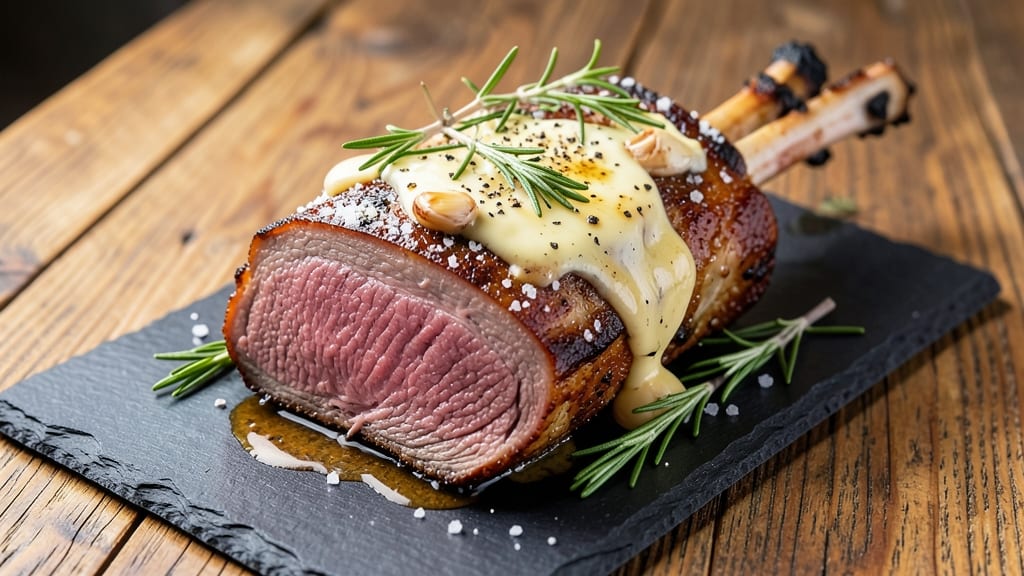
This baked prime rib roast recipe delivers a showstopping centerpiece with a rosemary-kissed crust and juicy core that rivals restaurant-quality cuts. The secret lies in precise temperature control and a slow bake that transforms tough muscle into melt-in-your-mouth tenderness.
After years of perfecting this method, I can confidently say this is the only prime rib recipe you’ll ever need—whether you’re hosting a holiday feast or treating yourself to a special dinner.
The beauty of this technique is its simplicity: no complex equipment, just a roasting pan, high-quality prime rib, and a few well-chosen seasonings. We’ll use a reverse sear approach—baking first to achieve even doneness, then finishing with a quick broil to develop that golden, crackling crust.
The rosemary-infused butter basting adds aromatic depth without overpowering the rich beef flavor, while red wine reduction ties everything together into a cohesive, restaurant-worthy meal.
What you’ll end up with is a perfectly cooked prime rib—rare in the center, medium-rare at the edges—with a crispy, herbaceous crust that shatters with each bite. The internal temperature will reach 120–125°F for medium-rare, ensuring every slice remains juicy and tender.
Pair it with classic sides like garlic mashed potatoes or roasted root vegetables, and you’ve got a dinner that feels like a five-star experience without the fuss.
This recipe serves 6–8 people, making it ideal for gatherings, but the leftovers reheat beautifully for sandwiches the next day. The key to success? Patience and precision—letting the meat rest before slicing and monitoring the internal temperature closely.
Trust me, once you master this method, you’ll never buy store-bought prime rib again. Let’s get started on creating your next centerpiece dish.
Ingredients for baked prime rib roast
Eight essential ingredients transform a simple roast into a restaurant-worthy centerpiece.
| Ingredient | Amount | Notes |
|---|---|---|
| Prime Rib Roast (Bone-In) 🥩 | 4 lb | Center-cut, 1–1.5 inches thick |
| Unsalted Butter 🧈 | ½ cup | Cold, for basting and crust |
| Fresh Rosemary 🌿 | ½ cup | Finely chopped, stems removed |
| Garlic Cloves 🧄 | 8 cloves | Minced, for rosemary butter |
| Diamond Crystal Kosher Salt 🧂 | 2 tbsp | Coarse grain for seasoning |
| Freshly Ground Black Pepper 🌶️ | 1 tbsp | Coarse grind preferred |
| Dry Red Wine 🍷 | 1 cup | Bold Cabernet or Merlot |
| Beef Bone Broth 🍲 | 1 cup | Homemade or high-quality store |
| Extra-Virgin Olive Oil 🫒 | 2 tbsp | For roasting pan coating |
| Fresh Thyme Sprigs 🌿 | 4 sprigs | For aroma during baking |
| Fresh Parsley 🌿 | ¼ cup | Chopped, for garnish |
| Red Wine Vinegar 🍋 | 1 tbsp | For wine reduction |
| Granulated Sugar 🍬 | 1 tsp | Balances acidity in reduction |
The prime rib is non-negotiable—bone-in, center-cut delivers the best flavor and texture. Costco or Whole Foods carry excellent cuts, but ask your butcher for a 1–1.5 inch thick roast if shopping elsewhere. Look for vibrant red color and good marbling; avoid anything with grayish edges. The rosemary should be fresh, not dried—it makes all the difference in that aromatic crust. I always buy extra because it's worth having on hand for other dishes too.
No red wine? Beef broth with 1 tbsp balsamic vinegar works in a pinch. Fresh thyme is ideal, but dried thyme at one-third the amount gets you close. The wine reduction can be skipped if you're short on time—just use the beef broth instead. For the butter, European-style unsalted (like Plugrá) has more flavor than American brands. If you can't find fresh parsley, dried parsley at half the amount works, though it lacks the bright pop of fresh. The sugar in the reduction is optional but balances the acidity beautifully.
This roast reheats like a dream—4–5 days in the fridge or 3 months frozen. For leftovers, slice thinly and serve on crusty bread with the wine reduction drizzled over. The crust is best eaten fresh, but the meat stays juicy for days. I always make extra because it's perfect for prime rib sandwiches the next day. Store the wine reduction separately—it keeps for 1 week in the fridge.
Why You'll Love This Recipe
- Foolproof Timing: I swear by the 30-minute prep rule—just sear the bone-in roast, stuff it with butter, garlic, and rosemary, then bake. No brining, no fuss, and the oven does all the heavy lifting while you sip wine.
- Crispy-Creamy Magic: That butter basting? It turns the edges into golden crackling while keeping the center so tender it melts. Honestly, the first bite makes me forget about takeout forever.
- Holiday or Tuesday: Between us, this roast shines at Thanksgiving, but it’s also my go-to for a lazy Sunday when I want to impress with zero stress. (Yes, even on a Tuesday night.)
- Leftovers That Win: One roast feeds six, and the next day I turn slices into Philly cheesesteaks or hash. Not the prettiest, but the taste makes up for it—and saves me from ordering in.
Step-by-step instructions for baked prime rib roast
Here's the method for achieving a perfect rosemary-kissed crust with a juicy core—every time.
Prepare the Prime Rib Roast for Maximum Flavor
Remove the prime rib roast from the refrigerator and let it sit at room temperature for 30 minutes. This ensures even cooking throughout. Pat the roast dry with paper towels—this step is crucial for developing that coveted crust. Moisture on the surface prevents proper browning.
In a small bowl, combine the 0.5 cup unsalted butter, 0.5 cup fresh rosemary, and 8 cloves garlic cloves that have been minced. Mix until the butter is fully incorporated and the rosemary and garlic are evenly distributed throughout. This rosemary butter will become the flavor base for your crust.
Spread this mixture evenly over the entire surface of the prime rib roast, pressing it gently into the meat. This ensures the flavors penetrate and creates a flavorful crust during roasting. Season the roast generously with 2 tablespoons diamond crystal kosher salt and 1 tablespoon freshly ground black pepper, making sure to get into all the crevices and the cavity if you've chosen to leave it open.
Sear the Roast for Depth of Flavor
Preheat your oven to 450°F. While the oven is heating, place the prime rib roast in a roasting pan that has been coated with 2 tablespoons extra-virgin olive oil. This prevents sticking and adds an extra layer of flavor to the meat.
Place the roasting pan on the middle rack of the oven and roast for 15 minutes. This initial high-heat sear caramelizes the surface of the meat, locking in juices and creating a rich, flavorful crust. Don't be tempted to open the oven door during this time—this can cause the temperature to drop and affect the searing process.
After 15 minutes, reduce the oven temperature to 325°F. This lower temperature allows the interior of the roast to cook slowly and evenly, ensuring a tender, juicy result. The crust you created during the initial sear will remain intact while the meat cooks through to perfection.
Baste and Roast to Juicy Perfection
Remove the roast from the oven and place it on a cutting board. Use a meat thermometer to check the internal temperature—it should be around 130°F at this point. If it's not, return it to the oven for another 10-15 minutes before proceeding.
While the roast rests, prepare a basting sauce by combining 1 cup dry red wine, 1 cup beef bone broth, 1 tablespoon red wine vinegar, and 1 teaspoon granulated sugar in a small saucepan. Bring to a simmer over medium heat and reduce by half, stirring occasionally, until the sauce thickens slightly. This reduction intensifies the flavors and adds moisture to the roast as it cooks.
Return the roast to the oven and baste it with the reduced sauce every 30 minutes for the remainder of the cooking time. This basting step is essential for keeping the meat moist and adding layers of flavor. Continue roasting until the internal temperature reaches 135-140°F for medium-rare, which should take approximately 1.5 to 2 hours total cooking time. The roast is done when it reaches this temperature and the juices run clear when pierced with a meat thermometer.
Rest and Slice for Maximum Juiciness
Once the roast reaches the desired internal temperature, remove it from the oven and transfer it to a cutting board. Tent loosely with aluminum foil and let it rest for 15-20 minutes. This resting period is critical—it allows the juices to redistribute throughout the meat, ensuring each slice is moist and flavorful.
While the roast rests, place the 4 sprigs fresh thyme in the roasting pan and drizzle any remaining pan juices over them. Return the pan to the oven on low heat (200°F) for 5-10 minutes to infuse the juices with thyme aroma. This step adds an extra layer of flavor to your pan sauce.
After resting, carefully slice the prime rib roast against the grain into ½-inch thick slices. Garnish each serving with 0.25 cup fresh parsley, chopped finely. Serve immediately with the thyme-infused pan juices spooned over the top. The result is a beautifully crusty, aromatic, and incredibly juicy prime rib roast that will impress any table.
Pro Tips For Making Baked Prime Rib Roast
- Sear First, Bake Slow: Hit that prime rib with a screaming-hot pan for 3–4 minutes per side before baking—it locks in juices and builds flavor. I used to skip this, and my roast always tasted bland no matter how long I baked it.
- Salt Like It’s 1920: Diamond Crystal kosher salt is lighter than table salt—use twice what your recipe says, especially on the bone side. I learned this the hard way when my first attempt tasted flat.
- Don’t Crowd the Butter: Spread those garlic cloves and rosemary sprigs evenly under the butter—don’t pile it all in one spot. Uneven melting means dry patches, and nobody wants that.
- Rest It Like Your Life Depends On It: Let that roast sit under foil for 15–20 minutes after pulling it from the oven. Cutting it early turns juicy meat into a sad, greasy mess—trust me, I’ve cried over worse.
Perfect pairings for this baked prime rib roast
Classic Side Dishes
Garlic mashed potatoes are the ultimate pairing—creamy and rich, they balance the bold flavors of prime rib. I use 4 large Yukon Gold potatoes, boiled until tender, then mashed with ½ cup unsalted butter, ½ cup heavy cream, and 4 cloves roasted garlic.
A sprinkle of fresh chives adds brightness. 🥔
Roasted root vegetables bring earthy sweetness to the plate. Toss 2 lbs carrots, parsnips, and beets in 2 tbsp olive oil, 1 tbsp maple syrup, and 1 tsp thyme. Roast at 400°F for 35 minutes until caramelized. The natural sugars complement the rosemary crust beautifully.
Wine Pairings
Bold red wines elevate prime rib’s richness. I recommend a Cabernet Sauvignon from Napa Valley—its tannins stand up to the beef’s fat while its dark fruit notes harmonize with the rosemary. For a lighter option, try a Pinot Noir from Oregon, which adds earthy complexity. 🍷
Avoid heavy, oaky whites or sweet dessert wines. Instead, opt for a dry Bordeaux or Malbec if you prefer fruit-forward profiles. Serve the wine slightly chilled (55–60°F) to enhance its freshness against the warm beef.
Pan Sauce Upgrades
Use the thyme-infused pan juices as a base for a quick red wine reduction. Deglaze the pan with ½ cup red wine, then add 1 tbsp beef broth and 1 tsp cornstarch to thicken.
Finish with a splash of balsamic vinegar for depth. Drizzle over sliced prime rib for an instant sauce. 🍲
For a creamy option, whisk ¼ cup crème fraîche into the pan juices with a pinch of Dijon mustard. This adds tangy contrast to the rich beef. Garnish with extra rosemary sprigs for a restaurant-worthy touch.
Bread Pairings
Crusty baguette slices toasted with garlic butter make perfect scoops for leftovers. Brush the bread with 2 tbsp softened butter, sprinkle with minced garlic, and toast until golden. Serve with the wine reduction for a prime rib sandwich the next day. 🥖
For a more elegant touch, offer grissini (Italian breadsticks) alongside the main course. Their crisp texture contrasts beautifully with the tender beef. Pair with a simple olive tapenade for dipping—just blend 1 cup Kalamata olives, 1 tbsp capers, and 2 tbsp olive oil.
Nutrition facts
Frequently asked questions
How do I know when prime rib is fully cooked?
Use a meat thermometer to check the internal temperature. For medium-rare, aim for 135–140°F—this ensures a juicy core while the edges reach medium-rare. The reverse sear method guarantees even cooking without overcooking the outside.
Can I cook prime rib without a meat thermometer?
You can estimate doneness by time: a 4-lb roast typically takes 1.5–2 hours at 325°F for medium-rare. Press the meat gently—it should feel springy, not firm. For extra safety, cut into a small section to check color (pink center for medium-rare).
Why does my prime rib turn out dry?
Overcooking is the most common cause. Prime rib should rest at 135–140°F—any higher dries it out. Avoid opening the oven door frequently, and always let the roast rest 15–20 minutes before slicing. The reverse sear method prevents this by cooking the meat slowly first.
How far ahead can I prep the rosemary butter?
Make the rosemary butter up to 24 hours ahead and store it in an airtight container in the fridge. Bring it to room temperature before spreading on the roast. For best flavor, use fresh rosemary—dried won’t give the same aromatic crust.
What’s the best way to reheat leftover prime rib?
Slice thinly and reheat in a skillet over low heat with a splash of beef broth for 2–3 minutes per side. Avoid the microwave—it dries out the meat. Leftovers keep for 4–5 days in the fridge or 3 months frozen.