
Sauces & Condiments
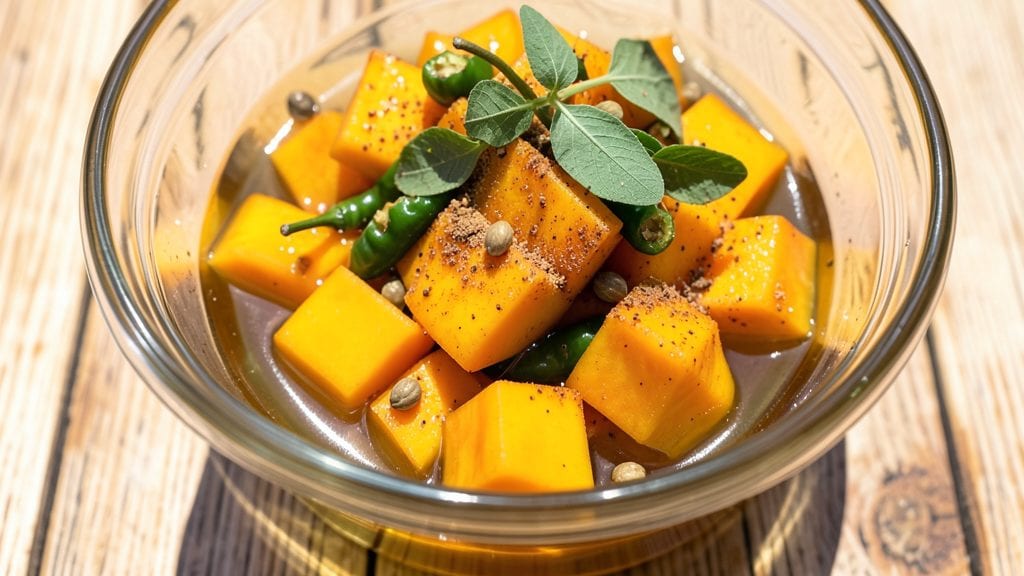
This oil-free mango pickle recipe transforms ripe mangoes into a vibrant, tangy-spicy condiment without a single drop of oil. The fermentation process creates a complex flavor profile—bright, acidic, and packed with heat—that elevates every dish it touches.
I developed this version after years of experimenting with traditional oil-based pickles, which often feel heavy or overly greasy.
The key to success lies in balancing spices and fermentation time. Fresh green chilies, mustard seeds, and fenugreek leaves form the backbone of flavor, while a touch of asafoetida deepens the umami.
Unlike oil-based pickles, this version relies on natural tang from lime juice and the probiotic benefits of fermentation, making it lighter yet equally bold.
Perfect for pairing with dosas, sandwiches, or even as a topping for grilled meats, this pickle delivers restaurant-quality heat without the guilt. The texture remains firm yet tender, with a glossy sheen from the mango’s natural juices.
Best of all, it keeps for months in the refrigerator, ready to transform any meal.
Whether you’re serving it alongside South Indian breakfasts or using it as a bold condiment for snacks, this recipe proves that oil-free doesn’t mean flavor-free. Let’s get started on creating your own batch today.
Ingredients for oil free mango pickle
Nine ingredients. Zero oil. Infinite flavor—this pickle is a game-changer for bold, tangy heat.
| Ingredient | Amount | Notes |
|---|---|---|
| Ripe Mangoes 🍈 | 2 lbs | Firm but ripe, peeled and cubed |
| Fresh Green Chilies 🌶️ | ½ cup | Slit lengthwise, seeds removed |
| Mustard Seeds 🌿 | 2 tbsp | Lightly toasted for aroma |
| Fenugreek Leaves 🌱 | ¼ cup | Fresh, finely chopped |
| Asafoetida Powder 🧂 | ½ tsp | For umami depth |
| Turmeric Powder 🧡 | 1 tsp | Bright yellow color |
| Red Chili Powder 🌶️ | 1 ½ tbsp | Adjust for heat preference |
| Salt 🧂 | ½ cup | Diamond Crystal preferred |
| Lime Juice 🍋 | ¼ cup | Freshly squeezed |
| Sugar 🍚 | ¼ cup | Balances tanginess |
The mangoes are the star—ripe but firm is key here. Local farmers markets often have perfect ones, or grab Alphonso mangoes if you can find them. Fresh fenugreek leaves add a unique bitterness that's hard to replicate with dried versions, so Indian grocery stores are your best bet. Mustard seeds should be toasted until they pop—30 seconds in a dry pan does the trick. Asafoetida might be tricky to find, but Himalaya or M.P. Birla brands are reliable. For the chilies, green serrano or Thai bird's eye work best—they bring the right level of heat without overpowering.
No fresh fenugreek? Dried at double the amount gets you close, but it won't have the same complexity. Running short on lime juice? Lemon works in a pinch, but the flavor profile shifts slightly. The sugar might seem odd, but it's crucial—it balances the acidity and prevents the pickle from becoming too sharp. Want extra heat? Add a pinch of cayenne powder or more green chilies. For the salt, Diamond Crystal is ideal—it dissolves better than table salt and enhances fermentation. If you're making a big batch, double-check your spice measurements—too much red chili can make it overwhelming.
This pickle gets better with time—minimum 3 days of fermentation for proper tang, but 2 weeks develops maximum flavor. Store in a clean glass jar with the mango cubes fully submerged in the brine. Keeps for up to 6 months in the fridge, though it'll be gone long before then. The brine can be reused for 2-3 batches if you strain and reuse it. For serving, scoop out the mango cubes and their juices—the liquid is packed with flavor too.
Why You'll Love This Recipe
- No Oil, No Stress: I swear by this recipe when I’m too lazy for frying—just toss in the mangoes, chilies, and mustard seeds, and let the spices do the work. The fenugreek leaves add depth without a single drop of oil, and honestly? The asafoetida gives it that umami punch that makes it feel like a restaurant dish.
- Sweet-Spicy Magic: That first bite of ripe mango with the green chilies and mustard seeds? It’s the kind of balance that makes you pause mid-chew. The heat lingers just enough, but the sweetness of the mango keeps it from being overpowering—like a party in your mouth that doesn’t crash and burn.
- Party in a Jar: Between us, this is my go-to for potlucks, picnics, or just because. It keeps for weeks in the fridge, so I can make a big batch and hand it out like edible gifts. My friends always ask for the recipe—somehow, it disappears faster than I can say "second helping."
- Pocketbook-Friendly Luxury: Mustard seeds and fenugreek leaves are cheap, but they make this taste like a splurge. No oil means no extra cost, and the mangoes? You can use whatever’s on sale or even slightly overripe ones—less waste, more flavor. It’s the kind of recipe that makes me feel fancy without breaking the bank.
Step-by-step instructions for oil-free mango pickle
This fermented mango pickle delivers bold flavors without a drop of oil—just vibrant spices and tangy fermentation.
Prepare the Mango Base
Cut the 2 lbs of ripe mangoes into ½-inch cubes, ensuring they're uniform in size for even fermentation. Place them in a large glass or ceramic bowl and sprinkle evenly with the 0.5 cup of salt. Stir gently to distribute the salt completely—this draws out moisture and begins the preservation process.
Let the mango cubes sit undisturbed for 30 minutes. You'll notice liquid pooling at the bottom—this is the brine forming. After 30 minutes, give them another stir, then let them rest for another 30 minutes. The mangoes should look slightly glossy from the brine, indicating they're ready for the next step. This salting process is crucial for developing that signature tangy flavor without oil.
Toast and Blend the Spice Mix
In a dry skillet over medium heat, toast the 2 tbsp of mustard seeds for 1-2 minutes until they begin to pop and release their nutty aroma. Immediately transfer them to a spice grinder along with the 0.25 cup of finely chopped fenugreek leaves, 0.5 tsp of asafoetida powder, 1 tsp of turmeric powder, and 1.5 tbsp of red chili powder.
Pulse the mixture until it reaches a coarse powder consistency—you want to preserve some texture for maximum flavor impact. The toasted mustard seeds will add depth, while the fenugreek and asafoetida contribute that unmistakable umami complexity. Keep this mixture nearby as you'll add it in the next step.
Combine and Ferment the Pickle
Drain any excess brine from the salted mango cubes, reserving it in a separate container. In a clean glass jar with an airtight lid, combine the mango cubes, the toasted spice blend, the 0.5 cup of reserved brine, and the 0.25 cup of lime juice. Stir thoroughly to ensure every mango piece is coated with the spice mixture and liquid.
Add the 0.25 cup of sugar and mix again. The sugar helps balance the acidity from the lime while promoting fermentation. Seal the jar tightly and let it ferment at room temperature for 24 hours. You'll see bubbles forming and the liquid becoming slightly cloudy—this indicates active fermentation creating those signature tangy flavors.
Second Fermentation and Storage
After 24 hours, open the jar and give the contents a good stir. The mango cubes should be softening slightly and the liquid may have developed a faint effervescence. Return the jar to room temperature for another 12 hours, then transfer it to the refrigerator where it will continue fermenting slowly.
For best results, let the pickle mature in the fridge for at least 3 days before tasting. The flavors will deepen and mellow over time—this is when the true complexity emerges. Store in the refrigerator for up to 3 months. The longer it sits, the more pronounced the tangy, spicy character becomes, though it's perfectly usable after just a few days.
Pro Tips For Making Oil Free Mango Pickle
- Slice Mangoes Thin: Cut the fruit into even ¼-inch slices—thinner pieces caramelize faster and absorb the spice blend better. I used to leave some thick, and they’d stay undercooked in the middle, no matter how long I waited.
- Toast Mustard Seeds Low: Cook mustard seeds on medium-low heat until they just pop—high heat burns them before the aroma develops. I learned this the hard way when my first batch tasted bitter instead of nutty.
- Dry Fenugreek Leaves: Pat fenugreek leaves with a paper towel to remove excess moisture before adding them to the pan. Wet leaves steam instead of crisping, and you’ll end up with a soggy, flavorless mess.
- Add Asafoetida Last: Sprinkle asafoetida powder after the chilies and mustard seeds have bloomed—this keeps its delicate aroma intact. Dumping it in early makes the whole dish taste like a medicine cabinet.
Wine and beer pairings for this recipe
Crisp White Wine
This pickle’s bright acidity and spicy kick pair beautifully with dry Riesling or Sauvignon Blanc—their citrus notes complement the mango’s sweetness while the wine’s crispness cuts through the heat. I love Dr. Loosen Blue Slate Riesling from Germany; its mineral finish enhances the pickle’s tangy depth.
Serve slightly chilled to let the wine’s acidity mirror the pickle’s fermentation tang. 🍷
Light Lager Pairing
A crisp Belgian witbier like Stella Artois or Hoegaarden balances the pickle’s bold flavors without overpowering them. The beer’s coriander and orange peel notes harmonize with the mango’s tropical sweetness, while its effervescence cleanses the palate.
For a stronger match, try Allagash White, which adds a touch of spice that echoes the green chilies. 🍺
Spiced Rum Cocktail
For a boozy twist, mix 2 oz dark spiced rum (like Diplomático Reserva Exclusiva) with 1 oz lime juice and a splash of the pickle’s brine. Shake with ice and strain into a chilled coupe.
The rum’s caramel and cinnamon notes deepen the pickle’s complexity, while the brine adds a salty tang. Garnish with a lime wheel for a refreshing sipper. 🍹
Beer Brewing Companion
Add a spoonful of this pickle to your IPA or sour ale while brewing for a fruity, spicy twist. The mango’s sweetness and chili heat create a unique flavor profile—think of it as a natural fruit addition without the sugar rush.
I’ve used it in New Belgium Fat Tire recipes for a South Indian-inspired hoppy brew. 🍻
Non-Alcoholic Sparkler
For a refreshing mocktail, combine sparkling water, a splash of ginger beer, and a spoonful of the pickle’s brine. Add ice and a lime wedge for a zesty, effervescent drink that highlights the pickle’s tangy-spicy balance.
It’s like a fermented mango soda—perfect for hot days or as a palate cleanser between bites of rich food. ✨
Nutrition facts
Frequently asked questions
Can I make this mango pickle without fermentation?
Yes, but the flavor will be less complex. Skip the room-temperature fermentation and mix all ingredients in a jar, then refrigerate immediately. The tangy depth comes from the 24-48 hour fermentation process—without it, you’ll get a spiced mango relish instead of a true pickle. For a quick version, ferment for just 12 hours before refrigerating.
How do I adjust the heat level?
The recipe uses 0.5 cup green chilies for moderate heat. For milder flavor, reduce to 0.25 cup or remove seeds. For extra spice, add 0.5 tsp cayenne powder or increase green chilies to 0.75 cup. Remember: heat builds during fermentation, so taste after 3 days before adjusting further.
What’s the best way to store leftover brine?
Strain the brine after removing mango cubes and store it in a clean glass jar. It keeps for 3 months in the fridge. Use it to make 2-3 more batches by adding fresh mango cubes and spices. The brine’s tangy flavor intensifies with each use—great for quick relishes or marinades!
Can I substitute dried fenugreek leaves?
Use 1 tbsp dried fenugreek leaves instead of 0.25 cup fresh, but the flavor won’t be identical. Fresh leaves add a unique bitterness that dried versions lack. If using dried, soak them in warm water for 10 minutes before blending to rehydrate. For best results, track down fresh fenugreek at Indian grocery stores.
How does this compare to traditional oil-based mango pickles?
This oil-free version is lighter, tangier, and packed with probiotic benefits from fermentation. Traditional oil-based pickles (like mango achar) rely on mustard oil for preservation and richness, while this recipe uses salt and acidity. The texture is firmer, and the heat comes from fresh chilies rather than dried powders. Perfect for health-conscious eaters!