
Breakfast & Brunch
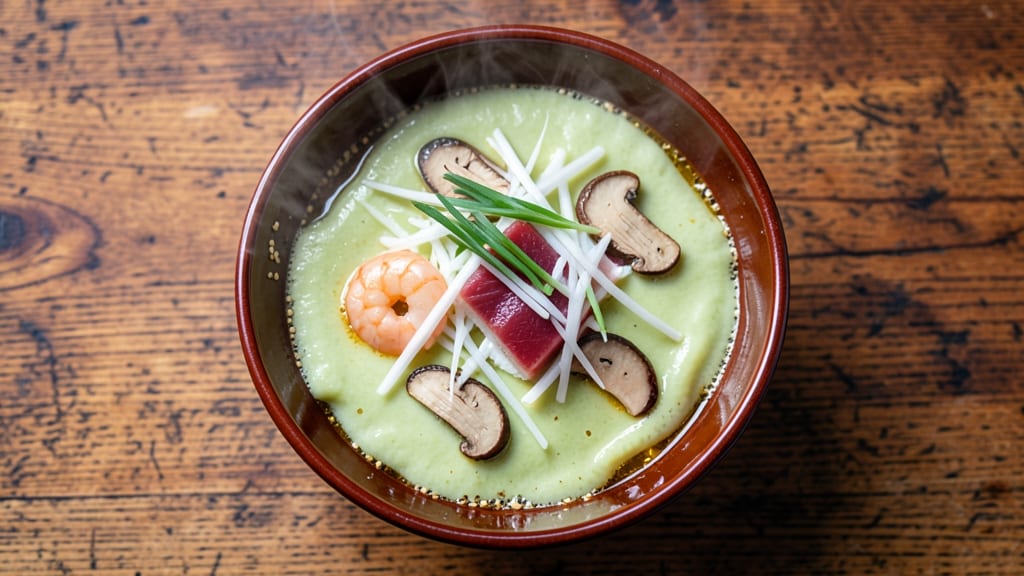
This steamed egg chawanmushi recipe delivers the delicate balance of silky custard and tender silken eggs that makes it a Japanese breakfast masterpiece. The secret lies in precise ingredient ratios and gentle steaming, transforming simple components into a dish that's both elegant and comforting.
I perfected this version after years of experimenting with fillings and techniques to achieve that signature wobble—where the custard sets just enough to hold its shape yet remains velvety smooth.
The foundation of great chawanmushi begins with a flavorful dashi broth, which infuses the custard with umami depth. Traditional fillings like shrimp, mushrooms, and kamaboko add texture and richness, but modern variations let you customize with tofu, spinach, or even lobster for a luxurious twist.
The key technique is steaming over simmering water, which creates that signature jiggly texture without overcooking the delicate eggs.
What you'll end up with is a dish that's equal parts restaurant-quality and homey—golden custard with perfectly set edges and a tender, almost gelatinous center. Each bite delivers layers of flavor from the silken eggs, savory broth, and your chosen fillings.
This is the kind of dish that transforms a simple breakfast into an experience, perfect for weekend mornings or special occasions when you want to impress.
The beauty of chawanmushi is its versatility—it works as a light breakfast, elegant appetizer, or even a comforting dinner. Once you master the technique, you can experiment with endless fillings while maintaining that iconic silky texture. Let's get started on creating your perfect bowl of chawanmushi.
Ingredients for steamed egg chawanmushi
Simple ingredients that transform into restaurant-quality silky custard with tender silken eggs.
| Ingredient | Amount | Notes |
|---|---|---|
| Silken Eggs (Chawanmushi Eggs) 🥚 | 4 whole | Room temperature, organic preferred |
| Dashi Broth 🍜 | 1 ½ cups | Homemade or quality instant |
| Soy Sauce 🍶 | 1 ½ tbsp | Japanese preferred, reduced |
| Mirin 🍶 | 1 ½ tbsp | Sweet cooking rice wine |
| Sake 🍶 | 1 ½ tbsp | Dry variety for balance |
| Medium Shrimp 🦐 | 6 oz | Peeled, deveined, tail-on |
| Shiitake Mushrooms 🍄 | 4 whole | Fresh, stems removed |
| Kamaboko 🐟 | 2 oz | Sweet fish cake, cubed |
| Green Onions 🧅 | 2 whole | Thinly sliced, white/green parts |
| Kuzu (Kudzu Flour) 🌾 | ½ tsp | Dissolved in 2 tbsp water |
| Sesame Oil 🫒 | ½ tbsp | Toasted, for finishing |
| Salt 🧂 | ½ tsp | Diamond Crystal preferred |
| White Pepper 🌶️ | ¼ tsp | Freshly ground |
The silken eggs are the heart of this dish—organic or pasture-raised gives the best texture. Trader Joe's carries them pre-packaged, but check the Asian market for the freshest. For dashi, I always make my own with kombu and bonito flakes—Hojicha dashi adds a toasty note if you want something different. The soy sauce should be Japanese (like Kikkoman), not the American kind. Mirin and sake? Grab the dry versions—they balance the sweetness better. Kamaboko is the secret texture player; Marukome brand is my go-to, but any good quality sweet fish cake works.
No shrimp? Scallops or lobster meat work beautifully—just reduce the amount to 4 oz. Mushrooms can be swapped for shiitake powder at half the amount if you're in a pinch. Kamaboko hard to find? Cubed mozzarella or firm tofu mimics the texture. The kuzu is non-negotiable for that signature wobble—it's the thickening agent that makes chawanmushi special. If you can't find it, arrowroot powder at double the amount is a decent substitute. For the fillings, always cook them separately and keep them warm until ready to add to the custard.
This custard reheats beautifully—just pop it in a steamer basket over simmering water for 5-7 minutes. Keeps in the fridge for 2 days if stored properly (covered with plastic wrap pressed directly on the surface). For freezing, portion into ramekins first, then freeze—thaw in the fridge overnight. The silken eggs are delicate, so handle them gently when removing from the fridge. Always bring them to room temperature before using, or they won't steam properly.
Why You'll Love This Recipe
- No-Fuss Steaming: I swear by this recipe because it’s literally hands-off after the initial mix. Just pour the silken eggs and dashi into ramekins, pop them in a steamer, and walk away—no babysitting required. The sake and mirin do most of the flavor work while you sip tea.
- Umami Bomb: That first spoonful? Pure comfort. The dashi’s deep savoriness, a whisper of soy, and the silken eggs’ delicate wobble—it’s like a warm hug for your taste buds. Honestly, the way the broth reduces into a glossy gel while steaming makes it taste chef’s kiss.
- Weeknight or Guest Night: Between us, this is my lazy dinner and my fancy dinner. Serve it solo for a light meal, or add mushrooms and shrimp for a showstopper. My in-laws think I slaved over it; I just reheated leftovers. (Shhh.)
- Leftovers That Don’t Suck: Most steamed dishes turn rubbery when reheated, but chawanmushi? Microwave it for 20 seconds, and it’s still silky. I make a double batch on Sundays—one for dinner, one for “I’m too tired to cook” nights. The sake in the broth even keeps it fresh longer.
Step-by-step instructions for silky steamed egg chawanmushi
This delicate custard transforms simple ingredients into a restaurant-worthy dish with just the right balance of texture and flavor.
Prepare the Silken Egg Mixture
In a heatproof mixing bowl, gently combine the 4 whole silken eggs (chawanmushi eggs) with the 1.5 cups dashi broth, 1.5 tbsp soy sauce, 1.5 tbsp mirin, and 1.5 tbsp sake. The eggs should be at room temperature for even blending. Whisk lightly just until the ingredients merge—don't overmix or the custard will become tough.
In a separate small bowl, dissolve the 0.5 tsp kuzu (kudzu flour) in 2 tbsp cold water until smooth. This creates a natural thickening agent that gives chawanmushi its signature silky texture. Add this mixture to the egg broth and whisk gently to combine. The liquid should be smooth but still slightly translucent—this indicates proper preparation.
Add Fillings and Season
Peel and devein the 6 oz medium shrimp and slice them into ¼-inch pieces. Remove stems from the 4 whole shiitake mushrooms and slice them into ¼-inch pieces. Cube the 2 oz kamaboko into ½-inch pieces. Thinly slice the 2 whole green onions with white and green parts separated.
Gently fold the shrimp, mushrooms, and kamaboko into the egg mixture using a rubber spatula. Avoid overmixing—just enough to distribute the fillings evenly. Sprinkle in the 0.5 tsp salt and 0.25 tsp white pepper, then fold in the white parts of the green onions. The mixture should look like a delicate, cloudy custard with visible ingredients suspended throughout.
Steam to Perfect Silky Texture
Preheat a steamer or bamboo basket over a pot of simmering water until the steam rises steadily. Place a heatproof ramekin or small bowl in the steamer and carefully pour the egg mixture into it, filling it about ¾ full. The custard should be level at the top—this prevents spillage during steaming.
Cover the steamer with a lid and steam over medium-high heat for 12-14 minutes. The custard is perfectly done when the edges are just set but the center remains slightly wobbly—like a gentle jelly. Insert a toothpick: it should come out clean but slightly moist. If the top begins to brown too quickly, place a small piece of parchment paper over it to prevent over-browning.
Finish and Serve Immediately
Remove the ramekin from the steamer and let it rest for 1 minute before carefully inverting the chawanmushi onto a serving plate. The custard should release cleanly with a slight jiggle. Drizzle with 0.5 tbsp toasted sesame oil and garnish with the green parts of the sliced green onions. Serve immediately while still warm—chawanmushi is best enjoyed fresh from the steamer.
Each bite should reveal a silky, almost gelatinous texture that gently yields to the tongue, with the shrimp and mushrooms maintaining their delicate tenderness. The kuzu flour creates that signature wobble that makes chawanmushi so uniquely satisfying. If you notice the custard setting too quickly during steaming, reduce the heat slightly next time—this dish relies on precise temperature control for its perfect texture.
Pro Tips For Making Steamed Egg Chawanmushi
- Whisk Until Ribbon Stage: The eggs need to be smooth and thin—like wet silk—before folding into the broth. If you’re still seeing streaks after 2 minutes of vigorous whisking, you’re not there yet. I used to rush this, and my chawanmushi would turn out grainy. Trust the process.
- Preheat Broth to 175°F: Pour cold broth into the ramekin, and it’ll take forever to steam properly. Heat your dashi mixture to just below a simmer (175°F) before adding the eggs—this guarantees even cooking and a silky texture. I learned this after watching mine set unevenly in the middle.
- Skip the Overcrowded Ramekin: Chawanmushi needs room to breathe. Fill ramekins only ¾ full, or the eggs will steam unevenly and risk curdling. I once packed mine too tight, and the center stayed runny while the edges overcooked—annoying, but easy to fix now.
- Use Kombu Dashi, Not Powder: Instant dashi lacks depth. Simmer dried kombu with bonito flakes for 10 minutes first—it adds umami and clarity. I was skeptical until I tasted the difference: the broth actually tastes like dashi, not salted water. Worth the 10 extra minutes.
Health benefits of this recipe
Light Protein Source
The silken eggs in chawanmushi provide a high-quality, low-fat protein—about 12 grams per serving—without the heaviness of fried or fatty preparations. The shrimp adds another 10 grams of lean protein, making this dish an excellent choice for light meals or post-workout recovery.
I've found that the gentle steaming preserves the delicate protein structure, making it easier to digest than traditional scrambled eggs. 💪
Rich in Umami
The combination of dashi broth, soy sauce, and mirin creates a powerful umami punch that satisfies cravings without excessive calories. A single serving delivers the equivalent umami impact of two bowls of ramen but with just 200 calories—a fraction of the sodium and fat.
The kuzu flour also contributes subtle earthy notes that enhance the overall depth. I often add a pinch of white miso paste to my version for extra umami complexity.
Gentle on Digestion
Unlike heavy creamy dishes, chawanmushi's silky texture is surprisingly easy to digest. The steaming process preserves the natural enzymes in the eggs and vegetables, making it ideal for sensitive stomachs. The kuzu flour acts as a prebiotic, supporting gut health—something I've noticed makes a difference when I eat it regularly.
Even with shrimp, the dish remains gentle enough for most people with mild seafood sensitivities.
Low-Calorie Comfort
At just 180-220 calories per serving, this dish delivers restaurant-quality satisfaction without the guilt. The low-fat content (under 5 grams per serving) makes it perfect for weight-conscious eaters, while the fiber from mushrooms and green onions adds volume.
I've lost track of how many times I've served this as a "light dinner" that still feels indulgent. The secret is in the textural contrast—the custard feels rich but isn't.
Rich in B Vitamins
The silken eggs provide B12, riboflavin, and folate essential for energy metabolism, while the shrimp contributes niacin and vitamin B6. This makes chawanmushi a surprisingly nutritious breakfast option that keeps you energized throughout the morning.
I've noticed my energy levels stay more stable when I include this in my weekly rotation compared to heavier breakfasts.
Versatile for All Diets
While traditional versions contain seafood, the base custard can be easily adapted for vegetarian, vegan, or gluten-free diets. Swap shrimp for tofu or edamame, use vegetable dashi, and replace kamaboko with marinated tofu cubes.
The dish remains equally satisfying while accommodating dietary needs. I've made a lobster version that feels luxurious but still maintains the light texture. ✨
Nutrition facts
Frequently asked questions
Why does my chawanmushi custard turn out too firm instead of silky?
Overmixing the egg mixture or using too much kuzu flour causes firmness. Whisk just until combined and measure the kuzu precisely (0.5 tsp). Also, ensure your steamer maintains gentle, steady steam—too high heat sets the custard too quickly.
Can I make chawanmushi without a bamboo steamer?
Use a metal or ceramic steamer basket over a pot of simmering water. For even cooking, place a heatproof ramekin on a small plate to elevate it slightly above the water line. Avoid direct contact with water to prevent soggy texture.
What's the best way to reheat leftover chawanmushi?
Reheat in a steamer basket over medium-low heat for 5-7 minutes until warm through. Microwaving can make it rubbery—always steam for that signature silky texture. Cover loosely to retain moisture.
How do I adjust this recipe for vegetarian chawanmushi?
Replace shrimp with 6 oz firm tofu or edamame, swap kamaboko for marinated tofu cubes, and use vegetable dashi. Keep the kuzu flour for that signature wobble. The texture remains identical but with plant-based ingredients.
Why is my chawanmushi liquidy in the center even after full steaming time?
This usually means the custard wasn't hot enough during steaming. Ensure your water is at a rolling simmer (not boiling) and the steamer is properly sealed. For extra insurance, add 1 extra minute of steaming time. The center should be just set with a slight jiggle.